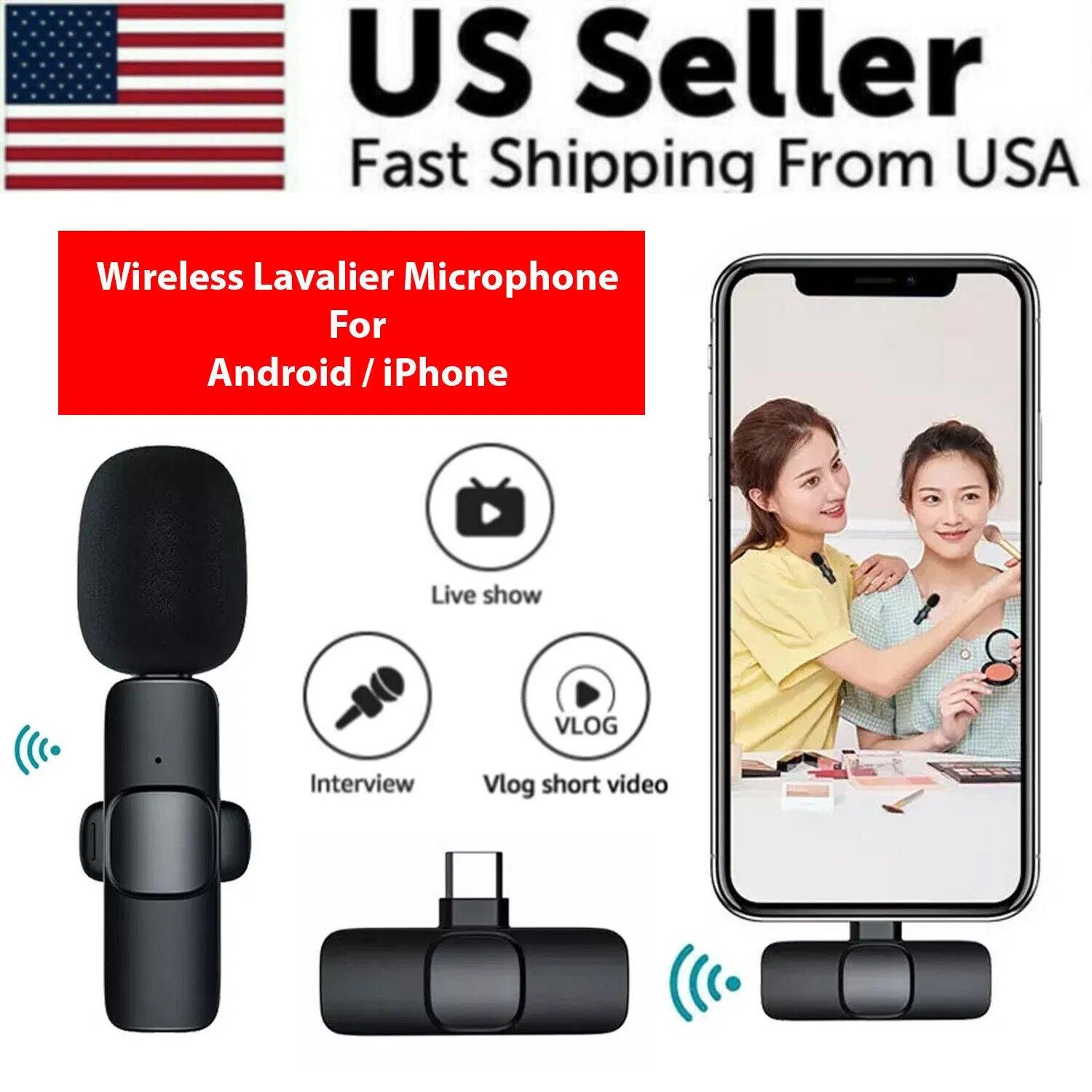

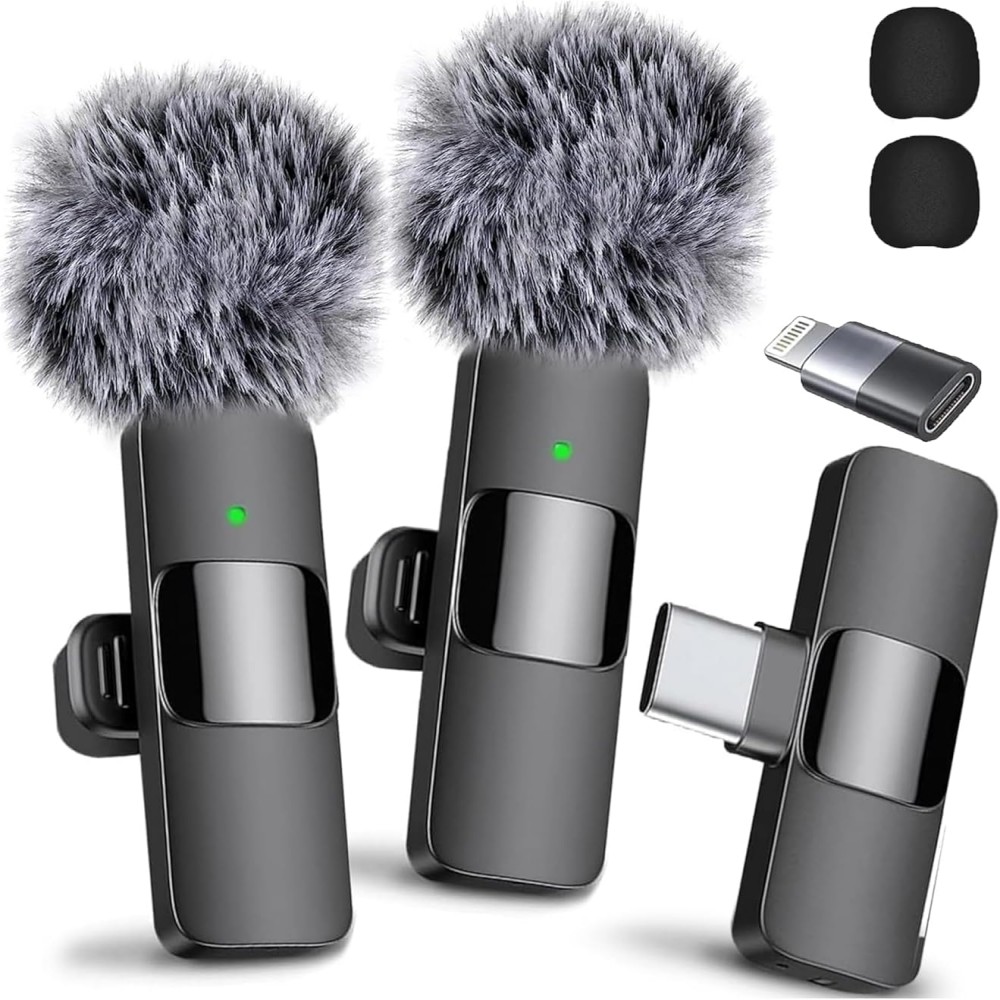
Photos from current listings. Actual item, color, and included accessories may vary.
Wireless Lavalier Microphone Buying Guide
Wireless lavalier microphones are compact clip-on systems that replace a wired mic with a radio or digital link to your phone, camera, or recorder for hands-free speech. The core trade-off is between ultra-cheap 2.4 GHz analog-style links with fragile plastic bodies and weak RF stability versus properly engineered digital systems with onboard recording, swappable connectors, and metal transmitters. The decision rule: buy a system whose transmitter physically locks to your device connector type and whose receiver offers a real gain/headphone monitor—skip any kit that only lists 'compatible with iPhone/Android' without naming the connector.


At a glance
- Category
- Microphones & Accessories
- Data updated
- Nov 15, 2026
Current offers
Highlights
- Transmission architecture splits into 2.4 GHz digital (auto-pairing, low latency, shorter range) vs UHF analog (longer range, more interference-prone, needs frequency tuning).
- Connector tier is the hard gate: Lightning transmitters for iPhone 14 and older, USB-C for iPhone 15/16 and modern Android/iPad, and 3.5 mm TRS/TRRS for cameras and older phones.
- Transmitter build quality spans all-plastic clips (light, brittle hinge) to metal-body lavs with shielded capsules; plastic units survive indoor desk use but crack at the clip under outdoor handling.
- Battery format determines workflow: built-in rechargeable cells run roughly 4–8 hours and die with age; AAA/coin-cell transmitters allow instant swap on long shoots.
Best use cases
- Best fit for iPhone 15/16 or USB-C Android: pick a USB-C plug-and-play kit with a charging pass-through so you can record and power simultaneously.
- Best fit for iPhone 14 or older: choose a dedicated MFi-certified Lightning transmitter—USB-C kits need a separate adapter that adds bulk and a failure point.
- Best fit for DSLR/mirrorless interviews: select a system with a 3.5 mm TRS receiver output plus manual gain, not a phone-only receiver.
- Wrong fit to skip: single-piece 'mini mic' units with no separate receiver for multi-person podcasts—they cannot mix two speakers independently or monitor levels.
Buying tips
- Match the connector first: Lightning for iPhone 14 and earlier, USB-C for iPhone 15/16, iPad Pro, and most 2023+ Android phones; never rely on a passive adapter for stable digital audio.
- Check transmitter battery chemistry—built-in Li-ion cells degrade to roughly half capacity after a few hundred cycles, while AAA-powered transmitters are field-swappable.
- For two-person recording, confirm the kit includes two transmitters and a receiver that mixes both to one track, or dual-channel output if you need separate tracks.
- Prioritize a receiver with a 3.5 mm headphone monitor jack and gain buttons; without live monitoring you cannot catch clipping or RF dropouts until post.
Specs
| Connector Type | Lightning / USB-C / 3.5mm TRS |
|---|---|
| Transmission | 2.4 GHz digital vs UHF analog |
| Transmitter Build | Plastic clip vs metal body |
| Battery Format | Built-in Li-ion vs AAA swappable |
Related searches
What to check before buying
- Confirm your phone's charging port before ordering—Lightning vs USB-C is a hard incompatibility, not a software setting.
- Measure your shooting distance: 2.4 GHz systems typically hold a clean signal to about 30–50 ft line-of-sight; walls and bodies cut this sharply.
- Check whether your recording app supports external mic input and gain control—some stock camera apps lock input level.
- Verify clip opening width fits your clothing or lapel thickness, and that the transmitter weight won't sag a light shirt.
FAQ
Data sources: eBay / Amazon listings and product attribute feeds Data updated Nov 15, 2026.
Some links on this page are affiliate links. If you buy after clicking one, we may earn a commission at no extra cost to you. This does not change which products appear here or their order. Affiliate disclosure.