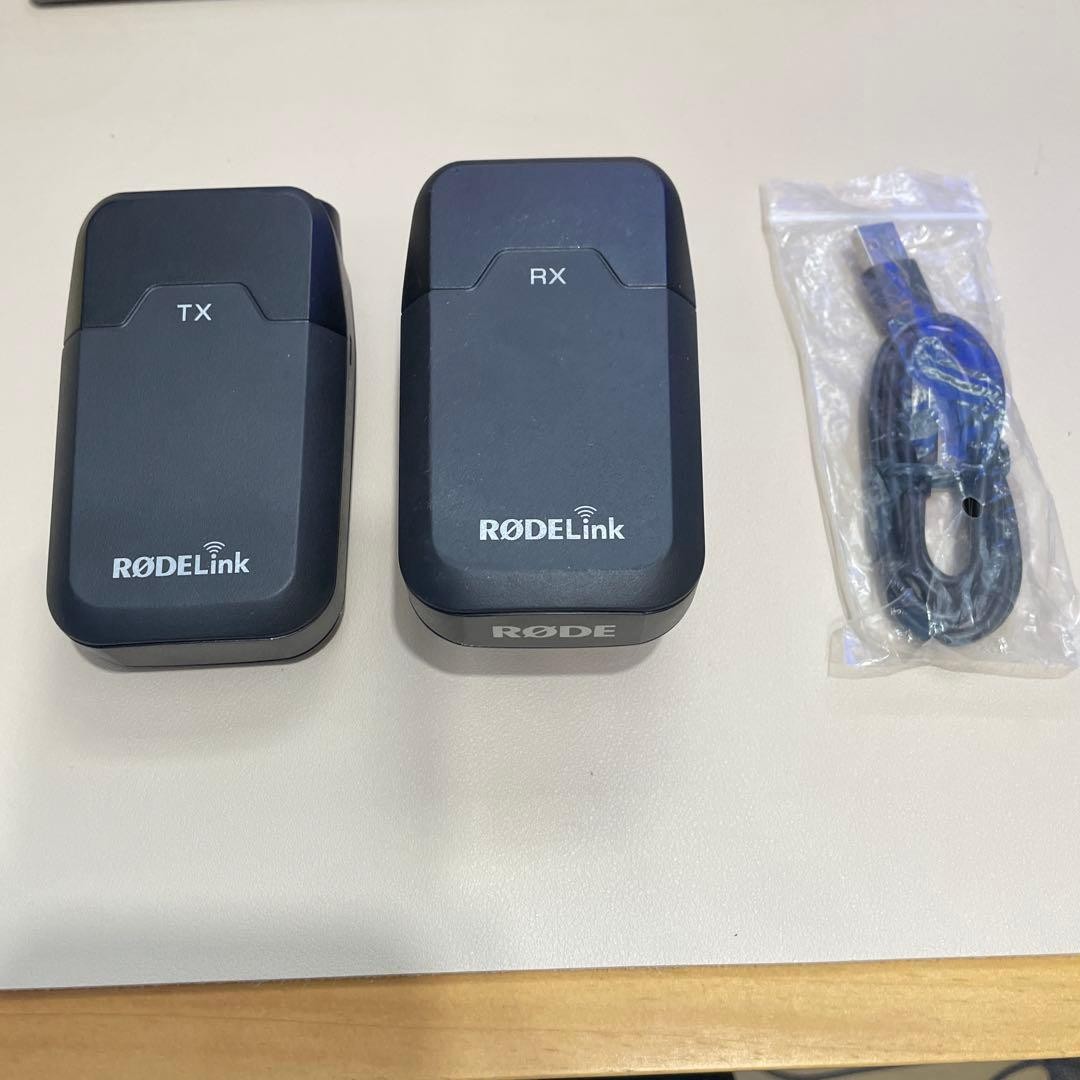

Photos from current listings. Actual item, color, and included accessories may vary.
Rodelink Microphone Buying Guide
The Rodelink is RODE's digital wireless microphone system family, built around 2.4 GHz FHSS transmission rather than traditional UHF/VHF analog. The core trade-off is convenience and license-free global operation versus potential 2.4 GHz Wi-Fi/Bluetooth congestion and higher latency than wired or high-end UHF systems. Choose a Rodelink kit when you need simple, battery-powered, camera-mount wireless for solo presenters or interviews; skip it for multi-channel RF-heavy venues or critical low-latency monitoring.


At a glance
- Category
- Microphones & Accessories
- Data updated
- Nov 15, 2026
Current offers
Highlights
- Rodelink systems use 2.4 GHz frequency-hopping spread spectrum (FHSS) and are license-free worldwide, unlike UHF systems that require country-specific frequency coordination.
- Original Rodelink kits (Filmmaker, Performer, Newsshooter) use a proprietary encryption and pairing scheme; the newer Rodelink II series adds upgraded transmitters with locking connectors and improved battery life.
- Transmitters integrate a broadcast-quality omnidirectional lavalier (Lavalier GO or smartLav+ depending on kit) and a built-in backup recording mode on select models, so a dropout at the receiver does not lose the take.
- Receiver outputs are 3.5mm TRS/TRRS compatible with DSLR/mirrorless cameras and smartphones, but require the correct RODE SC-series adapter cable for TRRS device compatibility.
Best use cases
- Best fit: solo vloggers and run-and-gun interviewers shooting with a DSLR or mirrorless camera who want a compact, battery-powered, license-free wireless lav kit; pick the Filmmaker kit for camera-mount receiver and included lav.
- Best fit: mobile journalists and smartphone creators who need a TRRS-ready receiver with a passthrough headphone monitor; choose the Rodelink II with the correct SC4/SC7 adapter cable for your phone.
- Wrong fit: multi-talent panel shoots or wedding receptions with dozens of simultaneous wireless systems—skip Rodelink and use a coordinated multi-channel UHF system with true diversity receivers.
- Wrong fit: studio or stage use where latency below 5 ms is critical—Rodelink's digital processing introduces latency unsuitable for live foldback monitoring; use a wired or analog UHF system instead.
Buying tips
- Match the transmitter input: Rodelink kits ship with either a 3.5mm TRS lav or a TRRS smartphone lav; confirm your camera or phone jack type and add the correct RODE SC adapter if needed.
- Check receiver output level compatibility: Rodelink outputs a consumer-level signal, so set camera mic input to manual and around 50-70% gain to avoid clipping the camera preamp.
- Prefer the Rodelink II generation for locking 3.5mm connectors and improved battery life; original Rodelink units use non-locking connectors that can pull loose during movement.
- Plan for 2.4 GHz congestion: Rodelink auto-hops channels, but in dense Wi-Fi environments keep the receiver within line of sight and under 30 meters for reliable operation.
Specs
| Transmission | 2.4 GHz FHSS digital, license-free |
|---|---|
| Kit Types | Filmmaker / Performer / Newsshooter |
| Lav Connector | 3.5mm TRS or TRRS (kit-dependent) |
| Receiver Output | 3.5mm TRS / TRRS via adapter |
Related searches
What to check before buying
- Measure your camera's mic input type and hot-shoe clearance: Rodelink receivers mount via cold shoe or 1/4-inch thread, so confirm your cage or bracket supports the receiver's footprint.
- Confirm your phone or tablet has a 3.5mm headphone jack or a certified Lightning/USB-C adapter that supports TRRS mic input; many newer phones require an external adapter.
- Check your shooting distance: Rodelink is rated for up to 100 meters line of sight, but walls, bodies, and Wi-Fi reduce range—plan receiver placement within 30 meters for indoor shoots.
- Verify battery logistics: Rodelink transmitters and receivers use AA batteries (2 per unit); budget for rechargeable AA cells and a charger for multi-hour shoots.
FAQ
Data sources: eBay / Amazon listings and product attribute feeds Data updated Nov 15, 2026.
Some links on this page are affiliate links. If you buy after clicking one, we may earn a commission at no extra cost to you. This does not change which products appear here or their order. Affiliate disclosure.