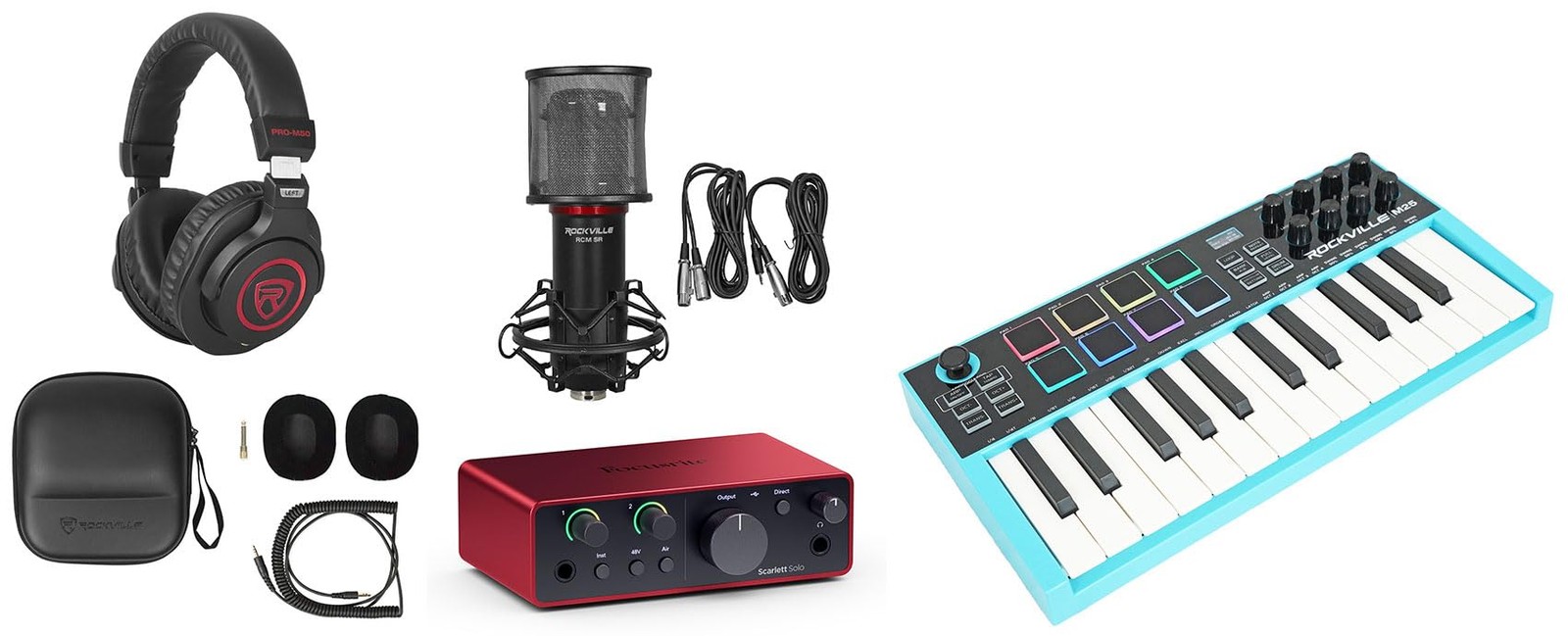

Photos from current listings. Actual item, color, and included accessories may vary.
USB Microphone Buying Guide
A USB microphone is a self-contained recording input that combines a capsule, preamp, and analog-to-digital converter into a single plug-and-play device, eliminating the need for a separate audio interface. The primary trade-off is between bus-powered condenser mics with onboard monitoring versus dynamic mics with higher gain requirements and fewer features. The decision rule: choose a cardioid condenser with a headphone jack and zero-latency monitoring for solo voice work, and step up to a dynamic or multi-pattern model only if you need room rejection or multi-source capture.


At a glance
- Category
- Recording & Studio Gear
- Data updated
- Nov 15, 2026
Current offers

Highlights
- Capsule type dictates gain needs: electret condenser USB mics output hot enough for bus power, while moving-coil dynamic USB mics require +20 to +30 dB more gain and often include built-in preamps.
- Bit depth and sample rate tiers: budget models cap at 16-bit/48 kHz, mid-tier at 24-bit/96 kHz, and prosumer at 24-bit/192 kHz—24-bit/48 kHz is the practical floor for clean voice tracking.
- Monitoring architecture: zero-latency direct monitoring via a 3.5 mm headphone jack and mix knob separates usable USB mics from latency-plagued budget units.
- Polar pattern matters more than specs: fixed cardioid rejects rear room reflections, while switchable omni/figure-8 models cost more and suit multi-person or room-capture sessions.
Best use cases
- Solo podcasting, voiceover, and streaming: pick a cardioid condenser USB mic with 24-bit/48 kHz, a headphone jack, and a mute button—skip multi-pattern and dynamic models that add cost without benefit.
- Home studio music tracking in an untreated room: choose a dynamic USB mic or a condenser with a tight cardioid pattern and low self-noise (under 15 dBA)—avoid large-diaphragm condensers in reflective spaces.
- Multi-person podcast or interview kit: select a USB mixer/interface with multiple XLR inputs plus separate mics rather than a single USB mic—one USB mic cannot capture two speakers at equal quality.
- Field recording or mobile content: pick a bus-powered USB-C mic with onboard gain control and a 3.5 mm monitoring jack—skip models requiring proprietary drivers or external power.
Buying tips
- Match connector to host: USB-C is standard on current laptops and phones; USB-A models need an adapter, and USB-C mics with USB 2.0 fallback work across both.
- Check self-noise and max SPL: voice mics should rate under 15 dBA self-noise and above 110 dB SPL for close speech; higher self-noise is audible on quiet sources.
- For dynamic USB mics, confirm onboard gain of at least +50 dB—bus power alone cannot drive a moving-coil capsule to line level without a built-in preamp.
- Verify monitoring path: a direct-monitor headphone jack with a mix knob beats software monitoring; USB mics without a headphone jack force latency-prone software monitoring.
Specs
| Capsule Type | Condenser vs Dynamic |
|---|---|
| Max Resolution | 16-bit/48 kHz to 24-bit/192 kHz |
| Polar Pattern | Cardioid / Omni / Figure-8 |
| Monitoring | 3.5 mm direct zero-latency |
Related searches
What to check before buying
- Measure your recording distance: cardioid condensers work at 6–12 inches; dynamic mics need 2–4 inches for adequate level—confirm your setup allows the closer placement.
- Check host port and power: confirm a USB-C or USB-A port that supplies standard 5 V bus power; avoid unpowered hubs for mics with high current draw.
- Assess room treatment: reflective rooms favor dynamic or tight-cardioid mics; untreated drywall and glass demand rear-rejection patterns and close placement.
- Confirm companion parts: a desktop stand or boom arm, a pop filter, and a USB-C cable rated for data (not charge-only) are required—many mics ship without a stand.
FAQ
Data sources: eBay / Amazon listings and product attribute feeds Data updated Nov 15, 2026.
Some links on this page are affiliate links. If you buy after clicking one, we may earn a commission at no extra cost to you. This does not change which products appear here or their order. Affiliate disclosure.