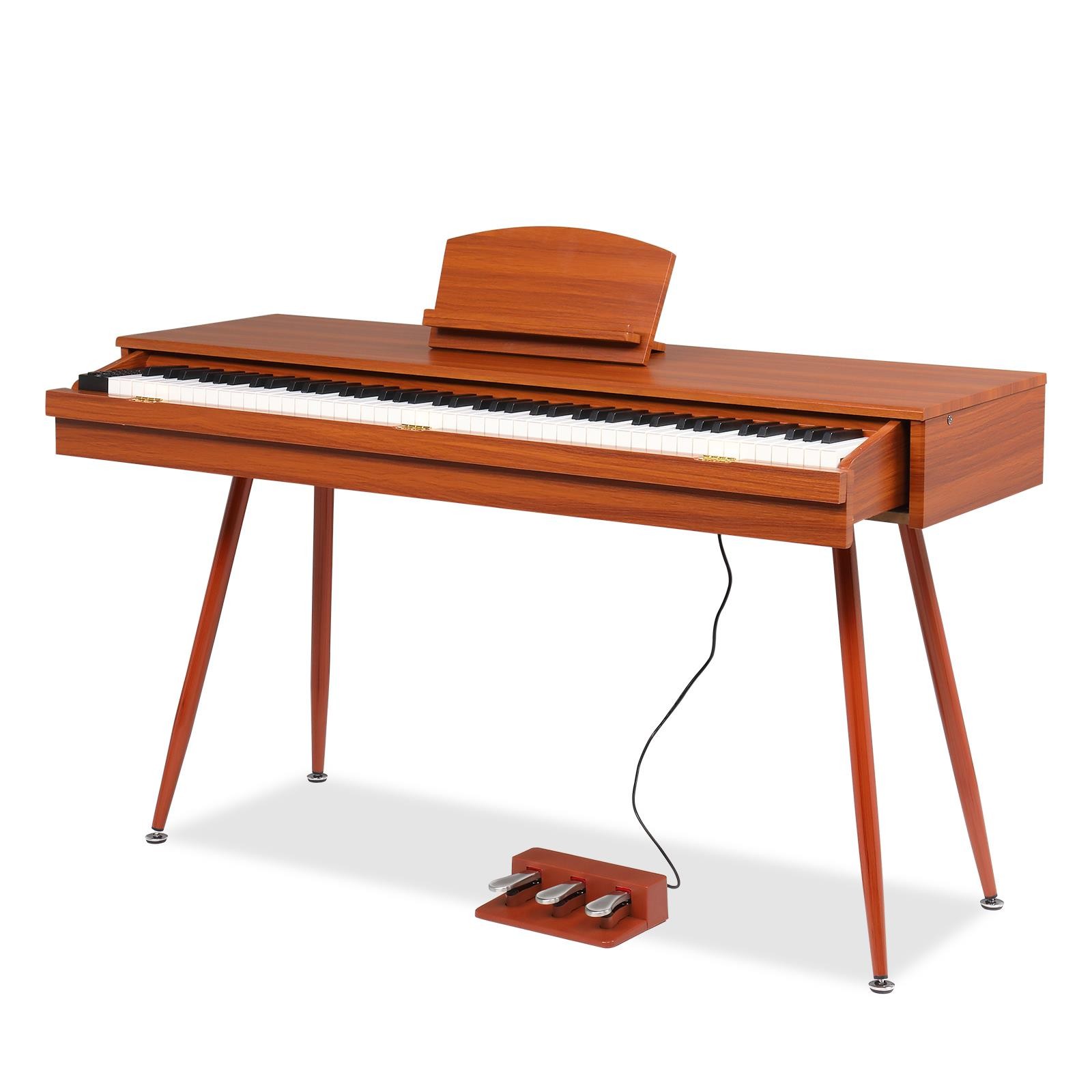

Photos from current listings. Actual item, color, and included accessories may vary.
Wood Keyboard Buying Guide
A wood keyboard is a digital piano or keyboard whose cabinet, keybed chassis, or side panels use real wood or wood-composite construction to improve structural rigidity, acoustic resonance, and furniture-grade appearance. The primary trade-off is between authentic wooden key actions and cabinetry (higher cost, heavier weight) versus wood-look MDF or vinyl-wrapped particleboard that mimics aesthetics without the durability or touch. The decision rule: buy real-wood keybeds or solid-wood cabinets only when key feel and long-term structural stability matter; choose wood-composite or wood-grain finishes for visual match on a budget, and skip any listing that cannot specify key action type, cabinet material grade, or pedal configuration.


At a glance
- Category
- Keyboards & Pianos
- Data updated
- Nov 16, 2026
Current offers
Highlights
- Real wooden key actions (e.g., spruce or beech keys with wooden chassis) deliver graded touch and faster repetition than all-plastic keybeds; wood-composite keys are a visual-only upgrade with plastic pivot mechanics.
- Cabinet construction separates tiers: solid wood or plywood panels resist warping and screw loosening, while MDF/particleboard with wood-grain vinyl is common in entry 88-key consoles and sensitive to humidity.
- 88-key weighted hammer-action models with triple-pedal units (soft, sostenuto, sustain) target piano repertoire; 61/76-key unweighted or semi-weighted wood-finish boards suit production and portability instead.
- Triple-pedal assemblies on console wood pianos usually require the matching stand or cabinet; detached single sustain pedals are standard on portable slabs regardless of wood color finish.
Best use cases
- Best fit: buy an 88-key weighted hammer-action wood-console piano with triple pedal if you practice classical repertoire at home and want furniture-grade appearance; skip 61-key unweighted wood-finish boards for serious piano study.
- Best fit: choose a real wooden key action (wooden keys plus wooden chassis) if touch response and repetition speed are priorities for advanced players; skip wood-composite keys that only imitate grain visually.
- Best fit: pick a wood-grain MDF cabinet for a living-room visual match on a tight budget; skip it in humid or sun-exposed rooms where particleboard swells and veneer lifts.
- Wrong fit: buying a wood keyboard for gigging — solid-wood consoles are heavy and rarely have detached pedal units; use a portable stage piano with a separate wood stand instead.
Buying tips
- Match key count to repertoire: 88 keys for classical and full-range piano; 61 or 76 keys for pop, production, and tight spaces — wood finish does not change playable range.
- Verify key action type explicitly: weighted hammer action for piano feel, semi-weighted for organ/synth, unweighted synth-action for portability; wood keys alone do not guarantee weighting.
- Check cabinet material grade: solid wood or plywood for structural longevity; MDF/particleboard with wood-grain vinyl only in climate-controlled rooms with stable humidity.
- Confirm pedal configuration: triple-pedal units are typically integrated into the stand or cabinet and not usable standalone; portable slabs use a single sustain pedal jack.
Specs
| Key Action | Weighted hammer / semi-weighted / synth |
|---|---|
| Key Count | 88 / 76 / 61 keys |
| Cabinet Material | Solid wood / plywood / MDF veneer |
| Pedal Unit | Triple integrated / single sustain |
Related searches
What to check before buying
- Measure the floor footprint and wall clearance: 88-key console wood pianos typically run about 55–58 inches wide and 14–18 inches deep; confirm doorways and stair turns before delivery.
- Check room humidity stability: solid wood and MDF both react to swings above 60% RH; plan a dehumidifier or place away from radiators and direct sun.
- Confirm voltage and plug standard for your region (100–240V external adapter vs fixed mains lead) and that the triple-pedal cable length reaches your seated position.
- Verify what ships in the box: stand, bench, triple pedal, and music stand are often separate or tier-dependent; a wood-color slab may include none of them.
FAQ
Data sources: eBay / Amazon listings and product attribute feeds Data updated Nov 16, 2026.
Some links on this page are affiliate links. If you buy after clicking one, we may earn a commission at no extra cost to you. This does not change which products appear here or their order. Affiliate disclosure.