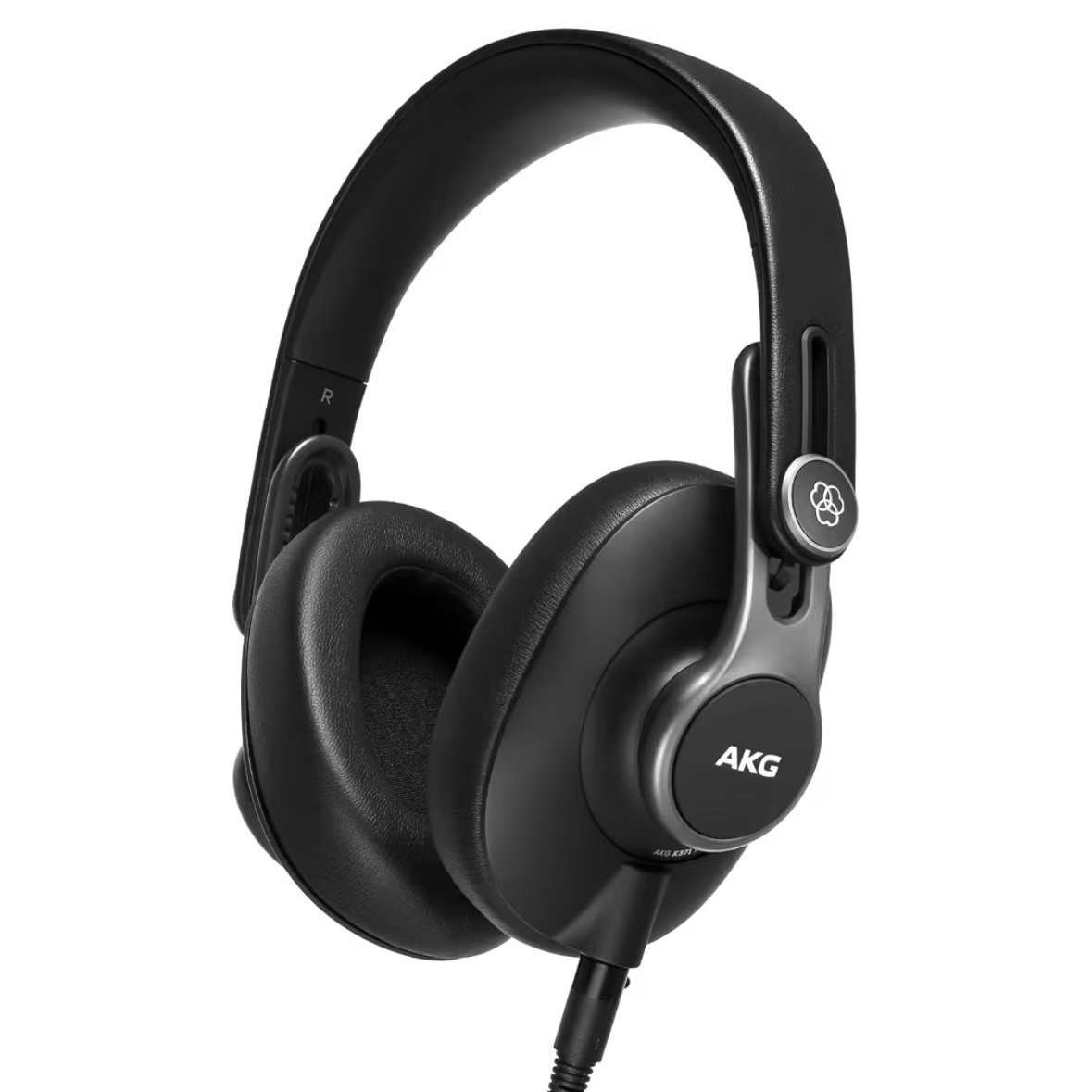

Photos from current listings. Actual item, color, and included accessories may vary.
AKG K371 Buying Guide
The AKG K371 is a closed-back over-ear studio headphone tuned to a diffuse-field target, built for tracking, editing, and monitoring without bleed. The core trade-off is sealed acoustic isolation and a foldable portable frame versus the open-back soundstage and long-session breathability of open studio cans. Buy the K371 if you need accurate, Harman-aligned reference sound in a portable, closed package; skip it if you need maximum isolation for loud drum tracking or open-back imaging for mix translation.


At a glance
- Brand
- Not synced yet
- Model
- Not synced yet
- MPN
- Not synced yet
- Category
- Recording & Studio Gear
- Status
- Offers available
- Data updated
- Nov 15, 2026
Current offers
Highlights
- Closed-back over-ear design with 50 mm titanium-coated drivers tuned to AKG's diffuse-field target for neutral, reference-grade response.
- Foldable three-axis hinge with swiveling earcups and included hard case enables flat packing for mobile recording and travel.
- Detachable 3.5 mm mini-XLR cable with inline remote/mic and 1/4-inch adapter supports both mobile and interface connections.
- Replaceable earpads and headband pad plus a lightweight metal-reinforced frame extend service life versus molded-plastic consumer cans.
Best use cases
- Best fit: vocal and instrument tracking in a home or project studio where closed-back isolation prevents bleed into microphones.
- Best fit: mobile recording, editing, and reference listening where the foldable frame and detachable cable pack into a gig bag or hard case.
- Wrong fit: loud drum tracking or live-stage monitoring at high SPL—choose higher-isolation closed-back or IEM designs instead.
- Wrong fit: open-back mixing and mastering where soundstage width and air matter—pick open-back reference headphones instead.
Buying tips
- Confirm the 32-ohm impedance and ~114 dB sensitivity: the K371 runs cleanly from phones, laptops, and bus-powered interfaces without a dedicated amp.
- Match the cable termination: the stock 3.5 mm mini-XLR cable needs a 1/4-inch adapter for studio interfaces; buy a spare mini-XLR cable for studio and mobile setups.
- Choose the K371 for a neutral diffuse-field tuning; choose the K371-BT only if wireless convenience outweighs wired reference accuracy for your workflow.
- Budget for replacement earpads: sealed pads compress over time and alter bass and isolation, so plan pad swaps on heavily used tracking pairs.
Specs
| Fit | Over-ear closed-back, foldable |
|---|---|
| Driver | 50 mm titanium-coated dynamic |
| Impedance/Sensitivity | 32 ohm / ~114 dB SPL |
| Cable | Detachable 3.5 mm mini-XLR |
Alternatives to compare


Related searches
What to check before buying
- Measure your headband fit and earcup clearance: the over-ear cups need enough room for your ear shape to seal properly for isolation.
- Check your audio interface or headphone amp output impedance and connector type; pair the 3.5 mm plug with a 1/4-inch adapter where needed.
- Confirm your monitoring environment: closed-back isolation suits noisy rooms and tracking, but open-back referencing requires a quiet space.
- Account for the foldable frame and hard case in your bag or desk layout; the folded footprint is compact but the case adds bulk.
FAQ
Data sources: eBay / Amazon listings and product attribute feeds Data updated Nov 15, 2026.
Some links on this page are affiliate links. If you buy after clicking one, we may earn a commission at no extra cost to you. This does not change which products appear here or their order. Affiliate disclosure.