Photos from current listings. Actual item, color, and included accessories may vary.
Portable Stage Light Buying Guide
Portable stage lights are compact, transportable fixtures—typically LED par cans, wash bars, or moving heads—used for DJ sets, bands, parties, and small venues where permanent rigging isn't available. The primary trade-off is between output and control sophistication versus weight, power draw, and ease of setup: DMX-capable, metal-bodied fixtures with proper thermal management outlast and outperform plastic, remote-only party lights. The decision rule: buy a metal-housed fixture with DMX512 (or at minimum sound-active plus IR remote) if you need repeatable, gig-worthy performance; skip sealed plastic RGB toys unless the use is occasional home/party use.

At a glance
- Category
- Live Sound & Stage Lighting
- Data updated
- Nov 15, 2026
Current offers
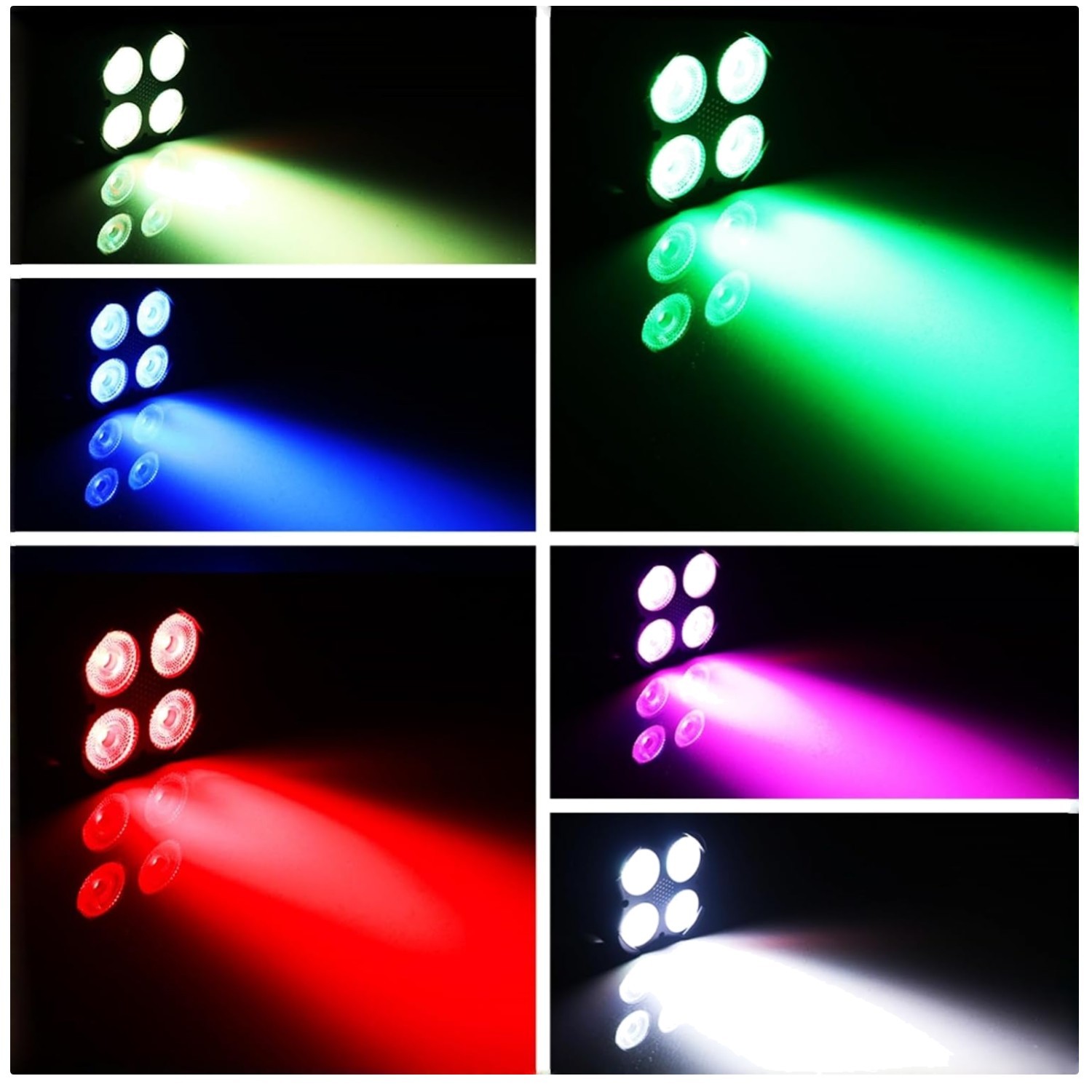 Portable Stage Lights | Sound Activated & Remote Control$51.74
 View on eBay
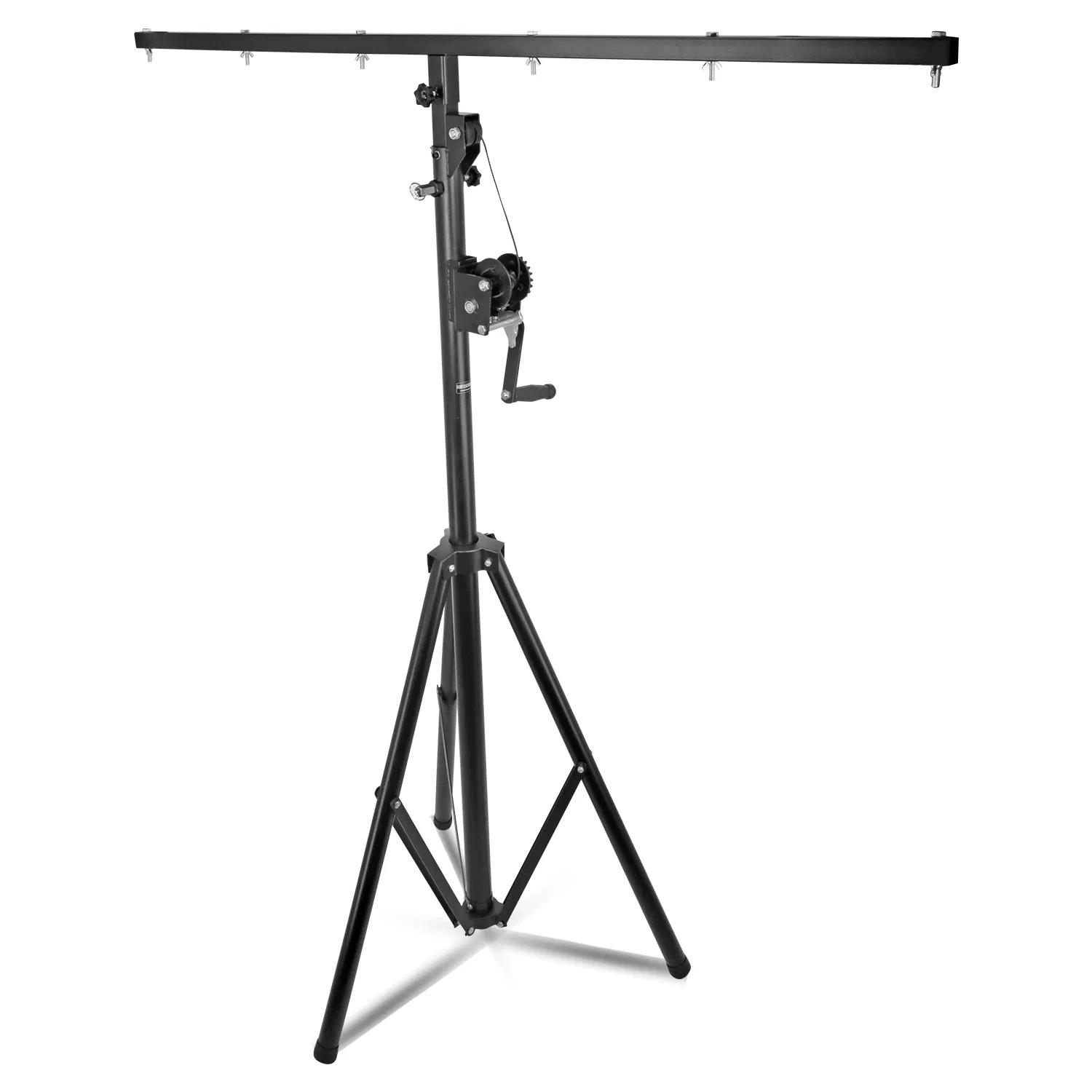 5Core DJ Light Stand Stage Lighting Truss System Hand Crank Up Portable Heavy Duty Height Adjustable 65.5 to 111 Inches T bar Mount for Can Lights Tall Tripod Floor LS 120$108.99
 View on Mallflare
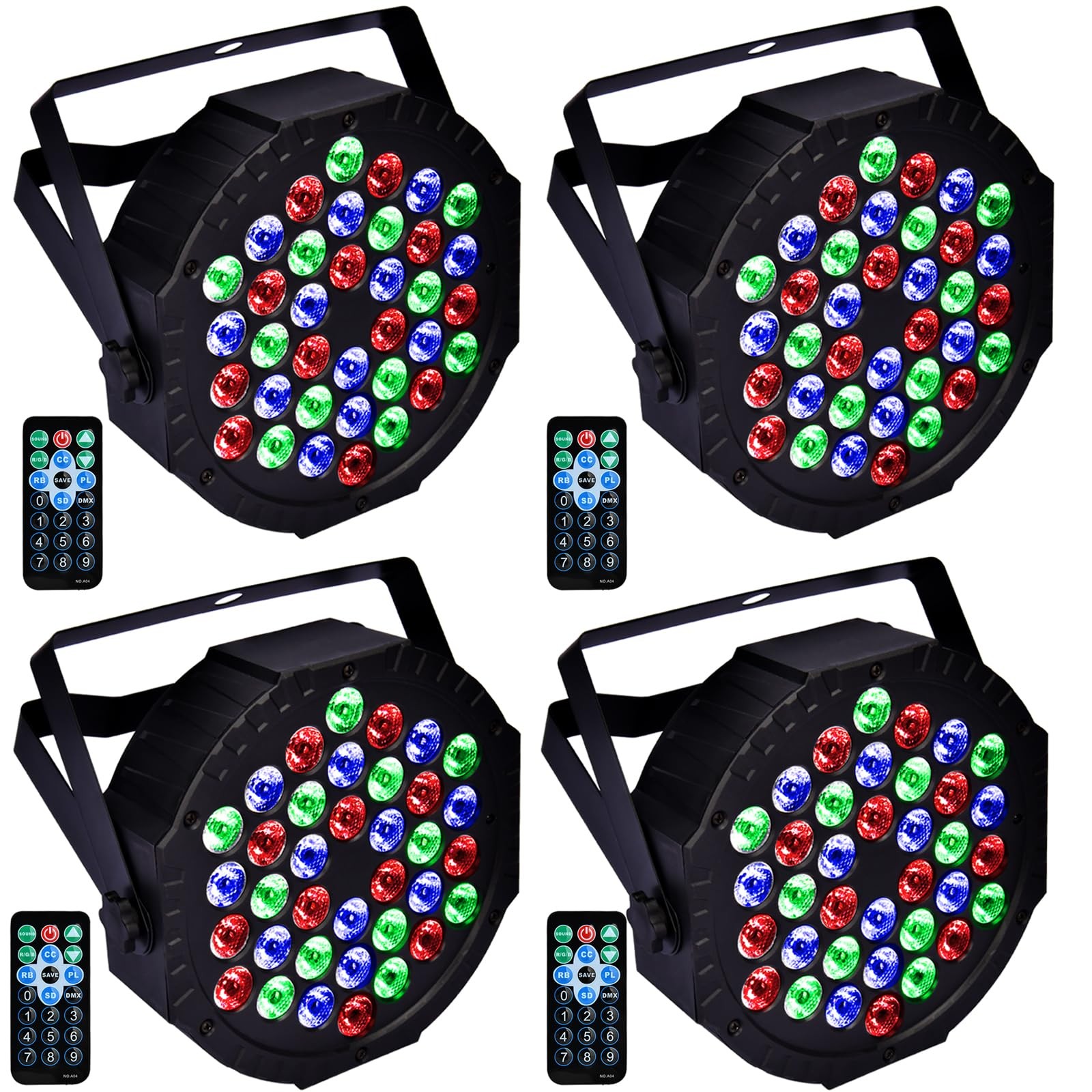 36~LED RGB Stage Lights Sound Activated Portable Party Light with Remote$67.60View on eBay
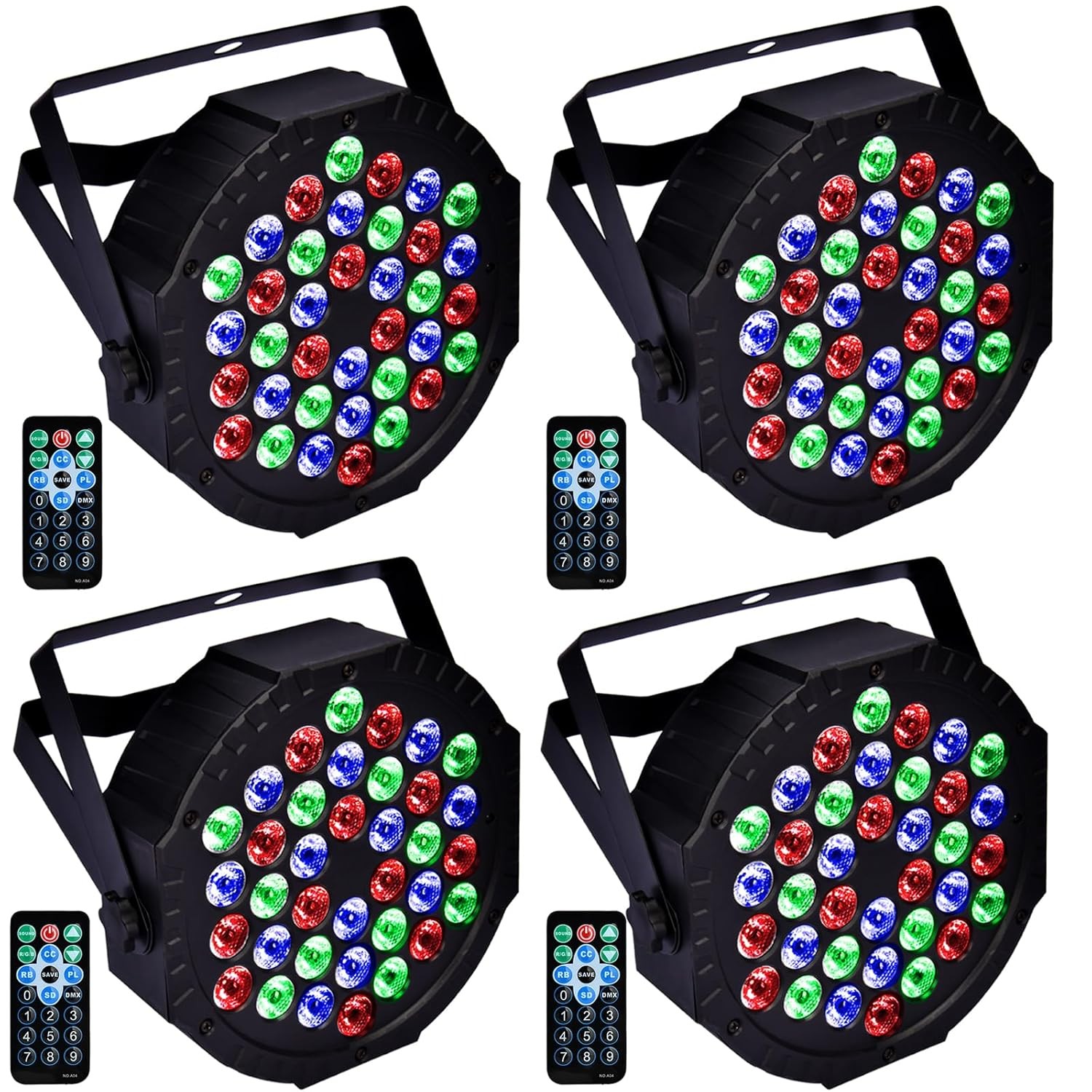 Portable Sound Activated Led Stage Lights for Parties Dj Events Stage Lighting$71.98View on eBay
Highlights
- LED source type drives output and life: RGB 3-in-1 vs separate R/G/B/W emitters; quality fixtures rate 50,000+ hours and use aluminum heat sinks, while plastic housings overheat and dim over time.
- Control protocol separates tiers: DMX512 (3-pin XLR in/out, 9-12 channels) enables daisy-chaining and console control; sound-activated and IR-remote-only fixtures cannot sync precisely across multiple units.
- Mounting and rigging standards: fixtures use a 10mm or 13mm mounting bolt with adjustable yoke bracket; scissor-lift/T-bar stands (e.g., 65.5–111 in hand-crank truss) must be rated for total fixture load, not just one light.
- Power and daisy-chain limits: most portable par cans draw 30–60W and support 4–8 units per daisy chain at 110–120V; exceeding the chain limit trips breakers and risks cable/connector damage.
Best use cases
- DJ/band gigging with multiple fixtures: pick DMX512-capable metal par cans with 3-pin XLR in/out and a rated T-bar or truss stand; skip remote-only plastic lights that can't sync to a console or each other.
- House parties and small events where one person runs lights: choose sound-activated RGB fixtures with IR remote and included bracket; skip DMX pro fixtures that add cost and setup complexity without a controller.
- Mobile entertainers needing fast load-in: select lightweight (under ~3 lb per fixture) aluminum-housing units with yoke brackets and a hand-crank tripod stand; skip heavy moving heads that require case transport and power sequencing.
- Permanent small-venue install: use metal fixtures with DMX and fan cooling mounted on truss; skip battery-powered or USB party lights whose output and duty cycle are too low for nightly use.
Buying tips
- Match fixture count to stand rating: a hand-crank T-bar rated for 100 lb safely holds 4–6 par cans (each ~2–4 lb plus brackets); never exceed the stand's stated load or raise the crank above its marked max height.
- Choose DMX512 for multi-fixture setups: 3-pin XLR daisy-chain with 9–12 channels per fixture lets one console address all units; sound-active/remote-only models drift out of sync and cannot be programmed.
- Verify housing material and cooling: aluminum body with visible heat-sink fins and a fan handles continuous duty; sealed plastic shells with no vents are for intermittent party use only.
- Check power chain math: 4–8 fixtures per 110–120V circuit at 30–60W each stays within a 15A breaker; use 3-prong grounded IEC or Edison plugs and avoid chaining beyond the fixture's rated outlet.
Specs
| Control Protocol | DMX512 vs sound-active/IR remote |
|---|---|
| Housing Material | Aluminum heat-sink vs sealed plastic |
| Mounting Standard | 10-13mm yoke bolt / T-bar truss |
| Power Draw | 30-60W per fixture, 110-120V |
Related searches
What to check before buying
- Measure your mounting point: a T-bar stand needs a footprint of roughly 3–4 ft diameter and ceiling/truss height of at least 65 in collapsed to 111 in extended; confirm the room can accommodate the tripod legs and crank clearance.
- Confirm voltage and plug standard for your region: portable stage lights are typically 110–120V 60Hz with US 3-prong plugs; 220–240V markets need the correct plug/transformer variant.
- Count fixtures and total load before buying a stand or daisy-chaining: sum fixture wattage (e.g., 6 × 40W = 240W) and compare with the stand's load rating and circuit breaker (15A at 120V = 1800W max).
- Plan control: if you want synced multi-fixture shows, budget for a DMX controller and 3-pin XLR cables; if not, confirm each fixture has sound-active mode and its own IR remote in the box.
FAQ
Data sources: eBay / Amazon listings and product attribute feeds Data updated Nov 15, 2026.
Some links on this page are affiliate links. If you buy after clicking one, we may earn a commission at no extra cost to you. This does not change which products appear here or their order. Affiliate disclosure.