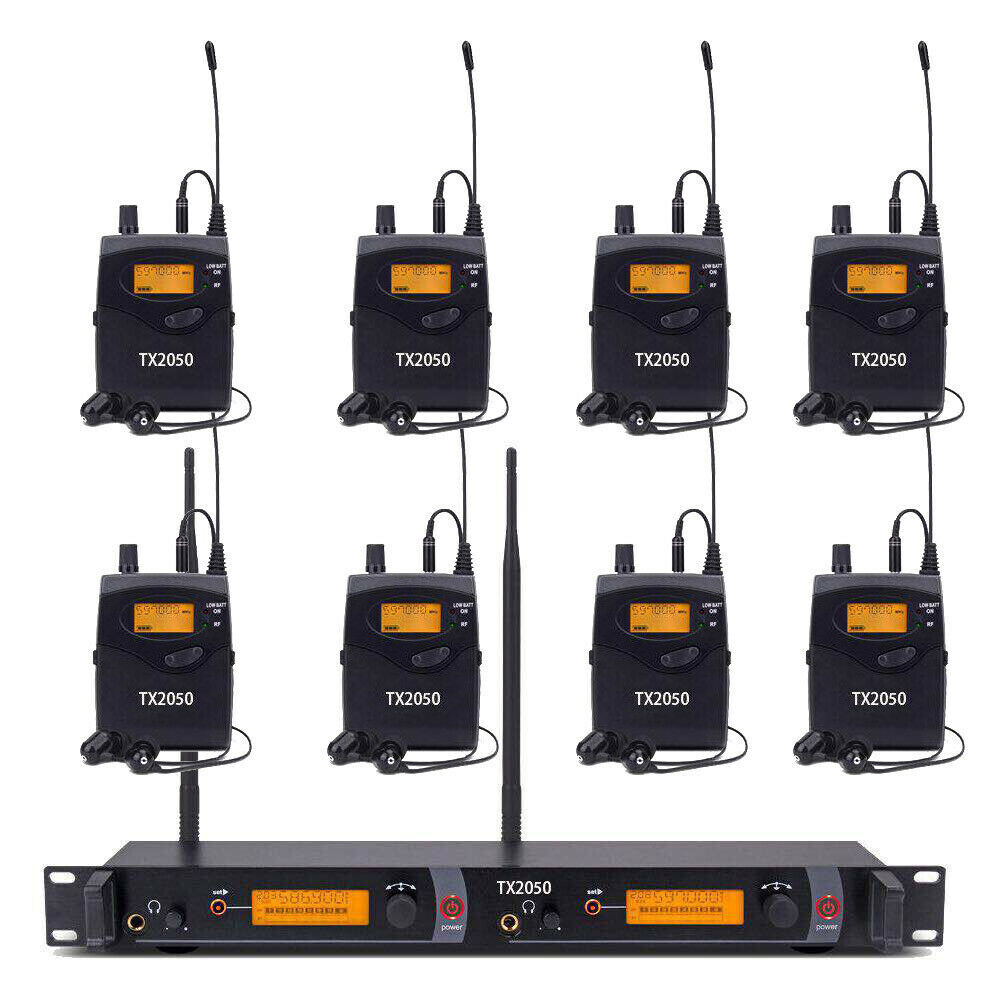

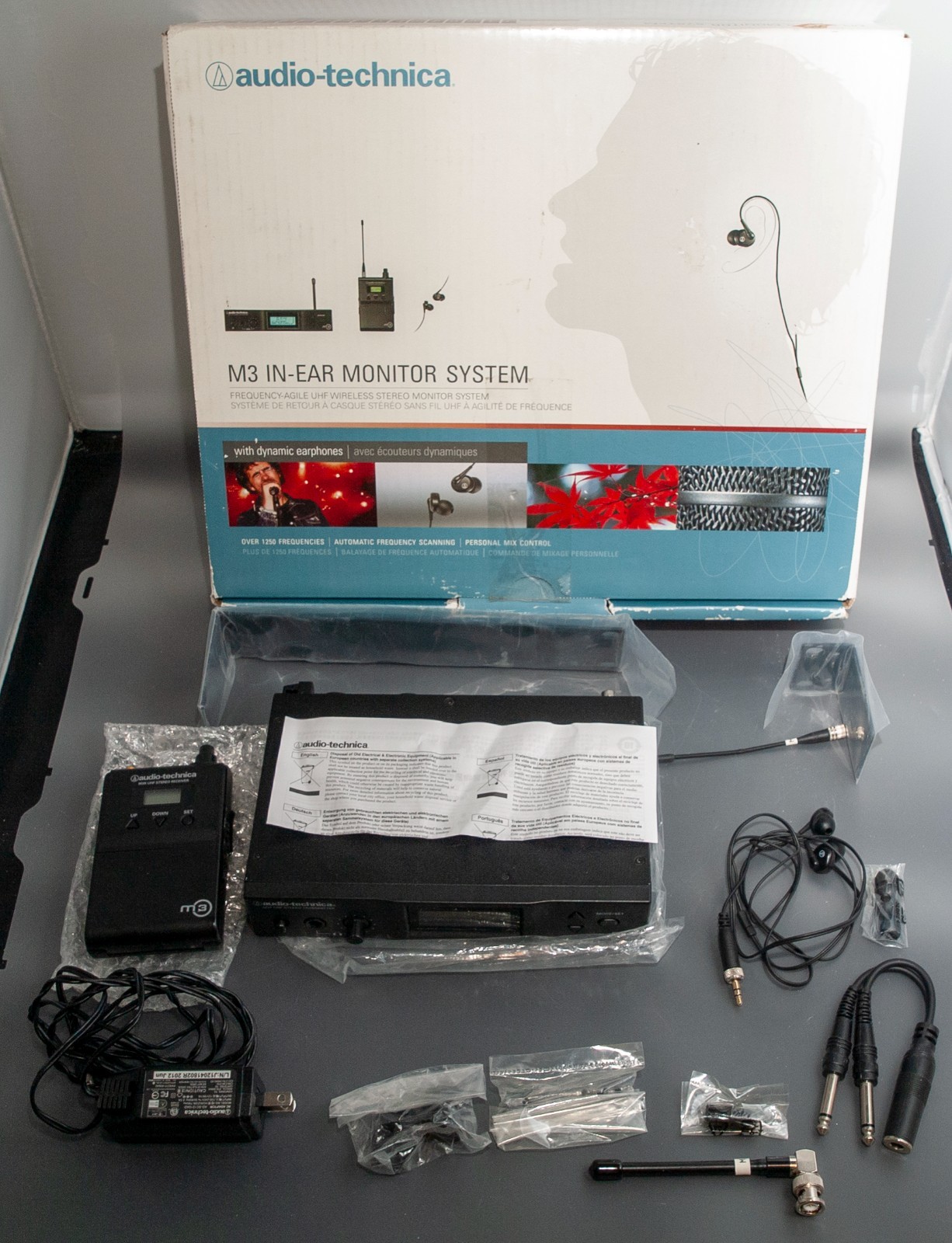
Photos from current listings. Actual item, color, and included accessories may vary.
In Ear Monitor Buying Guide
In-ear monitors (IEMs) for live sound split into wired universal-fit earphones driven by a stage mix, and wireless systems where a transmitter feeds a bodypack receiver. The primary trade-off is isolation and driver quality versus wireless channel agility and price; wired IEMs win on fidelity per dollar, wireless wins on mobility. Buy wireless only when you need untethered movement; otherwise invest in multi-driver wired IEMs and a hardwired pack.


At a glance
- Category
- Live Sound & Stage Lighting
- Data updated
- Nov 15, 2026
Current offers
Highlights
- Balanced armature drivers deliver detail and isolation; dynamic drivers deliver bass impact—hybrids combine both but cost more and need crossovers.
- UHF wireless IEM systems operate in TV-band frequencies, so legal channel choice depends on local spectrum availability and transmitter power (10–50 mW).
- Receiver bodypacks use AA or rechargeable Li-ion; AA offers swap-in reliability, Li-ion lowers running cost but adds charging logistics.
- Isolation is measured in dB of attenuation—foam tips reach 25–30 dB, silicone 15–25 dB—directly reducing stage volume and feedback risk.
Best use cases
- Choose wired universal-fit IEMs with foam tips for club bands and worship teams on a fixed stage mix; skip wireless unless performers need to roam.
- Choose a UHF wireless IEM system when the vocalist or guitarist moves across a large stage or into the crowd; skip entry single-channel kits if you need multiple independent mixes.
- Choose custom-molded IEMs only after a stable mix and isolation strategy; skip customs if you haven't settled on a consistent fit and driver preference.
- Choose a two-channel wireless system for a duo sharing one transmitter rack; skip multi-receiver systems if your mixer has only one aux send.
Buying tips
- Match receiver count to aux sends: one bodypack per independent mix; a 2-channel transmitter feeds two receivers only if both need the same mix.
- Check UHF frequency band against local TV channels before buying; a system in a crowded band may have few usable frequencies.
- For wired IEMs, prioritize detachable MMCX or 2-pin cables; fixed cables are the first failure point on stage.
- Confirm bodypack connector type (3.5 mm TRS vs 6.35 mm) and that your mixer aux output matches the transmitter input level.
Specs
| Transmission | Wired vs UHF wireless |
|---|---|
| Driver Type | Dynamic / Balanced armature / Hybrid |
| Receiver Power | AA battery vs Li-ion rechargeable |
| Isolation | 15–30 dB by ear tip type |
Related searches
What to check before buying
- Measure stage size and performer movement radius to decide wired vs wireless.
- Confirm your mixer has enough aux/monitor sends for each independent IEM mix.
- Check local UHF TV band occupancy and legal transmitter power limits.
- Verify ear tip supply and replacement availability for your chosen nozzle size.
FAQ
Data sources: eBay / Amazon listings and product attribute feeds Data updated Nov 15, 2026.
Some links on this page are affiliate links. If you buy after clicking one, we may earn a commission at no extra cost to you. This does not change which products appear here or their order. Affiliate disclosure.