
Photos from current listings. Actual item, color, and included accessories may vary.
Equalizer Buying Guide
An equalizer in instrument accessories is either a compact true-bypass EQ pedal for shaping tone on a pedalboard or a dedicated acoustic preamp/EQ DI for direct amplification. The core trade-off is analog tone-shaping flexibility versus clean, feedback-resistant acoustic amplification with balanced output. Buy the pedal tier if you need subtractive frequency control in a pedal chain; buy the preamp/EQ DI tier if you need to convert a passive pickup to a balanced stage signal.


At a glance
- Category
- Instrument Accessories
- Data updated
- Nov 16, 2026
Current offers
Highlights
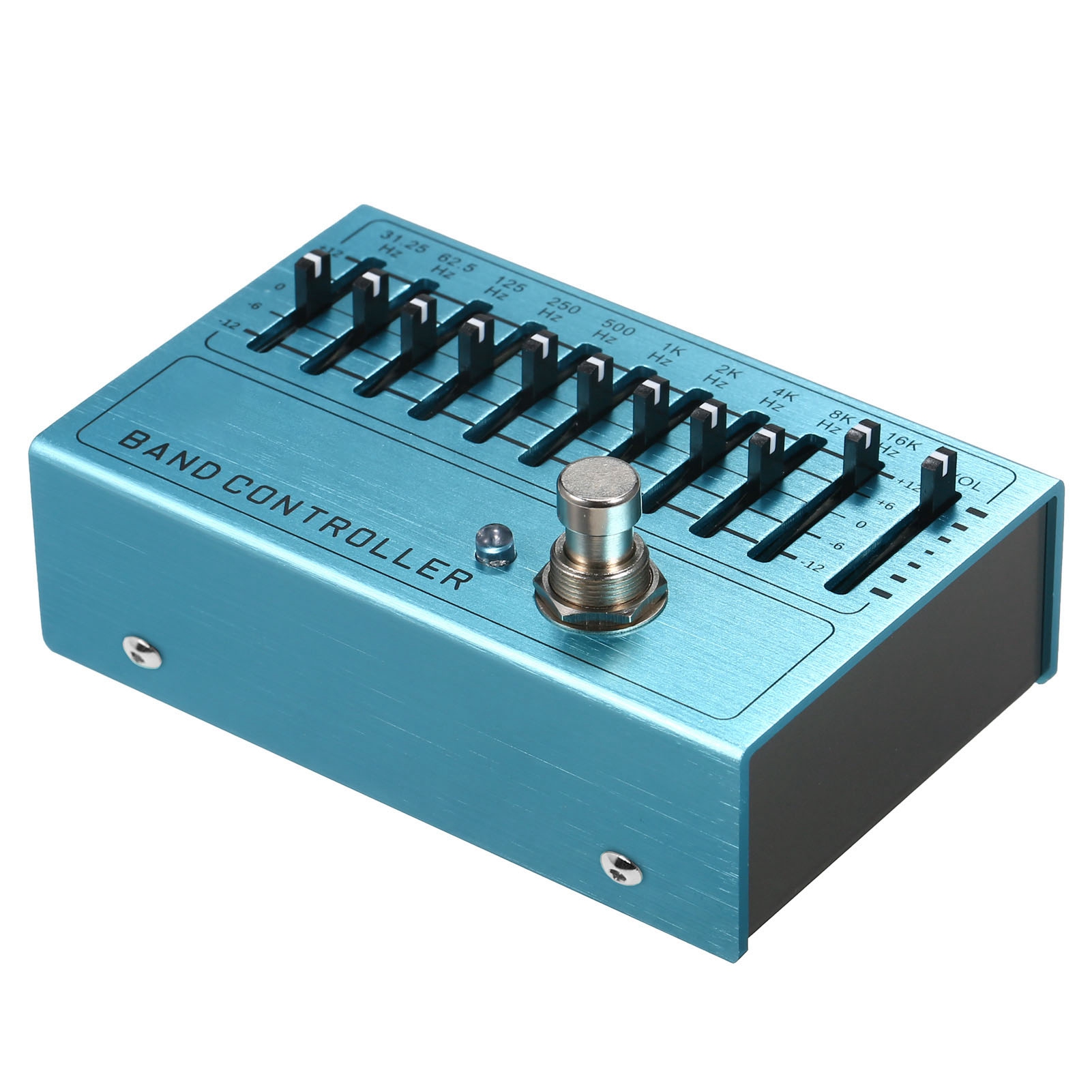
- 10-band graphic EQ pedals use octave-spaced sliders from 31.25 Hz to 16 kHz plus ±15 dB boost/cut and a master level slider.
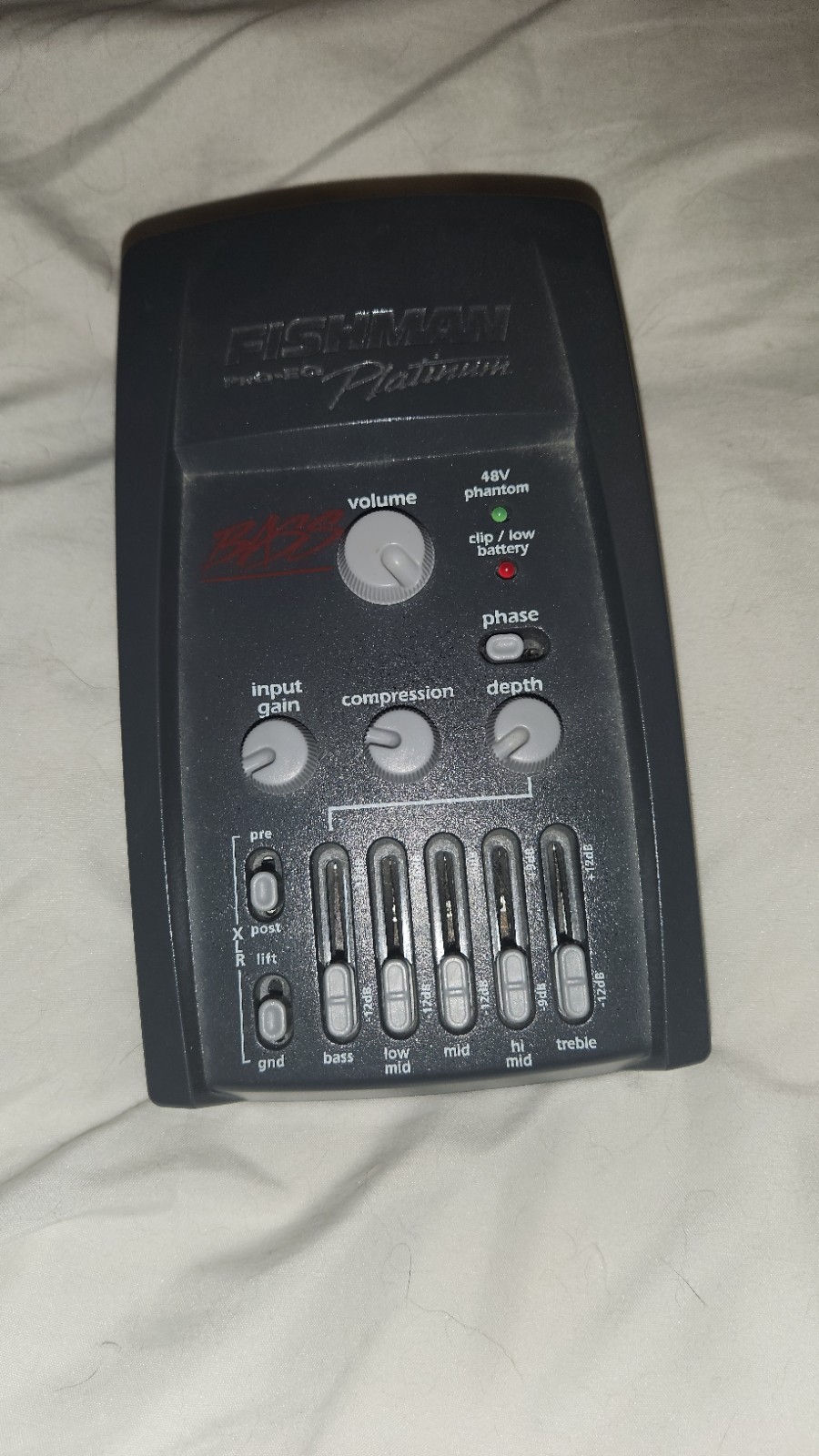
- Fishman Pro EQ Platinum BASS uses a phase switch, notch filter, and balanced XLR DI to suppress feedback and send a clean signal to the house.
- Aluminum-alloy pedal enclosures resist foot-stomp flex and shield against RF noise better than ABS plastic housings.
- True-bypass wiring removes the EQ circuit from the signal path when disengaged, preventing tone-suck on long pedal chains.
Best use cases
- Electric bass or guitar players with a pedalboard: choose a true-bypass 10-band EQ pedal to cut boomy lows and add presence without altering the base amp tone.
- Acoustic players with passive piezo pickups going direct to PA: choose a Fishman Pro EQ Platinum BASS-style preamp/EQ DI for balanced XLR output and feedback suppression.
- Home recording without an amp: skip the pedal and use a preamp/EQ DI to feed an audio interface, because a pedal's 1/4-inch output is not a balanced line-level signal.
- Players wanting broad tone shaping at the amp's input: skip the 10-band for a simple 3-band tone stack; graphic EQ is for targeted frequency repair, not general tone.
Buying tips
- Match the EQ type to signal level: 10-band pedals accept instrument-level 1/4-inch input, while preamp/EQ DIs accept pickup-level input and output balanced XLR to mixer.
- Check power draw before mounting: most analog EQ pedals run 9V DC center-negative at under 100 mA, but preamp/EQ DIs may need 9V battery or phantom-style external supply.
- Footprint matters on a crowded board: mini EQ pedals fit tight spaces but use shorter sliders with less precise travel than full-size 10-band units.
- For acoustic feedback control, prioritize a preamp/EQ DI with a phase switch and notch filter over a graphic pedal; phase inversion kills low-frequency howl that EQ cutting alone cannot.
Specs
| EQ Type | 10-band graphic pedal vs preamp/EQ DI |
|---|---|
| Bypass | True bypass vs buffered bypass |
| Enclosure | Aluminum alloy vs ABS plastic |
| Output | 1/4-inch unbalanced vs XLR balanced |
Related searches
What to check before buying
- Measure your pedalboard's free slot: a mini EQ pedal typically needs about 2.5 x 4.5 inches, while a full 10-band pedal needs roughly 4 x 6 inches.
- Confirm your instrument's output type: passive piezo pickups need a high-impedance preamp input, while active bass/guitar pickups work into a standard pedal input.
- Verify the power supply polarity and voltage: most pedals are 9V DC center-negative, but reversing polarity or using 18V can destroy the circuit.
- For DI use, confirm the mixer or interface accepts XLR input and can supply phantom power only if the preamp is designed for it; otherwise use the unit's battery or DC jack.
FAQ
Data sources: eBay / Amazon listings and product attribute feeds Data updated Nov 16, 2026.
Some links on this page are affiliate links. If you buy after clicking one, we may earn a commission at no extra cost to you. This does not change which products appear here or their order. Affiliate disclosure.