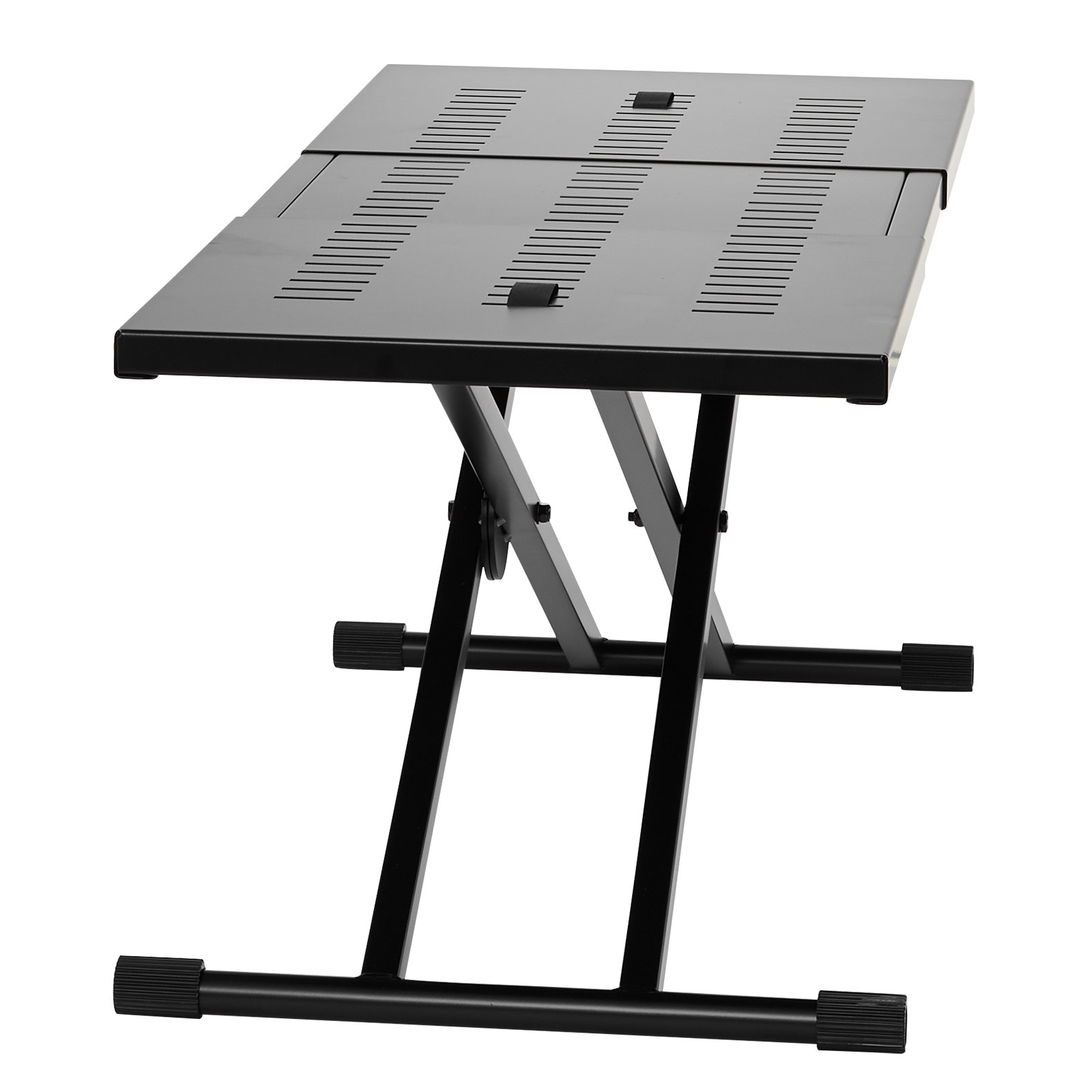

Photos from current listings. Actual item, color, and included accessories may vary.
Portable Dj Table Buying Guide
A portable DJ table is a folding, height-adjustable performance surface that must support a controller or turntables plus laptop and mixer without flex or wobble. The core trade-off is between lightweight aluminum-X or scissor frames that fold flat for transport and heavier steel or dual-brace frames that stay rigid under scratching and heavy gear. The clear rule: choose a frame rated for at least 1.5x your total gear weight with a cross-brace or double-X design; skip single-hinge, thin-tube tables that flex under lateral load.


At a glance
- Category
- DJ Equipment
- Data updated
- Nov 16, 2026
Current offers
Highlights
- Double-X or cross-braced scissor frames distribute lateral scratching force far better than single-X designs, which rock and squeak under turntable use.
- Height ranges around 32–43 inches cover seated and standing DJ positions; tables below 28 inches force hunched posture and above 45 inches reduce reach control.
- Standard 18-inch depth fits most controllers and a laptop; turntable setups need 24 inches or more depth plus a separate laptop stand.
- Aluminum frames save carry weight but flex more; steel frames and 1.2–1.5 mm tube walls resist wobble under 50+ lb loads.
Best use cases
- Best fit: mobile DJs and house-party setups needing a flat-folding double-X table with 32–43 in height adjustment and an 18 in depth for controller plus laptop.
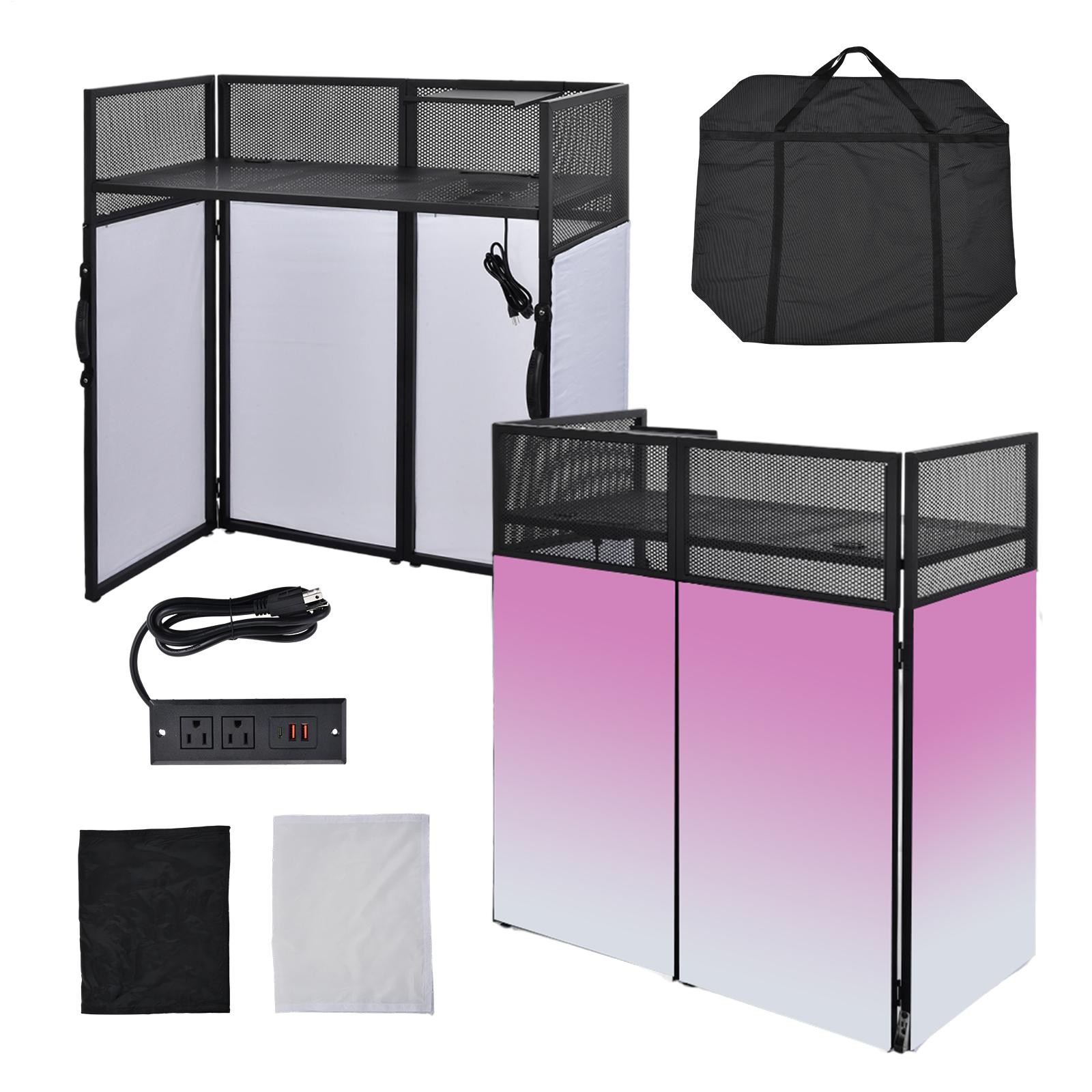
- Best fit: club or wedding DJs wanting a facade booth with black and white scrims to hide cables and present a clean front-of-house look.
- Wrong fit: turntable purists or scratch DJs should skip lightweight X-stands and choose a dual-brace steel table or solid-top booth rated for 100+ lb.
- Wrong fit: permanent studio installs should skip folding portables entirely and use a fixed desk with cable management and monitor risers.
Buying tips
- Match table load rating to gear weight: controller (10–20 lb), laptop (3–6 lb), mixer (5–15 lb), and accessories; aim for a stand rated at least 1.5x the total.
- For turntables, require at least 24 in depth and a frame with dual cross-braces; 18 in depth tables leave platters overhanging and unstable.
- Confirm height adjustment spans at least 32–43 in so the table works both seated and standing; fixed-height tables force bad ergonomics.
- Choose steel or thick-wall aluminum (1.2 mm+) over thin tubular aluminum if you play vinyl or scratch; flex shows up first as side-to-side rock.
Specs
| Frame Type | Double-X / cross-braced vs single-X |
|---|---|
| Height Range | 32–43 in adjustable; fixed below 28 in avoid |
| Tabletop Depth | 18 in controllers / 24 in+ turntables |
| Load Rating | 60–80 lb controller rigs / 100 lb+ vinyl |
Related searches
What to check before buying
- Measure your controller or turntable footprint plus laptop and mixer; tabletop width should exceed total by at least 4 in and depth by 2 in.
- Check the folded dimensions and carry weight against your vehicle trunk and typical load-in distance; aluminum frames fold flatter and lighter.
- Verify the table height range fits your standing elbow height (tabletop roughly at elbow level when standing) and seated reach.
- If using a facade booth, confirm scrim panels attach with rigid frames and that the booth footprint clears venue aisle and stage requirements.
FAQ
Data sources: eBay / Amazon listings and product attribute feeds Data updated Nov 16, 2026.
Some links on this page are affiliate links. If you buy after clicking one, we may earn a commission at no extra cost to you. This does not change which products appear here or their order. Affiliate disclosure.