Photos from current listings. Actual item, color, and included accessories may vary.
Dj Speaker Buying Guide
DJ speakers are the final link between your controller and the room, and the key trade-off is passive vs. active architecture: passive speakers need an external amplifier and careful impedance matching, while active (powered) speakers integrate amp and driver for simpler, more reliable setup. The decision rule is straightforward—buy active speakers with at least 10-inch woofers and XLR/TRS inputs for gigging, or a compact active pair for home practice; skip unbranded passive boxes with vague power ratings.


At a glance
- Category
- DJ Equipment
- Data updated
- Nov 16, 2026
Current offers
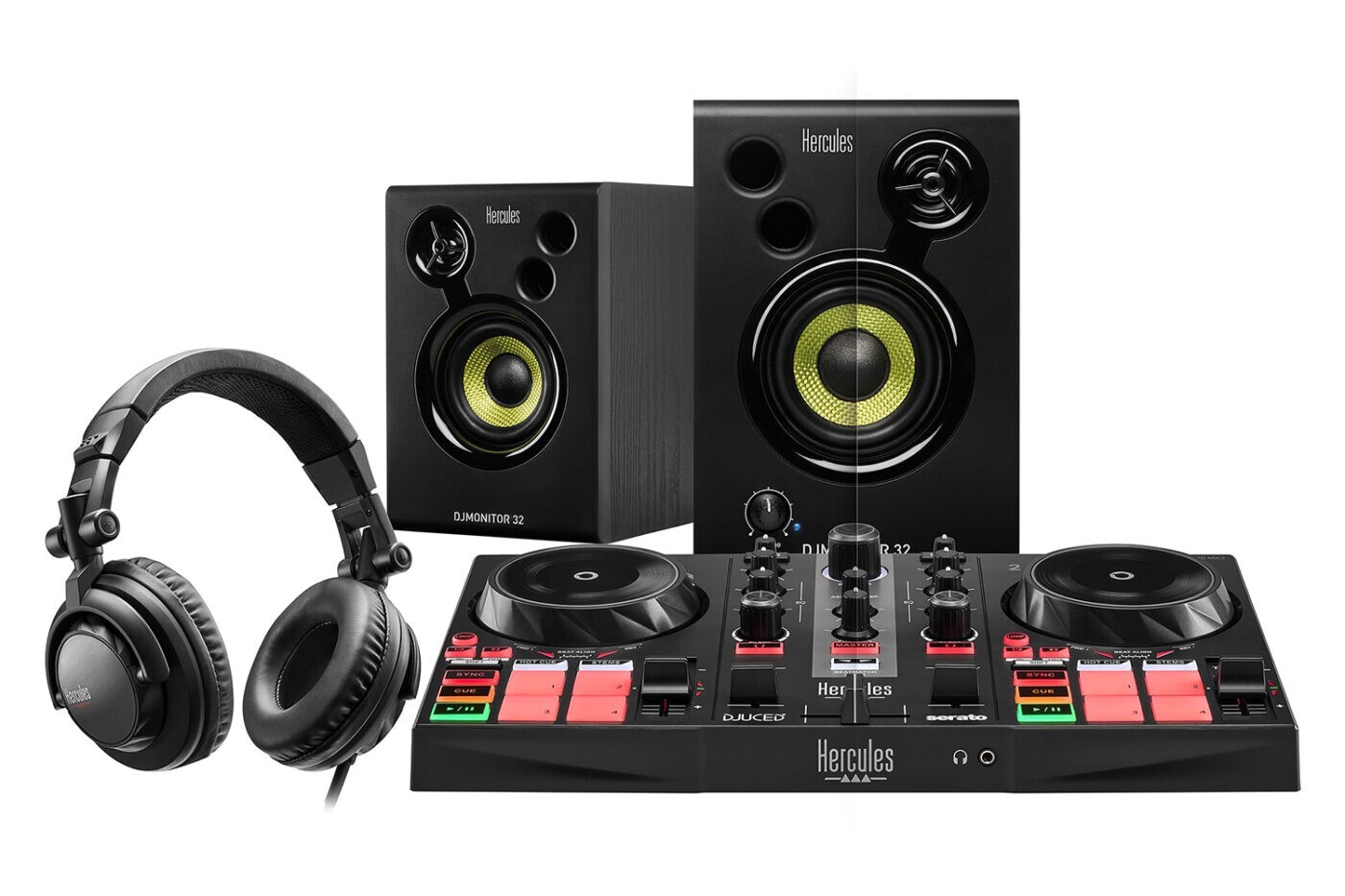 Hercules DJ Learning Kit MK2 w/ Controller, Speakers, Headphones, and Software$319.99Last checked Nov 14, 2026
 View on eBay
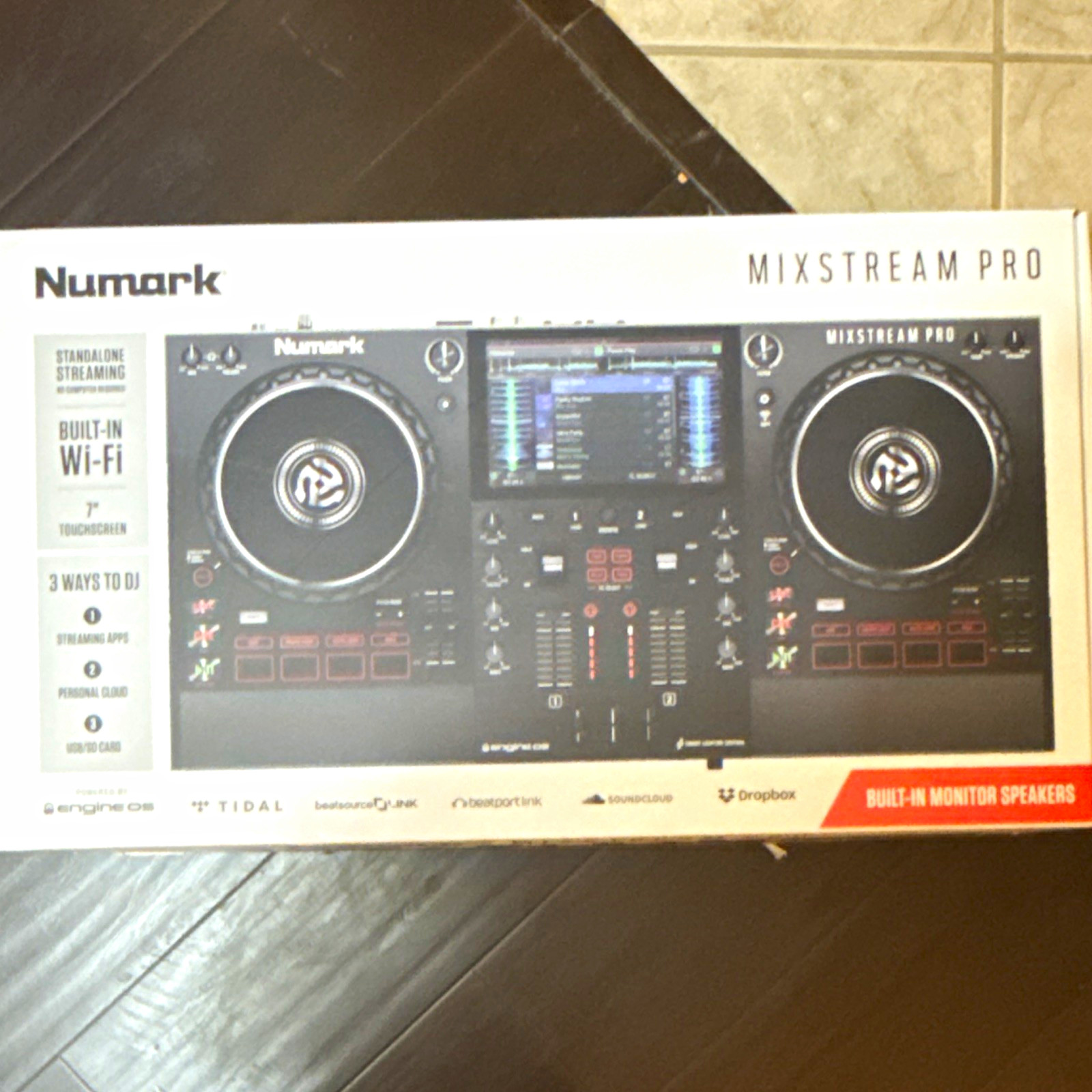 Numark Mixstream Pro 2-Deck DJ Controller w/ Wi-Fi Touchscreen Monitor Speakers$420.00View on eBay
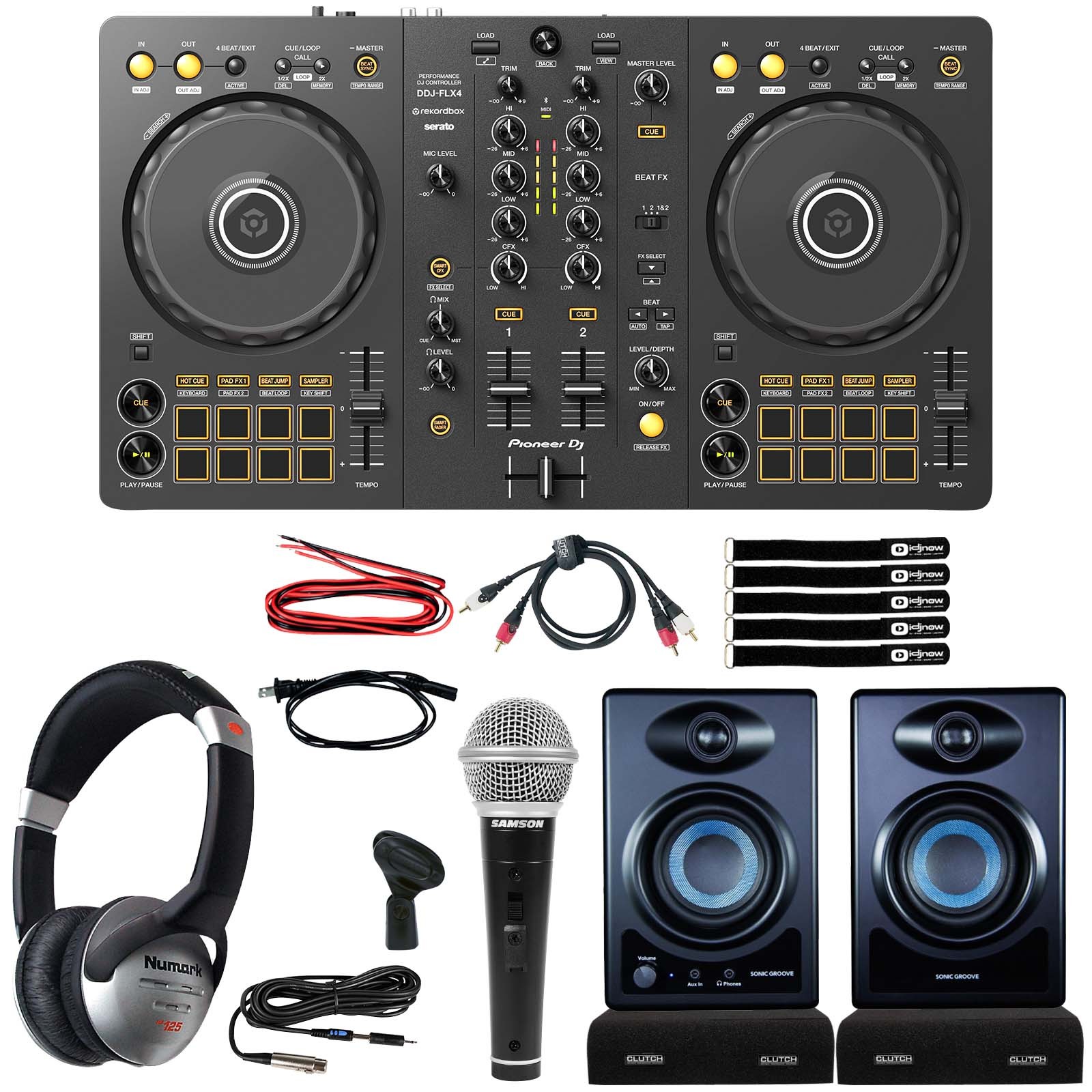 Pioneer DDJ-FLX4 2-Channel Serato Lite Rekordbox DJ Controller w Speakers & Mic$485.40Last checked Nov 14, 2026View on eBay
Highlights
- Active speakers integrate amplifier and driver, eliminating impedance-matching errors and extra cabling; passive models require an external amp rated at or above speaker RMS wattage.
- Woofer size governs low-frequency output: 10-inch drivers reach roughly 50-60 Hz, 12-inch reach 45-55 Hz, and 15-inch reach 40-50 Hz for club-grade bass.
- Connectivity tiers separate practice from gigging: RCA and 3.5mm suit controller-to-speaker home setups, while XLR/TRS balanced inputs and thru outputs are mandatory for stage chains and long cable runs.
- Power ratings are not standardized—compare continuous RMS wattage, not peak or 'max' figures, and match active speaker RMS to room size: 100-300W for small rooms, 500W+ per side for large venues.
Best use cases
- Best fit: a bedroom or apartment DJ using a DDJ-FLX4 or similar controller should pick a compact active pair with RCA/TRS inputs and 5-8 inch woofers; skip 15-inch passive boxes that need an amp and overwhelm small rooms.
- Best fit: mobile and party DJs playing 50-150 guests should choose 12-inch active speakers with XLR thru outputs and pole-mount sockets for stands; skip 5-inch monitors that lack bass output and thru chaining.
- Best fit: club or large-event rigs need 15-inch active tops plus dedicated active subwoofers crossed over below 100 Hz; skip all-in-one portable party boxes that cannot scale or chain multiple units.
- Wrong fit: buyers expecting a controller bundle's included speakers to cover a venue—bundle speakers are practice-grade only; for paid gigs, budget for separate active PA speakers.
Buying tips
- Match amplifier power to speaker RMS: for passive speakers choose an amp delivering 1.5-2x the speaker's continuous RMS wattage to avoid clipping and driver damage.
- Verify impedance before pairing: most DJ passive speakers are 8 ohms; connecting two 8-ohm speakers in parallel drops to 4 ohms and requires an amp rated for 4-ohm loads.
- For active speakers, check that inputs include XLR or 1/4-inch TRS—RCA-only inputs limit cable runs and pick up noise on stage; balanced connections are the gigging standard.
- Size the woofer to the room: 8-inch for under 30 people, 12-inch for 30-100, 15-inch for 100+ or when adding a subwoofer; smaller drivers cannot move enough air for large spaces.
Specs
| Speaker Type | Active (powered) vs Passive |
|---|---|
| Woofer Size | 5 / 8 / 10 / 12 / 15 inch |
| Inputs | XLR / TRS / RCA / 3.5mm |
| Power Rating | Continuous RMS (not peak) |
Related searches
What to check before buying
- Measure your setup space and confirm speaker placement: stands need a 35mm pole socket, and floor placement requires at least 6 inches clearance behind rear-ported cabinets.
- Confirm your controller's output type—RCA, 1/4-inch TRS, or XLR—and buy speakers or cables that match without adapters that degrade signal.
- Check voltage and plug standard for your region (120V/60Hz vs 230V/50Hz) on active speakers, especially when buying imported models.
- Plan companion parts: speaker stands, balanced XLR cables, and a power strip with surge protection; active speakers each need their own outlet.
FAQ
Data sources: eBay / Amazon listings and product attribute feeds Data updated Nov 16, 2026.
Some links on this page are affiliate links. If you buy after clicking one, we may earn a commission at no extra cost to you. This does not change which products appear here or their order. Affiliate disclosure.