Choosing among keyboards pianos starts with a basic question: do you need keys that make sounds on their own, a performance instrument centered on organ and layered sounds, a fully weighted 88-key keyboard, or a compact way to connect existing MIDI gear? The four choices here serve distinctly different roles. Their listed prices run from USD 40.00 to USD 5,699.99, so deciding on key count, action, onboard sound capability, and whether you need an interface rather than an instrument will narrow the field quickly.
Quick take
- For portable beat-making and casual playing: the Akai Professional MPK Mini Play MK3 - MIDI MK3, Standard combines a 25-key mini keybed, onboard instruments, a speaker, pads, and battery-powered operation.
- For an organ-led performance setup: the Hammond Hammond SK Pro 73-key Keyboard/Organ Essentials Bundle centers on virtual tonewheel, drawbar, transistor, and pipe-organ sounds, alongside pianos, synths, and ensemble sounds.
- For players prioritizing a full piano-style layout: the Nord Stage 4 88 Key Fully Weighted Keyboard with Triple Sensor Keybed is the clear 88-key option, with weighted graded/hammer action and three synth layers.
- For connecting MIDI equipment to mobile devices or recording gear: the iRig MIDI Interface for iPhone iPod touch iPad Pro Audio | Piano Synth Keyboard is a portable MIDI interface, not a keyboard.
Listed price comparison
| Product | Listed price | Relative price bar | What it is for |
|---|---|---|---|
| iRig MIDI Interface for iPhone iPod touch iPad Pro Audio | Piano Synth Keyboard | USD 40.00 | Portable MIDI interface | |
| Akai Professional MPK Mini Play MK3 - MIDI MK3, Standard | USD 185.39 | Compact MIDI keyboard with onboard sounds | |
| Hammond Hammond SK Pro 73-key Keyboard/Organ Essentials Bundle | USD 3,129.00 | 73-key organ-focused performance keyboard | |
| Nord Stage 4 88 Key Fully Weighted Keyboard with Triple Sensor Keybed | USD 5,699.99 | Fully weighted 88-key performance keyboard |
The listed range is unusually broad because the iRig is a connectivity accessory while the other three are playable keyboards. The lowest listed price is 99% below the highest, so it is more useful to compare by intended role than to treat this as a like-for-like price ladder.
Decision matrix
Choose by playing experience. Players who want a compact controller with pads and immediate onboard sounds should start with the Akai. Those who want the widest conventional keyboard span among these choices should focus on the Nord's 88 keys and weighted action. The Hammond occupies a different lane: its drawbars, digital Leslie, and multiple organ types point toward organ-centered performance.
Choose by setup needs. The iRig makes sense when keys and sound generation are already handled elsewhere and the priority is MIDI connection in a portable form factor. It should not be substituted for a playable keyboard. Conversely, the Akai is compact but has a 25-key layout, while the Hammond and Nord are instruments intended for much broader two-hand playing.
Choose by sound focus. Akai emphasizes 128+ onboard instruments and drum kits, plus MPC-style pads for rhythmic work. Hammond emphasizes tonewheel, drawbar, transistor, and pipe organs, with additional piano, electric piano, synth, brass, reed, string, choir, and percussion sounds. Nord combines piano-oriented sounds with a Nord Wave 2 synth engine, independent synth layers, effects, and real-time controls.
Choose with condition in mind. The Akai and Hammond are listed as new. The Nord is listed as open box, and the iRig is listed as used. That distinction matters when comparing otherwise very different types of equipment.
Concise product notes
Akai Professional MPK Mini Play MK3 - MIDI MK3, Standard
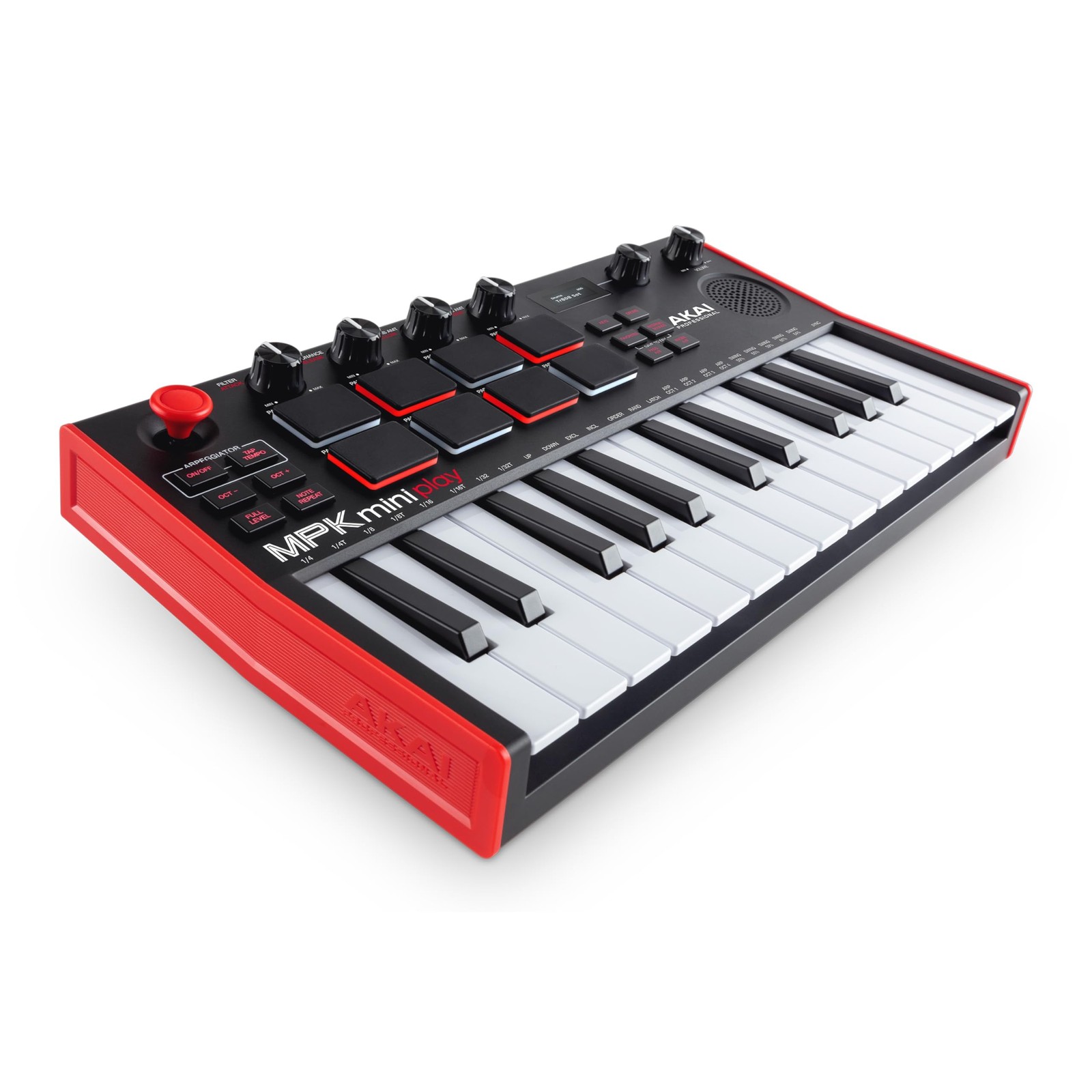
The Akai is the most direct choice for a compact music-making keyboard that can work without a full desk setup. Its battery-powered option, built-in speaker, OLED display, arpeggiator, note repeat, and eight velocity-sensitive backlit MPC drum pads give it a focused beat-making and sketching format. It also functions as a USB MIDI controller and has four assignable rotary encoders for DAW parameter control. The tradeoff is its 25-key Gen 2 mini keybed: that compact layout favors portability and short parts over full-range piano practice or expansive two-hand arrangements. Choose it when small size and creative controls matter more than a traditional keyboard span.
Hammond Hammond SK Pro 73-key Keyboard/Organ Essentials Bundle
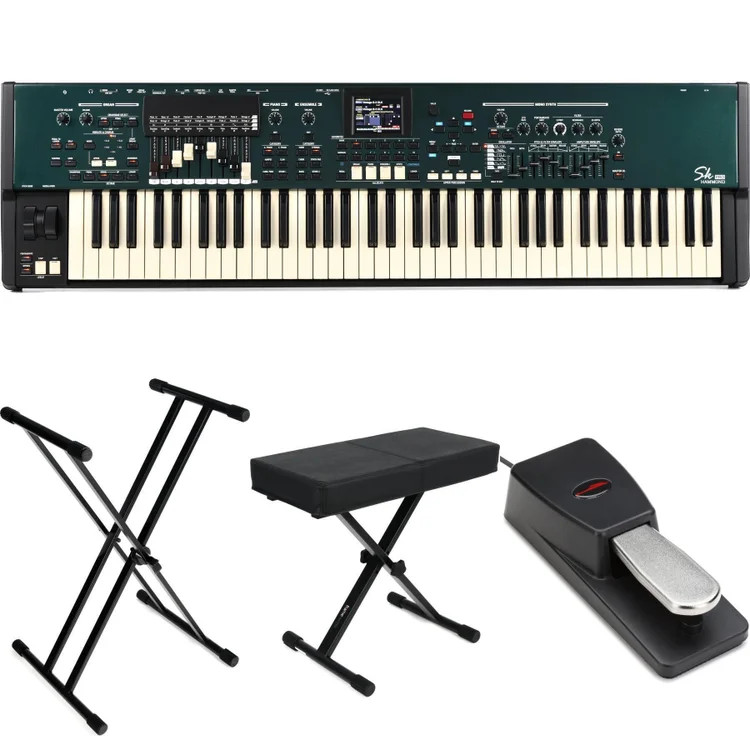
The Hammond is geared toward a player who wants organ sounds at the center of the instrument rather than as one category among many. Its four sound engines cover virtual tonewheel, drawbar, transistor, and pipe organs, while a digital Leslie supports classic organ-oriented texture. Pianos, electric pianos, synths, brass, reeds, strings, choirs, and percussion expand the palette beyond organ work. A 73-key configuration gives more room than a compact controller while remaining shorter than an 88-key keyboard. That is the key limitation for buyers whose priority is a full piano-size range. Pick the Hammond when organ controls and layered performance sounds outweigh the need for 88 keys.
Nord Stage 4 88 Key Fully Weighted Keyboard with Triple Sensor Keybed
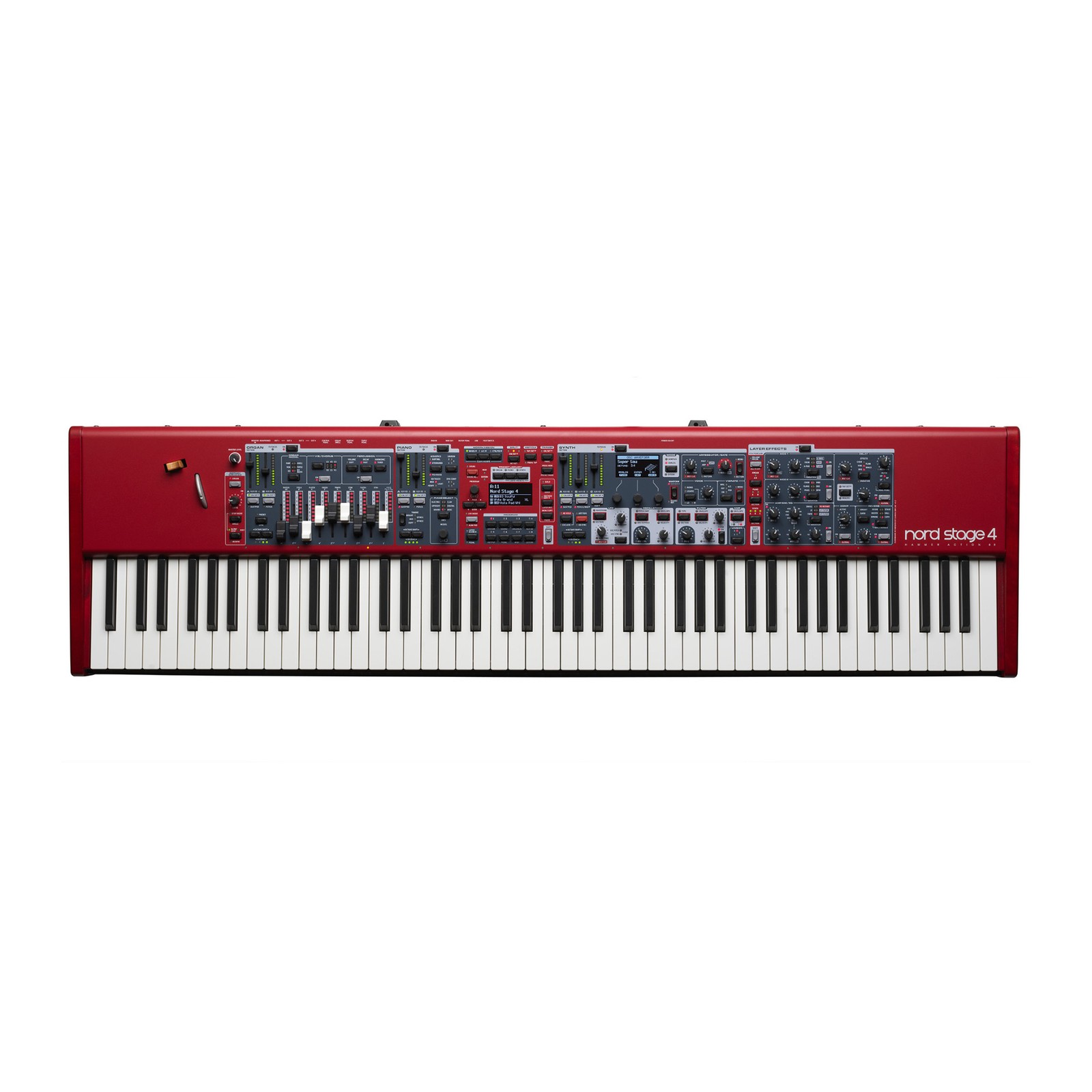
The Nord is the strongest fit here for a player who specifically wants 88 keys with graded, weighted hammer action. Its triple-sensor keybed and piano collection of uprights, grands, and electric pianos suit a piano-centered approach, while the Nord Wave 2 synth engine and three independent synth layers add substantial sound-design scope. Dynamic compression, creative timbre presets, enhanced samples, and extensive real-time controls broaden its stage-oriented toolkit. This is also the highest listed-price choice at USD 5,699.99 and is listed as open box, making it a more specialized purchase than the compact alternatives. Choose it when weighted action and an 88-key layout are non-negotiable.
iRig MIDI Interface for iPhone iPod touch iPad Pro Audio | Piano Synth Keyboard
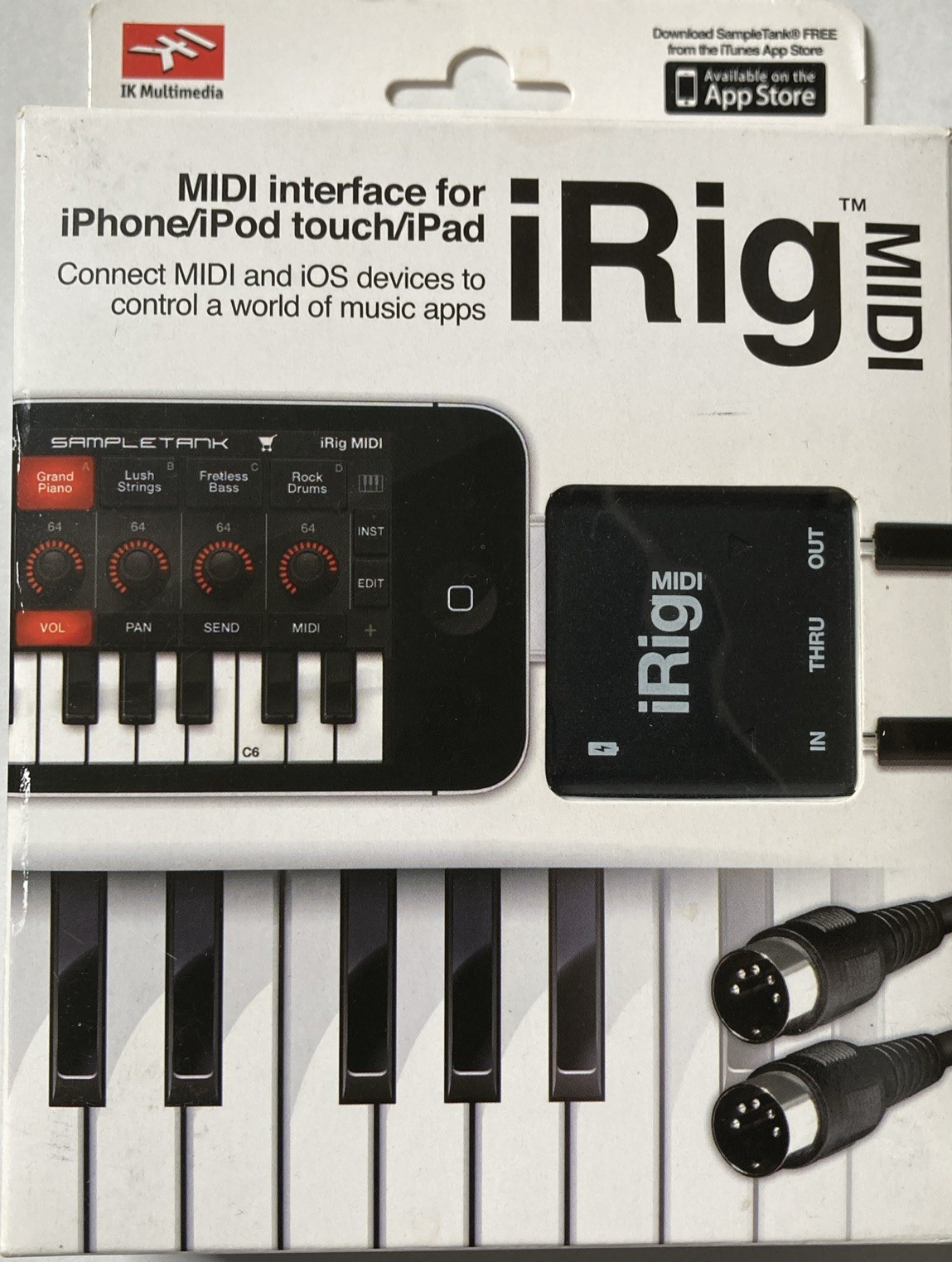
The iRig MIDI Interface is the practical choice when the task is connection rather than performance on keys. It is listed as a portable MIDI interface suitable for home recording, studio/recording, and recording and live sound, and its title identifies iPhone, iPod touch, and iPad use. Its compact form factor can suit a setup built around an existing piano, synthesizer, controller, or mobile device. The central limitation is equally important: there are no keys, onboard instruments, pads, or speaker because it is an interface rather than an electronic keyboard. At USD 40.00, it is the lowest-priced item here, but it addresses a fundamentally different need.
Final recommendation
Start with the role you cannot compromise on. Select the Akai Professional MPK Mini Play MK3 for portable 25-key playing, onboard sounds, and drum pads. Select the Hammond SK Pro 73-key when drawbar and virtual tonewheel organ capability are the priority. Select the Nord Stage 4 88 Key Fully Weighted Keyboard with Triple Sensor Keybed when a weighted 88-key action is essential. Select the iRig MIDI Interface only when your goal is adding MIDI connectivity to equipment you already use. These four choices are complementary categories of a keyboard piano setup, not interchangeable versions of the same instrument.