Choosing a keyboard piano for music creation often comes down to one question: do you need a self-contained instrument for casual playing, a controller for software, or one compact unit that can cover both roles? The Akai Professional MPK Mini Play MK3 is aimed at the third path, combining portable playability with MIDI control features.
Quick verdict
At USD 237.99, the Akai Professional MPK Mini Play MK3 is a focused choice for players who want to sketch ideas away from a desk and then connect to a DAW when they are ready to produce. Its battery-powered option, built-in speaker, onboard instrument and drum-kit sounds, and USB compatibility make it more flexible than a controller designed solely for computer-based use.
The central trade-off is the Mini format. It favors a lightweight, compact setup over the larger playing surface some piano-focused players may want. It is most compelling when portability, beat-making controls, and quick access to sounds matter more than a full-size keyboard experience.
Who it suits
Choose the MPK Mini Play MK3 if your keyboard piano needs to move easily between a small workspace, a rehearsal area, and casual practice sessions. The listed 14+ hours of battery-operated performance supports a cable-light setup, while the built-in speaker and 128+ onboard instruments and drum kits let you play without making software the starting point.
It also fits producers who use a DAW and want physical controls close at hand. The plug-and-play MIDI capability, four assignable rotary encoder knobs, arpeggiator, and eight bankable velocity-sensitive MPC drum pads create a practical layout for entering melodies, shaping parameters, and triggering drums or samples.
What stands out
Akai Professional MPK Mini Play MK3 - MIDI MK3, Standard
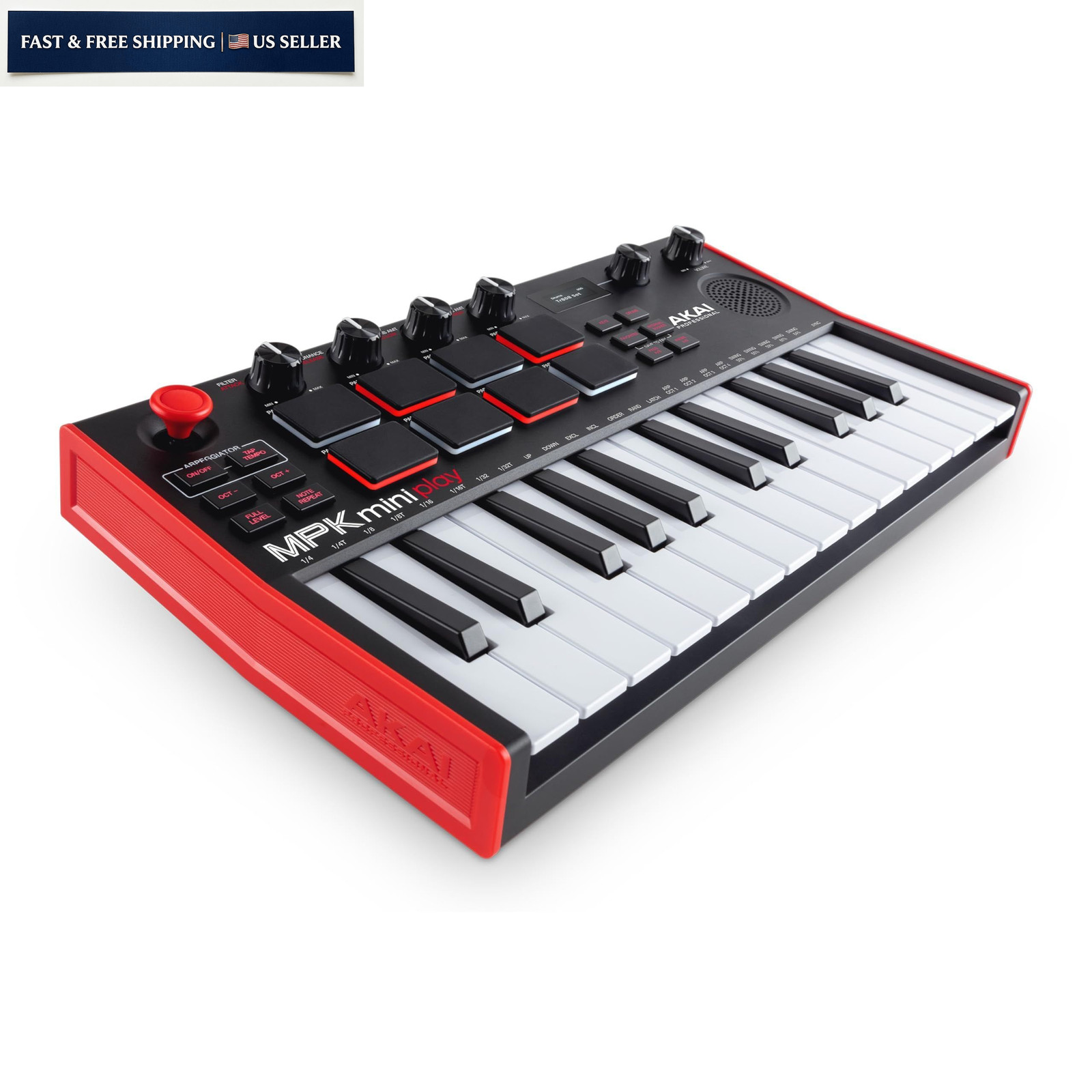
The reason to choose this model is its blend of standalone features and controller functions. You can work with onboard acoustic and electric piano sounds, synth leads, pads, and drum kits, then use the same keyboard as a MIDI controller. The eight velocity-sensitive MPC pads add a dedicated rhythmic input option rather than leaving all performance duties to the keys.
Its limitation is that its compact Mini design and four rotary encoders prioritize portability and essential hands-on control. Shoppers building a more expansive piano-style setup or wanting a broad bank of physical controls may find that focus restrictive.
Meaningful trade-offs
The built-in speaker is a defining convenience feature: it makes the MPK Mini Play MK3 suitable for immediate playback of its onboard sounds. For DAW sessions, USB MIDI connectivity and assignable controls shift the emphasis toward software-driven creation. That dual role is the product's appeal, but it also means it is not positioned as only a traditional piano keyboard or only a pad controller.
The listed price places the decision on whether those combined functions matter to your workflow. If you will use the speaker, battery-powered operation, onboard sounds, and MPC pads, the package is coherent. If your use is limited to occasional MIDI note entry at one computer, many of its portable performance features may be less central to your choice.
Bottom line
The Akai Professional MPK Mini Play MK3 is best for portable music makers who want to play onboard sounds, tap out rhythms on MPC pads, and connect to a DAW from one lightweight keyboard. Pick it for its all-in-one creative setup; pass if your priority is a larger, more piano-oriented playing format.