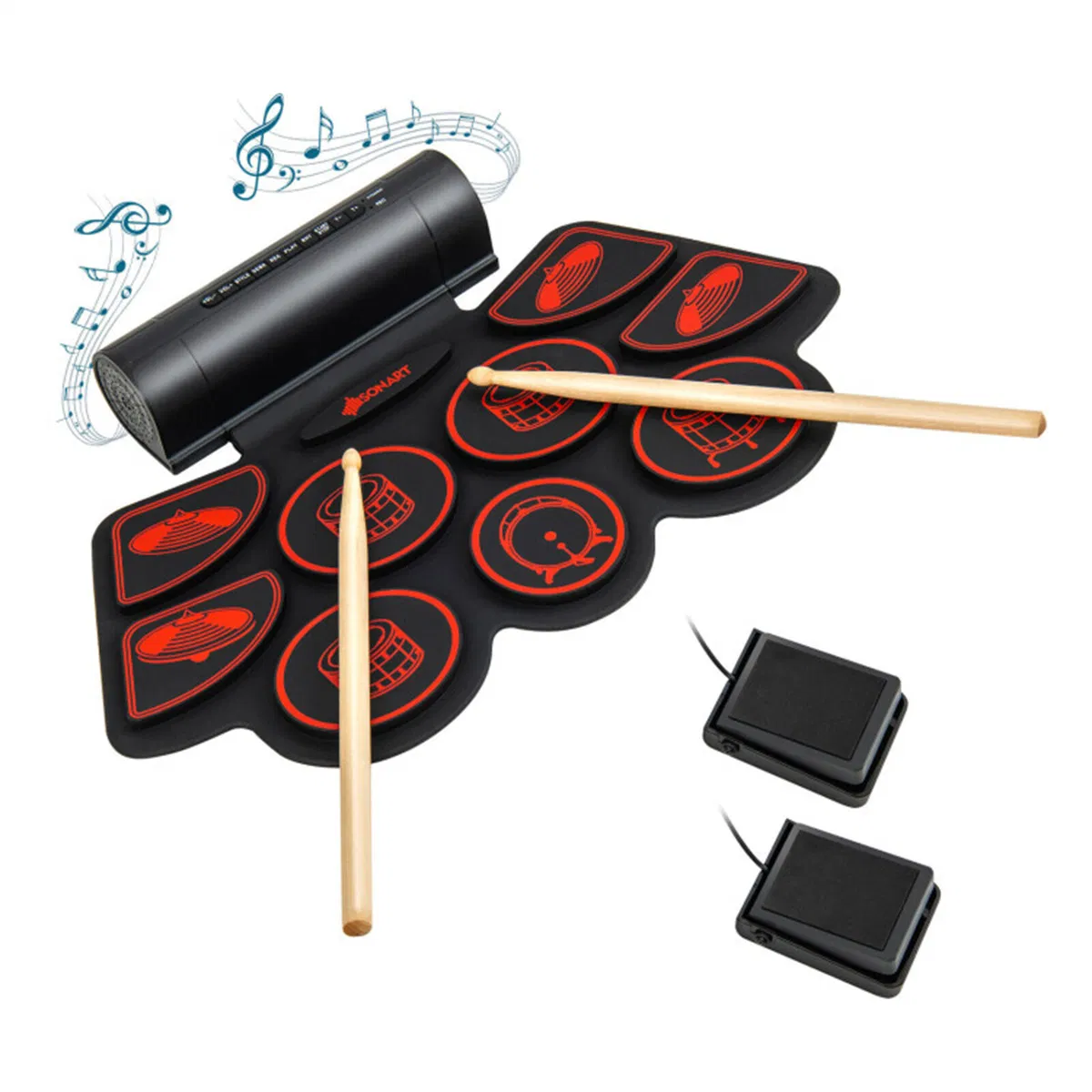

Photos from current listings. Actual item, color, and included accessories may vary.
Electric Drum Buying Guide
Electric drum kits replace acoustic shells with rubber or mesh pads and trigger sensors, trading natural room-filling tone for headphone-friendly, low-noise practice. The core trade-off is pad material and sensor architecture: rubber pads are durable but loud and stiff, while mesh heads with multi-zone triggers feel realistic and quieter at higher cost. The clear decision rule is to pick mesh pads with a standalone sound module and standard 1/4-inch or USB-MIDI output if you practice seriously; choose a compact all-in-one pad unit only for casual tabletop use.


At a glance
- Category
- Percussion
- Data updated
- Nov 16, 2026
Current offers
Highlights
- Pad surface material is the primary durability and feel determinant: rubber is cheapest and most durable but loud; mesh heads are quieter and more realistic but can wear through over years.
- Trigger zones matter: single-zone pads trigger one sound; dual-zone pads support rimshots and separate rim sounds; triple-zone ride cymbals enable bell, bow, and edge articulation.
- Sound modules fall into two tiers: entry modules with fixed preset kits and limited polyphony (often 32-64 voices) versus mid-tier modules with multi-layer samples, USB audio, and expandable kit memory.
- Pad size and layout vary widely: compact all-in-one units use 6-8 inch rubber pads and fold for storage, while full kits use 8-12 inch mesh snare and tom pads on a metal rack.
Best use cases
- Best fit for quiet apartment practice with realistic feel: choose a mesh-head kit with a metal rack, 8-inch or larger snare, and headphone output; skip rubber-pad kits if noise transfer through floors is a concern.
- Best fit for a beginner or child on a budget or limited space: a compact all-in-one 9-pad unit with built-in stereo speakers and USB-MIDI is ideal for tabletop play and computer recording; skip full-size kits that require assembly and floor space.
- Best fit for recording into a DAW: pick a kit with USB-MIDI or USB audio output and low-latency module; skip kits with only 3.5mm headphone out and no MIDI if you need to trigger virtual instruments.
- Wrong fit for live performance without a PA: built-in speakers on compact units are low-wattage and not stage-ready; choose a kit with line outputs to connect to a PA or amp.
Buying tips
- Measure your available floor space first: full kits need roughly 4x4 feet (1.2x1.2 m) for the rack and throne, while compact 9-pad units need about 2x1 feet of tabletop or stand space.
- Match pad size to your hand size and playing style: 8-inch snare and 8-10 inch toms suit adults; 6-inch pads on compact units are best for children or tight spaces.
- Check trigger output compatibility: 1/4-inch TS mono cables are standard for pads to module; USB-MIDI (class-compliant) connects directly to computers without a driver on modern OS.
- Prioritize a module with at least 32-voice polyphony and separate headphone and line outputs; modules with only 16 voices can cut off fast rolls and layered cymbal swells.
Specs
| Pad Material | Rubber vs Mesh (dual-layer) |
|---|---|
| Trigger Zones | Single vs Dual vs Triple zone |
| Module Polyphony | 32-64 voices (entry-mid) |
| Connectivity | USB-MIDI + 1/4-inch line out |
Related searches
What to check before buying
- Room and floor: measure the footprint including throne and stick clearance; mesh kits on a rack need about 4x4 ft, and upstairs rooms may need a noise-isolating mat under the kit.
- Power and plug: confirm the module's power adapter matches your local voltage (100-240V universal is common) and that the plug type fits your outlet; USB-powered compact units avoid this.
- Companion parts: budget for a drum throne, a pair of 5A or 7A sticks, and headphones with a 1/4-inch adapter; some kits omit the kick pedal and throne.
- Connectivity: verify the module has the outputs you need—1/4-inch line out for amps/PA, USB-MIDI for DAW, and a 3.5mm or 1/4-inch headphone jack for silent practice.
FAQ
Data sources: eBay / Amazon listings and product attribute feeds Data updated Nov 16, 2026.
Some links on this page are affiliate links. If you buy after clicking one, we may earn a commission at no extra cost to you. This does not change which products appear here or their order. Affiliate disclosure.