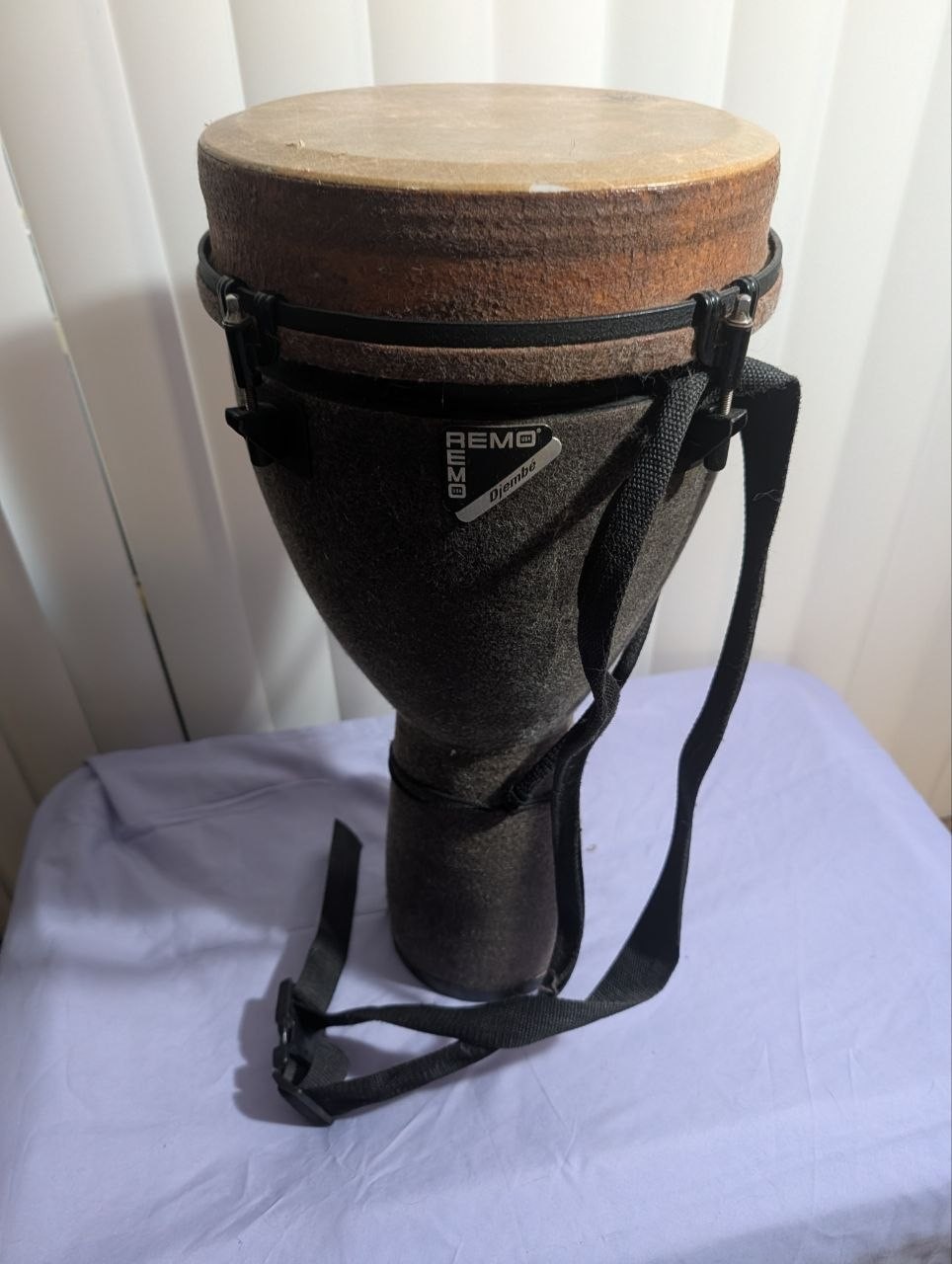

Photos from current listings. Actual item, color, and included accessories may vary.
Djembe Drum Buying Guide
A djembe is a goblet-shaped hand drum whose tone depends on shell construction, head material, and tuning system. The core trade-off is between traditional carved wood with a goat-skin head for authentic warmth and modern synthetic shells with weather-resistant heads for stable tuning and durability. Buy wood if you value classic timbre and accept seasonal tuning; buy synthetic if you need low-maintenance reliability across climates and gigging.


At a glance
- Category
- Percussion
- Data updated
- Nov 16, 2026
Current offers
Highlights
- Key-tuned (mechanical lug) systems hold pitch far longer than rope-tuned drums and allow precise, repeatable tuning with a standard drum key.
- Shell material dictates resonance: solid carved mahogany or lenke wood yields warm, complex overtones; synthetic/composite shells (e.g., Remo Mondo) resist humidity and temperature swings.
- Head choice separates durability tiers: goatskin offers traditional slap tone but is humidity-sensitive; synthetic heads (Fiberskyn, Renaissance) stay stable and are ideal for travel and outdoor use.
- Size mapping: 14-inch heads suit adults and full-volume playing; 12-inch suits smaller hands and travel; 10-inch and below are for children or quiet practice.
Best use cases
- Best fit: adult players and performers choose a 14-inch key-tuned djembe with synthetic head for reliable pitch at gigs and outdoor events—skip rope-tuned wood if you play in fluctuating humidity.
- Best fit: traditionalists and recording musicians choose a carved-wood, rope-tuned djembe with goatskin head for authentic warm tone—skip it if you need set-and-forget tuning or play in dry climates.
- Best fit: beginners and classrooms choose a 12-inch key-tuned synthetic djembe for easy tuning and durability—skip oversized 14-inch drums for young players or tight spaces.
- Wrong fit: buying a decorative or souvenir djembe for serious practice—these often lack tunable heads and proper bearing edges, producing poor tone and no pitch control.
Buying tips
- Measure player height: 14-inch djembe suits players roughly 5'6" and taller; 12-inch suits 5'0"–5'6"; 10-inch for children and seated practice.
- Choose key-tuned over rope-tuned unless you specifically want traditional aesthetics—key tuning lets you adjust head tension in minutes with a drum key, while rope tuning requires re-lacing.
- Inspect shell thickness and bearing edge: a smooth, rounded bearing edge protects the head and improves tone; thin shells under 1 inch risk cracking under tension.
- Match head to climate: synthetic heads are the safe choice for dry or humid regions and outdoor playing; goatskin needs 40–60% relative humidity to avoid cracking or sagging.
Specs
| Tuning System | Key-tuned lugs vs rope-tuned |
|---|---|
| Shell Material | Carved wood vs synthetic composite |
| Head Type | Goatskin vs synthetic (Fiberskyn) |
| Head Diameter | 10 / 12 / 14 inch standard |
Related searches
What to check before buying
- Measure your seated playing height and hand span: a 14-inch head should sit at roughly navel height when seated; a 12-inch head at lower chest.
- Confirm the drum includes a tuning key (for key-tuned models) and a protective bag—these are often sold separately and are essential for maintenance and transport.
- Check the bearing edge and shell interior for rough spots or cracks before buying; a damaged edge will tear heads and ruin tone.
- Verify the head diameter matches replacement heads available in your region (standard 10, 12, 14 inch); odd sizes make future head replacement difficult.
FAQ
Data sources: eBay / Amazon listings and product attribute feeds Data updated Nov 16, 2026.
Some links on this page are affiliate links. If you buy after clicking one, we may earn a commission at no extra cost to you. This does not change which products appear here or their order. Affiliate disclosure.