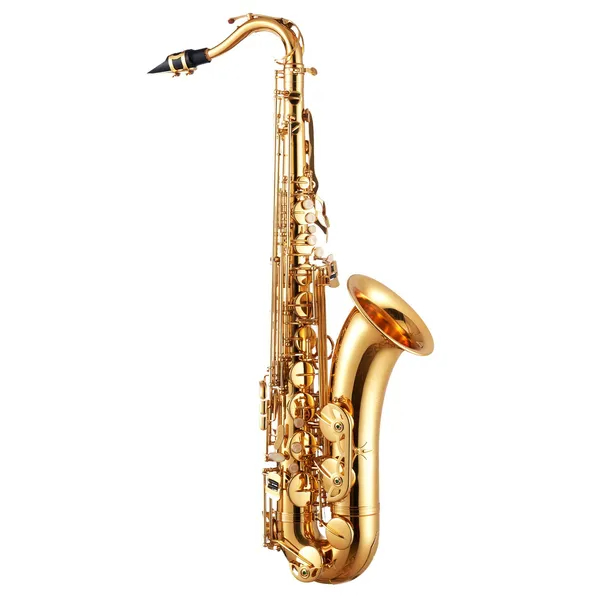

Photos from current listings. Actual item, color, and included accessories may vary.
Tenor Saxophone Buying Guide
A tenor saxophone is a B-flat transposing brass instrument with a straight neck and a curved bell, available in student, intermediate, and professional tiers that differ mainly in bore taper, key mechanism materials, and pad sealing. The core trade-off is between a durable, free-blowing student horn with robust keywork and a responsive, resonant pro horn with hand-hammered neck and premium pads. Choose a student model if you need reliability and easy resale; choose a pro model only when your embouchure and budget justify the tonal and ergonomic upgrade.


At a glance
- Category
- Brass, Woodwind & Strings
- Data updated
- Nov 16, 2026
Current offers
Highlights
- Body material: yellow brass (70/30 cupronickel keys) is standard; rose brass and phosphor bronze bells add warmth but cost more.
- Key mechanism: student horns use direct-drive or single-post keys; intermediate/pro use ribbed or double-arm key guards and stainless steel springs for speed.
- Bore and neck: larger bore (around .547 in) gives a darker, freer sound; smaller bore (.530 in) offers more focus for jazz and lead work.
- Pad type: leather pads with plastic resonators are standard; premium horns use kangaroo leather or synthetic pads with metal resonators for airtight seal and projection.
Best use cases
- Best fit: a beginner or school student needs a B-flat tenor with ribbed key guards, a reliable case, and a mouthpiece kit—pick a student-tier horn with a low-action octave mechanism and adjustable thumb rest.
- Best fit: a advancing jazz player wants a free-blowing horn with a large bore and a hand-hammered neck—choose an intermediate or pro model with premium pads and a metal resonators for projection.
- Wrong fit: a marching band player should skip a vintage or professional tenor with delicate keywork—choose a durable student or intermediate model with reinforced key guards and a hard case.
- Wrong fit: a budget buyer seeking a decorative or wall-hanging piece should skip any tenor with leaky pads or missing octave keys—only buy a playable horn with a return policy that covers setup.
Buying tips
- Match bore size to playing style: .547 in or larger for classical and concert band; .530–.540 in for jazz and commercial work where focus and edge matter.
- Check key mechanism: ribbed key guards and double-arm keys resist bending during transport; direct-drive keys are simpler but more fragile for beginners.
- Verify pad condition: leather pads should be supple with no cracks; plastic resonators should be flat and seated—worn pads cause leaks and cost more to repair than a student horn is worth.
- Confirm the case fits: a contoured hard case with neck and mouthpiece compartments protects the instrument; gig bags offer less protection and are best for local transport only.
Specs
| Key | B-flat (transposing) |
|---|---|
| Bore Size | .530–.547 in (style-dependent) |
| Body Material | Yellow brass / rose brass |
| Pad Type | Leather with resonators / synthetic |
Related searches
What to check before buying
- Measure your hand span: a tenor sax has a larger key spread than alto—if your hands are small, test an adjustable thumb rest and low-action keys before buying.
- Check the neck tenon: it should fit snugly into the body receiver with no wobble; a loose tenon causes leaks and intonation problems.
- Confirm mouthpiece compatibility: a standard tenor mouthpiece (around .070–.090 in tip opening) fits most horns; avoid off-brand mouthpieces with uneven facings.
- Verify the case dimensions against your transport space: a hard case for a tenor is roughly 33–36 in long and 12–14 in wide—measure your car trunk or locker before buying.
FAQ
Data sources: eBay / Amazon listings and product attribute feeds Data updated Nov 16, 2026.
Some links on this page are affiliate links. If you buy after clicking one, we may earn a commission at no extra cost to you. This does not change which products appear here or their order. Affiliate disclosure.