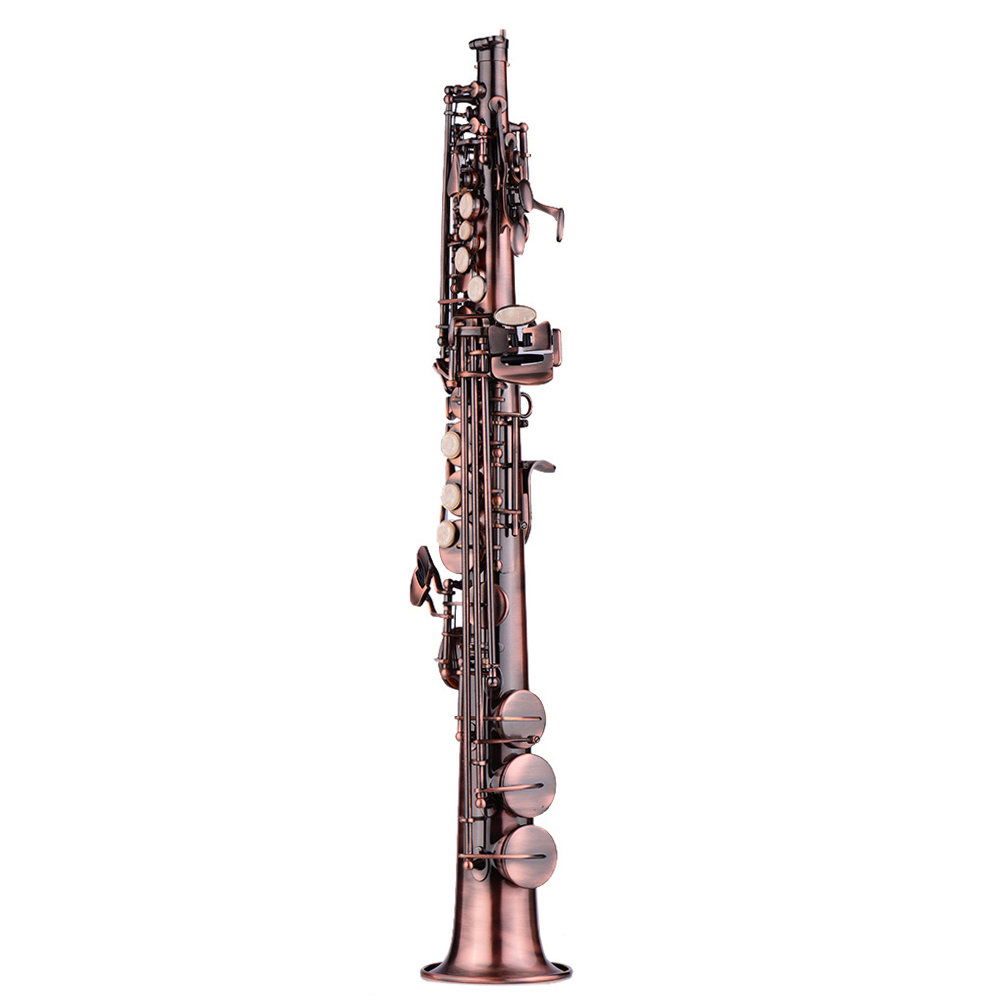

Photos from current listings. Actual item, color, and included accessories may vary.
Soprano Saxophone Buying Guide
A soprano saxophone is the highest-pitched common saxophone, pitched in Bb one octave above the tenor, and is available in straight or curved body styles. The primary trade-off is between cheap generic imports with soft brass and leak-prone pads versus reputable student or pro models with proper keywork geometry and regulated spring tension. The clear decision rule: buy a used reputable brand (Yamaha, Selmer, Yanagisawa, Jupiter) before a new no-name horn, because pad sealing, bore taper, and key alignment determine playability far more than cosmetic plating.


At a glance
- Category
- Brass, Woodwind & Strings
- Data updated
- Nov 16, 2026
Current offers
Highlights
- Straight sopranos project a focused, nasal tone and use a straight neck; curved models mimic alto ergonomics and produce a slightly warmer, more diffuse sound.
- Bb sopranos are the standard; C sopranos exist but are rare, require different mouthpieces, and are not interchangeable for ensemble work.
- Cheap imports often use soft yellow brass with thin key rods and poor pad seating, causing leaks within months; reputable brands use harder brass alloys and regulated blue-steel springs.
- Professional-tier horns feature hand-hammered or soldered tone holes and ribbed construction, while student models use drawn tone holes and post-to-body mounting.
Best use cases
- Best fit: straight Bb soprano for jazz, solo, or doubling work where a bright cutting tone and compact case are priorities.
- Best fit: curved Bb soprano for players with smaller hands or those transitioning from alto who want familiar ergonomics and a warmer tone.
- Wrong fit: a cheap generic straight soprano for a beginner in a school band—skip it and buy a used Yamaha YSS-475 or Jupiter 547 instead.
- Wrong fit: a C soprano unless you specifically play historical repertoire or already own C-pitched mouthpieces; skip it for modern ensemble work.
Buying tips
- For a first soprano, choose a used Yamaha YSS-475 or Jupiter 547GL rather than a new no-name horn; these hold adjustment and retain resale value.
- Check pad sealing with a leak light or feeler gauge; any leak above the low C keys means a repad costing a significant fraction of a cheap horn's value.
- Straight sopranos need a stable floor stand or peg; curved models balance better on a neck strap, so pick based on whether you play seated or standing.
- Mouthpiece pitch matters: soprano uses a smaller chamber than alto; a dedicated soprano mouthpiece (e.g., Selmer S80 C*) prevents intonation problems on cheap generic horns.
Specs
| Key/Pitch | Bb standard; C rare (historical) |
|---|---|
| Body Style | Straight vs curved (ergonomics/tone) |
| Construction | Ribbed soldered vs drawn tone holes |
| Spring Type | Blue-steel regulated vs soft generic |
Related searches
What to check before buying
- Measure your hand span: if you cannot comfortably reach a 4-inch key spread, choose a curved soprano with offset G and adjustable thumb rest.
- Confirm case dimensions against your carry-on or gig bag; straight sopranos are about 26 inches long and need a dedicated soprano case, not an alto bag.
- Check that the horn includes a mouthpiece, ligature, and cap; generic imports often ship with unusable mouthpieces that need immediate replacement.
- Inspect neck tenon and receiver for wobble; a loose neck joint on a used horn requires professional expansion and is a sign of wear.
FAQ
Data sources: eBay / Amazon listings and product attribute feeds Data updated Nov 16, 2026.
Some links on this page are affiliate links. If you buy after clicking one, we may earn a commission at no extra cost to you. This does not change which products appear here or their order. Affiliate disclosure.