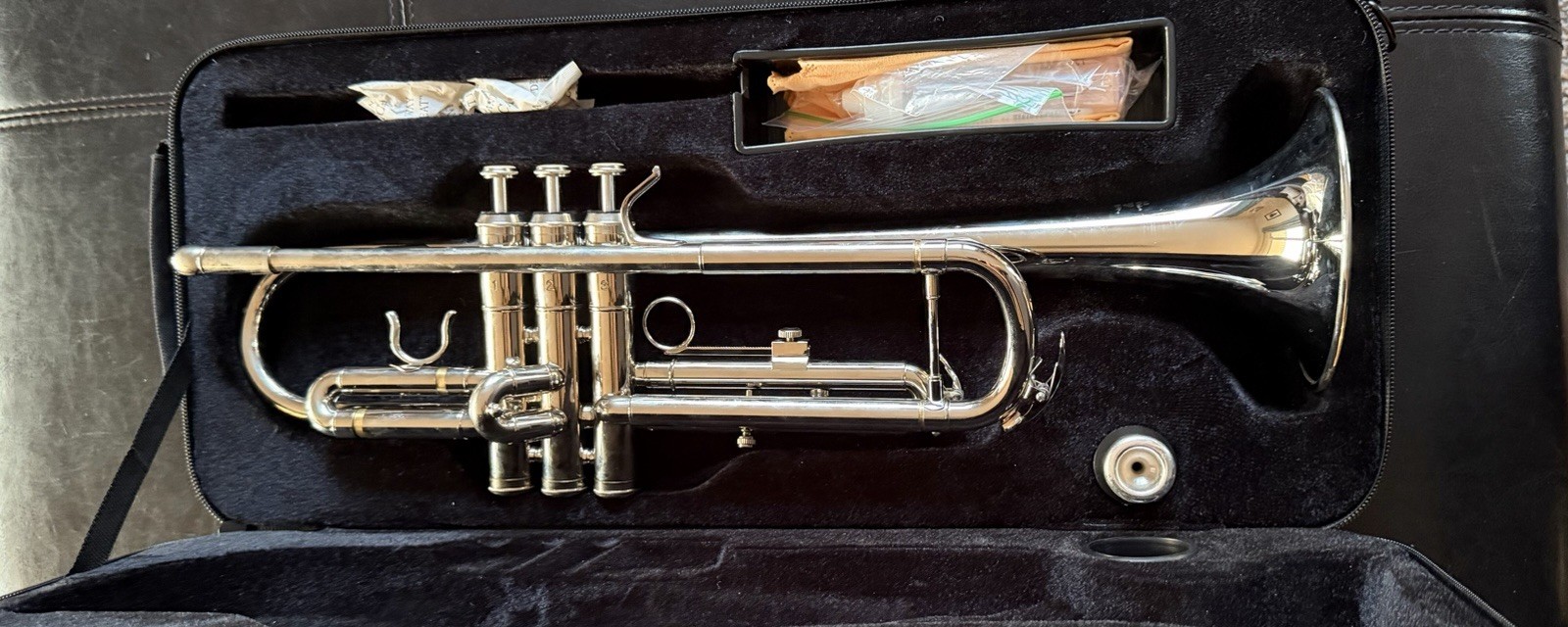

Photos from current listings. Actual item, color, and included accessories may vary.
Silver Trumpet Buying Guide
A silver trumpet is a Bb brass instrument with a silver-plated or lacquered finish, where the key trade-offs are bore size, bell material, and valve build quality. Entry-level silver trumpets typically use two-piece yellow brass bells and nickel-plated valves, while step-up models use one-piece bells, monel pistons, and heavier bracing for slotting and durability. The decision rule: buy a silver-plated Bb trumpet with a .459" bore and monel or nickel-silver valves for student use; skip ultra-cheap lacquered-over-brass imports with tinny bells and loose valve casings if you need reliable intonation and a 5+ year service life.


At a glance
- Category
- Brass, Woodwind & Strings
- Data updated
- Nov 16, 2026
Current offers
Highlights
- Silver-plated finish resists tarnish and sweat corrosion better than clear lacquer, but plating thickness and adhesion determine longevity—look for multi-layer silver plating over polished brass.
- Bore size drives resistance and tone: .459" (11.66 mm) medium-large bore is the standard for all-around Bb trumpets; .462" large bore suits orchestral players with more air support.
- Valve material separates tiers: monel pistons resist wear and corrosion better than nickel-plated brass; stainless steel is hardest but can feel heavier under fast passages.
- Bell construction matters: two-piece yellow brass bells are student-grade and prone to solder failure; one-piece bells with soldered rims project more evenly and hold intonation under load.
Best use cases
- Best fit: student or beginner needing a first Bb trumpet—choose a silver-plated model with .459" bore, monel valves, and a 4.8"-5" bell; skip large-bore or heavy-brace models that demand more air.
- Best fit: marching band or outdoor pit—pick silver plate over lacquer for sweat and weather resistance, and verify valve casings are nickel-silver for smoother action in cold conditions.
- Best fit: jazz or commercial lead playing—select a .459" or .462" bore with a slightly heavier bell for projection; skip student two-piece bells that compress at high dynamics.
- Wrong fit: orchestral principal or brass quintet—avoid .459" medium-large student horns; step up to .462" large bore with one-piece bell and adjustable finger ring for nuanced intonation.
Buying tips
- Match bore to experience: .459" medium-large is the safe default for students and all-around play; only move to .462" large bore after two or more years of consistent practice.
- Check valve material before buying: monel pistons are the durability benchmark for student horns; nickel-plated brass is acceptable but wears faster under daily marching use.
- Silver plating quality beats plating presence: multi-layer silver over polished brass resists flaking; thin cosmetic plate over raw brass tarnishes through within a season of acidic sweat.
- Bell size and taper: a 4.8"-5.0" bell with a soldered rim gives balanced resistance; bells under 4.7" on a .459" bore feel stuffy and play sharp in the upper register.
Specs
| Key & Bore | Bb / .459" medium-large standard |
|---|---|
| Valve Material | Monel vs nickel-plated brass |
| Bell Construction | One-piece vs two-piece brass |
| Finish Type | Silver-plated vs clear lacquer |
Related searches
What to check before buying
- Confirm the trumpet is keyed in Bb (the standard) and includes a mouthpiece—7C is the standard student size; a 3C or 5C suits advancing players.
- Verify the case type: hard-shell with molded interior protects valves and bell from case-bite; gig bags are lighter but offer less protection for school transport.
- Check valve oil and slide grease compatibility—most new trumpets ship dry; budget for a starter care kit with valve oil, slide grease, and a cleaning snake.
- Measure your hand span and finger reach: adjustable third-valve slide ring and pinky hook placement affect comfort; student hands may need a lighter valve spring tension.
FAQ
Data sources: eBay / Amazon listings and product attribute feeds Data updated Nov 16, 2026.
Some links on this page are affiliate links. If you buy after clicking one, we may earn a commission at no extra cost to you. This does not change which products appear here or their order. Affiliate disclosure.