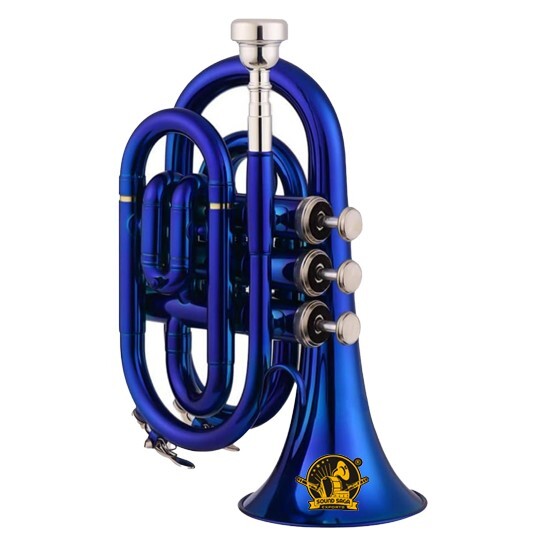

Photos from current listings. Actual item, color, and included accessories may vary.
Pocket Trumpet Buying Guide
A pocket trumpet is a compact Bb brass instrument that wraps the same tubing length as a standard trumpet into a smaller, more portable package. The primary trade-off is portability versus intonation consistency: budget models often have uneven resistance and tuning across the range, while well-built options maintain a true Bb scale despite the tighter wrap. The clear decision rule is to buy a pocket trumpet only if portability is essential and you accept some intonation compromise, and to choose a model with a standard bore size and a reputable valve block rather than the cheapest unbranded option.


At a glance
- Category
- Brass, Woodwind & Strings
- Data updated
- Nov 16, 2026
Current offers
Highlights
- Pocket trumpets use the same Bb tubing length as a standard trumpet, typically with a bore of 0.460 inches (11.66 mm) for consistent resistance and tone.
- Valve construction matters most: stainless steel or monel pistons with proper alignment provide smooth action, while cheap nickel-plated brass pistons wear quickly and leak.
- The tight wrap increases resistance and can cause intonation drift, especially in the upper register, so models with a larger bell flare and proper leadpipe taper perform better.
- Most pocket trumpets accept standard trumpet mouthpieces (small shank) and come with a case, but included mouthpieces are usually beginner-grade and should be upgraded.
Best use cases
- Best fit: traveling musicians or commuters who need a trumpet that fits in a backpack or carry-on and can accept the intonation compromise for practice and casual playing.
- Best fit: beginners or students who want a compact instrument for space-limited practice rooms, but only if paired with a teacher who can help manage intonation.
- Wrong fit: serious orchestral or jazz players who need accurate intonation and projection for performance; a standard trumpet or cornet is the correct choice.
- Skip: the cheapest unbranded models with no bore specification and nickel-plated pistons; they often have leaky valves and poor tuning that hinder progress.
Buying tips
- Choose a pocket trumpet with a bore size around 0.460 inches (11.66 mm); smaller bores feel stuffy and larger bores are rare in this format.
- Look for stainless steel or monel pistons rather than nickel-plated brass; they resist wear and maintain compression over time.
- Ensure the bell flare is at least 4.5 inches (114 mm) in diameter for better tone and projection; smaller bells sound thin and edgy.
- Confirm the instrument is keyed in Bb and accepts standard small-shank trumpet mouthpieces; avoid models with non-standard threads or fittings.
Specs
| Key | Bb (standard) |
|---|---|
| Bore Size | 0.460 in / 11.66 mm |
| Piston Material | Stainless steel vs nickel-plated brass |
| Bell Diameter | 4.5-5.0 in / 114-127 mm |
Related searches
What to check before buying
- Measure your case or bag: a typical pocket trumpet is about 9-11 inches long, so verify it fits your intended carry method.
- Check that the included case has adequate padding and a mouthpiece pouch; flimsy cases offer little protection for the valves.
- Verify the instrument includes a cleaning cloth, valve oil, and a mouthpiece; these are essential for immediate playability.
- Confirm the trumpet is in Bb and not C or Eb; Bb is standard for most players and instructional materials.
FAQ
Data sources: eBay / Amazon listings and product attribute feeds Data updated Nov 16, 2026.
Some links on this page are affiliate links. If you buy after clicking one, we may earn a commission at no extra cost to you. This does not change which products appear here or their order. Affiliate disclosure.