Choosing DJ equipment often comes down to a practical split: do you want a straightforward two-channel mixer for core mixing duties, or more channels and wireless playback options for a broader setup? The Stanton M.203 and Pyle PMXU68BT take notably different approaches, with a $19.93 listed-price spread between them.
Quick verdict
Pick the Stanton M.203 Professional 2 Channel DJ Audio Mixer when a two-channel analog layout, RCA/coaxial input connection, and 3-band equalizer are the priorities. Its listed price is USD 50.00.
Choose the Pyle Professional DJ Audio Mixer Bluetooth 6 Channel Portable Sound Mixer USB when Bluetooth, USB, portability, and six channels better match the way you plan to route audio. Its listed price is USD 69.93. Both mixers are listed as rack mountable, so that form factor does not decide the matchup.
Compact comparison
| Mixer | Listed price | Key configuration | Notable listed features |
|---|---|---|---|
| Stanton M.203 Professional 2 Channel DJ Audio Mixer | USD 50.00 | Analog, 2 channels | 3-band equalizer; RCA/coaxial input |
| Pyle Professional DJ Audio Mixer Bluetooth 6 Channel Portable Sound Mixer USB | USD 69.93 | Digital, 6 channels | Bluetooth; USB; portable design; 3 buses |
Where each mixer wins
Stanton M.203: focused analog mixing
The Stanton is the clearer fit for a DJ setup centered on two channels rather than a larger input layout. Its analog format and 3-band equalizer put the emphasis on direct channel mixing and tonal adjustment. The RCA/coaxial input connection also suits an arrangement built around analog audio sources. At the lower listed price in this comparison, it is the more direct choice when extra channels and Bluetooth are not central to the setup.
Pyle PMXU68BT: channel count and flexible playback
The Pyle is aimed at shoppers who need more routing capacity. Its six-channel configuration and three buses create a different kind of mixer choice than the Stanton's two-channel layout. Bluetooth and USB are meaningful additions for anyone who wants wireless playback and USB included in the mixer's feature set, while the portable designation supports an easier-to-move format. The tradeoff is a higher listed price and a used condition designation.
Product notes
Stanton M.203 Professional 2 Channel DJ Audio Mixer 3 Band Equalizer Tested
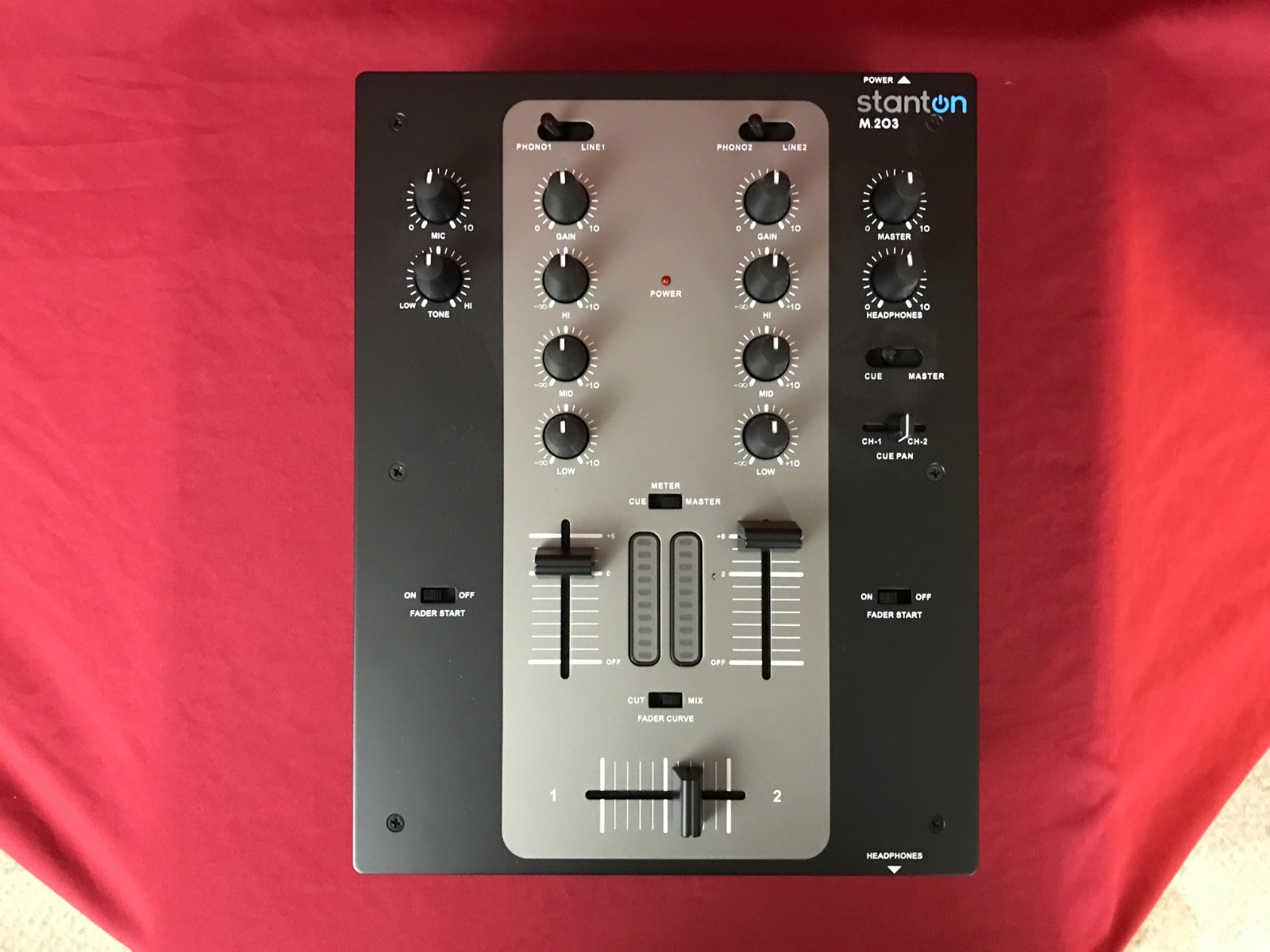
The strongest reason to select the Stanton M.203 is its intentionally focused specification: two channels, analog operation, a 3-band equalizer, and RCA/coaxial input. That combination suits DJs who want to concentrate on a conventional pair of sources and make level adjustments with dedicated EQ control. The rack-mountable form factor can also fit setups where the mixer needs to live alongside other audio gear. Its open-box condition and included original box, mixer, and power cable further define the listed package. The limitation is scale: with two channels, the M.203 does not offer the six-channel layout or three buses named for the Pyle. Choose it for a compact, analog-first mixing role rather than a wider multi-input configuration.
Pyle Professional DJ Audio Mixer Bluetooth 6 Channel Portable Sound Mixer USB
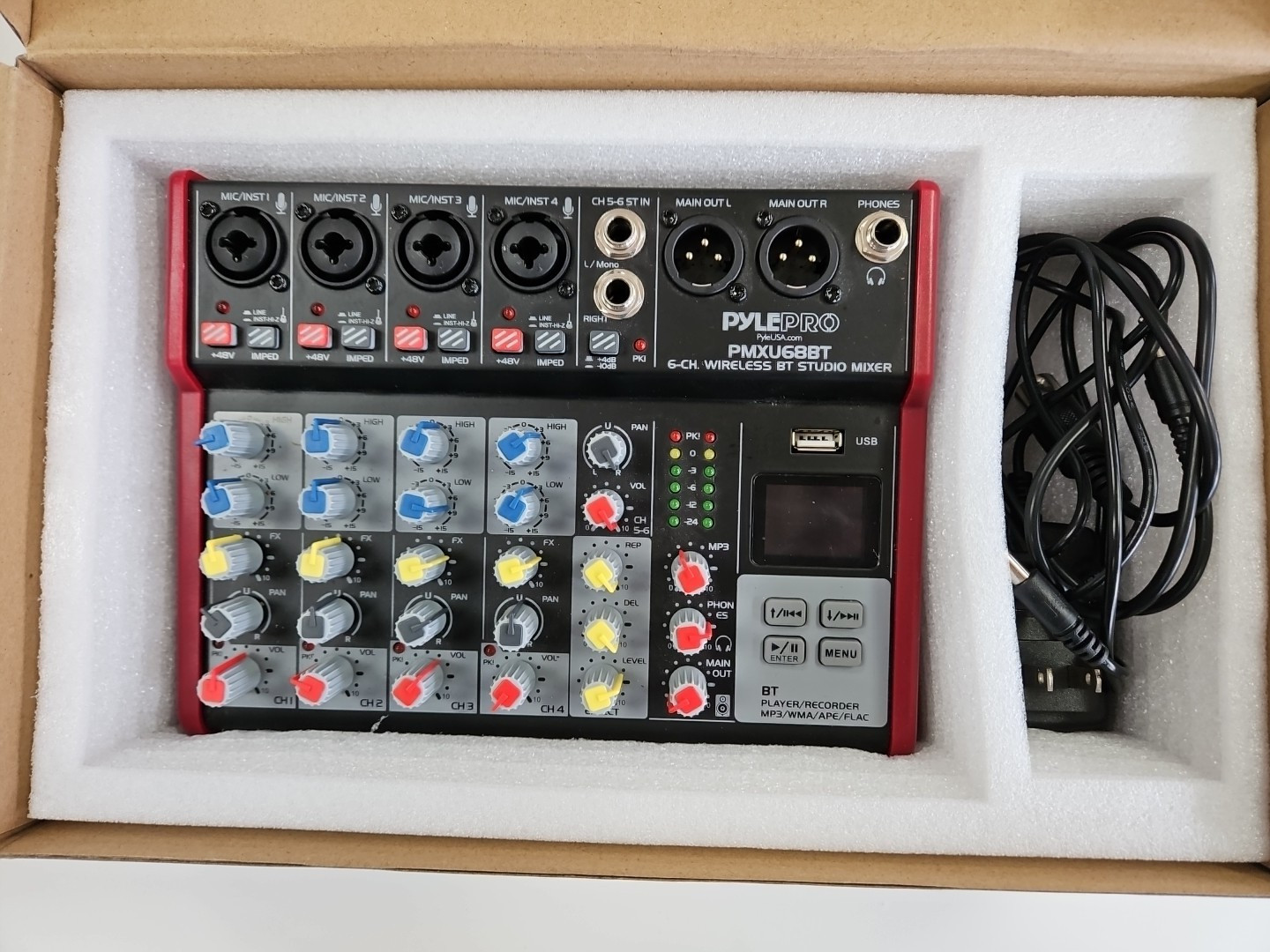
The Pyle PMXU68BT makes the better case when the mixer needs to handle more than a basic two-channel assignment. Six channels and three buses provide a larger control layout, while Bluetooth, USB, and portability broaden the playback and placement options described for this model. It is also listed as rack mountable, matching the Stanton on that point despite its portable designation. Digital operation is another defining part of its configuration. The main limitation is straightforward: at USD 69.93, it sits $19.93 above the Stanton's listed price, and its condition is used rather than open box. Select the Pyle when expanded channel capacity and Bluetooth matter more than keeping the setup centered on analog two-channel mixing.
Final choice by use case
For an analog DJ mixer with two channels and 3-band EQ, choose the Stanton M.203. For a setup that calls for six channels, three buses, Bluetooth, USB, and a portable design, choose the Pyle PMXU68BT. The decision is less about a shared rack-mountable form factor and more about whether your setup benefits from the Pyle's broader channel layout or the Stanton's simpler analog focus.