Choosing a microphone for a recording studio starts with a trade-off. Do you need a dynamic mic's resistance to loud sources, or a condenser's sensitivity to detail? If you record vocals, acoustic instruments, or podcast-style content in a treated or semi-treated room, a cardioid condenser often becomes the shortlist favorite. The PreSonus M7 MKII fits squarely in that conversation, with a wired connection, a cardioid polar pattern, and a USD 79.99 listed price.
Quick Verdict
For a first condenser mic in a home studio, the PreSonus M7 MKII is a straightforward pick. Its cardioid pattern focuses on the sound directly in front of the capsule while reducing some off-axis noise, which helps in rooms without perfect acoustic treatment. The wired design keeps things simple and stable, and the listed price puts it within reach for a first upgrade. It is not a mic that promises to fix your room or your sound source, but the listed details align well with a basic vocal and acoustic recording setup.
Who It Suits
This mic suits a vocalist or instrumentalist building a first dedicated recording chain. Because the attributes note a cardioid polar pattern, it is a reasonable match for single-source recording: one voice, one guitar amp, one acoustic guitar. The universal compatibility listed in the product details suggests it can pair with a range of interfaces and mixers, so you don't need to lock into a proprietary ecosystem. The black finish keeps it visually unobtrusive in a studio corner.
What Stands Out
The clear highlight is the polarity pattern. A cardioid condenser picks up sound mostly from the front, which can reduce room reflections and background hum compared to an omnidirectional mic. That makes it easier to get a clean take in a bedroom studio or any untreated space. The wired connectivity also means no battery anxiety and no Bluetooth pairing; you plug into your interface and go. At USD 79.99, the M7 MKII sits in a range where many new home recordists look for their first serious condenser.
Meaningful Trade-offs
A condenser mic tends to be more sensitive than a dynamic, which means it will capture subtle room noise, chair creaks, and computer fan hum. The cardioid pattern helps, but it won't eliminate those problems. If you plan to record very loud sources like drum kits or cranked guitar cabinets, a dynamic mic might be a better fit; this mic is best paired with controlled recording conditions. The listed details describe the microphone itself, so plan your own setup around keeping the recording space quiet.
Bottom Line
The PreSonus M7 MKII Cardioid Condenser Microphone is a sensible candidate for your first studio condenser. The cardioid pattern addresses the most common home-studio problem, unwanted room tone, and the listed price is approachable. For a simple, wired, black condenser that won't complicate your signal chain, this is a solid option to consider.
PreSonus M7 MKII Cardioid Condenser Microphone PRO Studio Gear
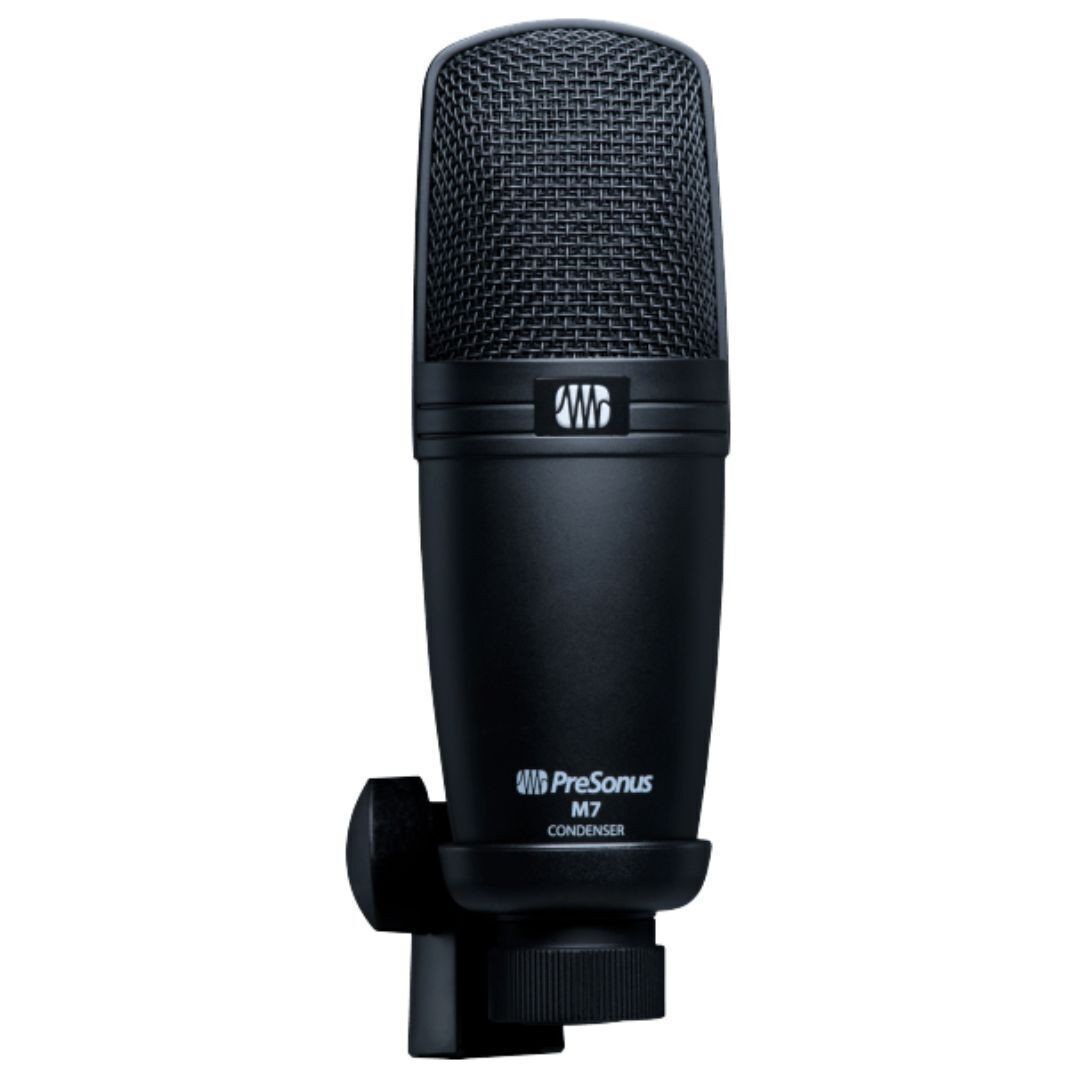
Listed at USD 79.99, this wired condenser microphone comes in black and uses a cardioid polar pattern. It is described as universally compatible, meaning it can connect to a wide range of audio interfaces. This is a dedicated single-source mic, suited to vocals or acoustic instruments. The main limitation is that condenser mics pick up room noise, so the cardioid pattern does the heavy lifting; for a clean take, pair it with a quiet room.