Choosing between these two DJ controllers comes down to whether you need gear you can use today or a project you're willing to fix. The choice is not just about price; it's about risk tolerance and how much repair you're willing to tackle.
Quick verdict
If you need a working controller without extra hassle, the AlphaTheta DDJ-GRV6 is the smarter buy. It's listed at $600 and ready for performances. The Pioneer DJ DDJ-REV7 costs $899 and is listed for parts or not working, so you're taking on a repair risk. The REV7's for-parts status means you may need to diagnose the audio issue before you can use it. The GRV6, by contrast, is designed for performances and works with software you likely already own. Unless you specifically want a Pioneer controller to troubleshoot, the AlphaTheta gives you more value for your money.
At a glance
| Product | Price | Condition | Channels | Key features |
|---|---|---|---|---|
| AlphaTheta DDJ-GRV6 | $600 | Used | 4 | Portable; works with Rekordbox or Serato DJ Pro |
| Pioneer DJ DDJ-REV7 | $899 | For parts or not working | 2 | Motorized jog wheels; built-in effects; loop/sampler |
Where each product wins
AlphaTheta DDJ-GRV6 wins if you want a functional controller with more channels. It supports Rekordbox or Serato DJ Pro, so you can mix using either software. It's also a lighter setup to transport, so it fits DJs who move between venues.
Pioneer DJ DDJ-REV7 wins if you're specifically after a scratch-style layout. The motorized jog wheels are the big draw, and the included XLR outputs give you solid connectivity. If you already have a mixer and just want a controller with a familiar scratch layout, the REV7 could serve as a repair project. But the unit's condition makes this a gamble.
Product notes
AlphaTheta DDJ-GRV6
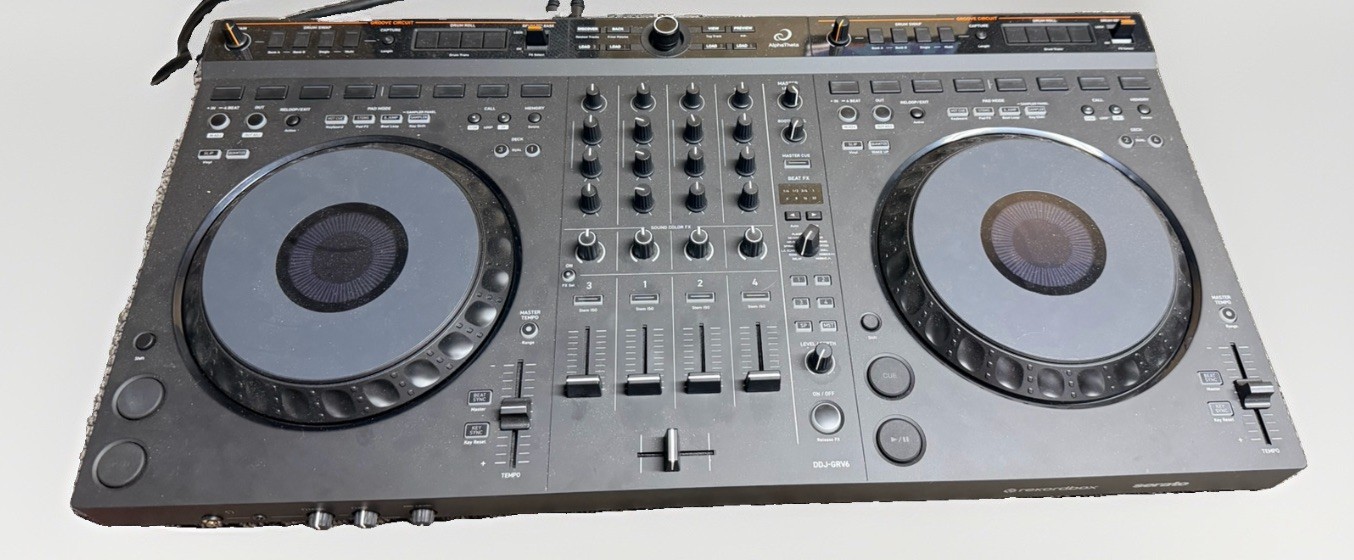
The AlphaTheta DDJ-GRV6 is a used double deck controller designed to work with both Rekordbox and Serato DJ Pro, which is a big plus if you switch between software or play on setups where either is available. It's also built with portability in mind, so hauling it to a gig or a practice space is easier than hauling a heavier rig. The black finish and double-deck layout keep the controls easy to reach, and the layout is intuitive, so you can transition from a simpler deck without a steep learning curve. The main limitation is that it's pre-owned, so you should inspect the pads, faders, and output ports before you rely on it for a performance. But for a working controller that supports two major software platforms, it's a flexible choice.
Pioneer DJ DDJ-REV7
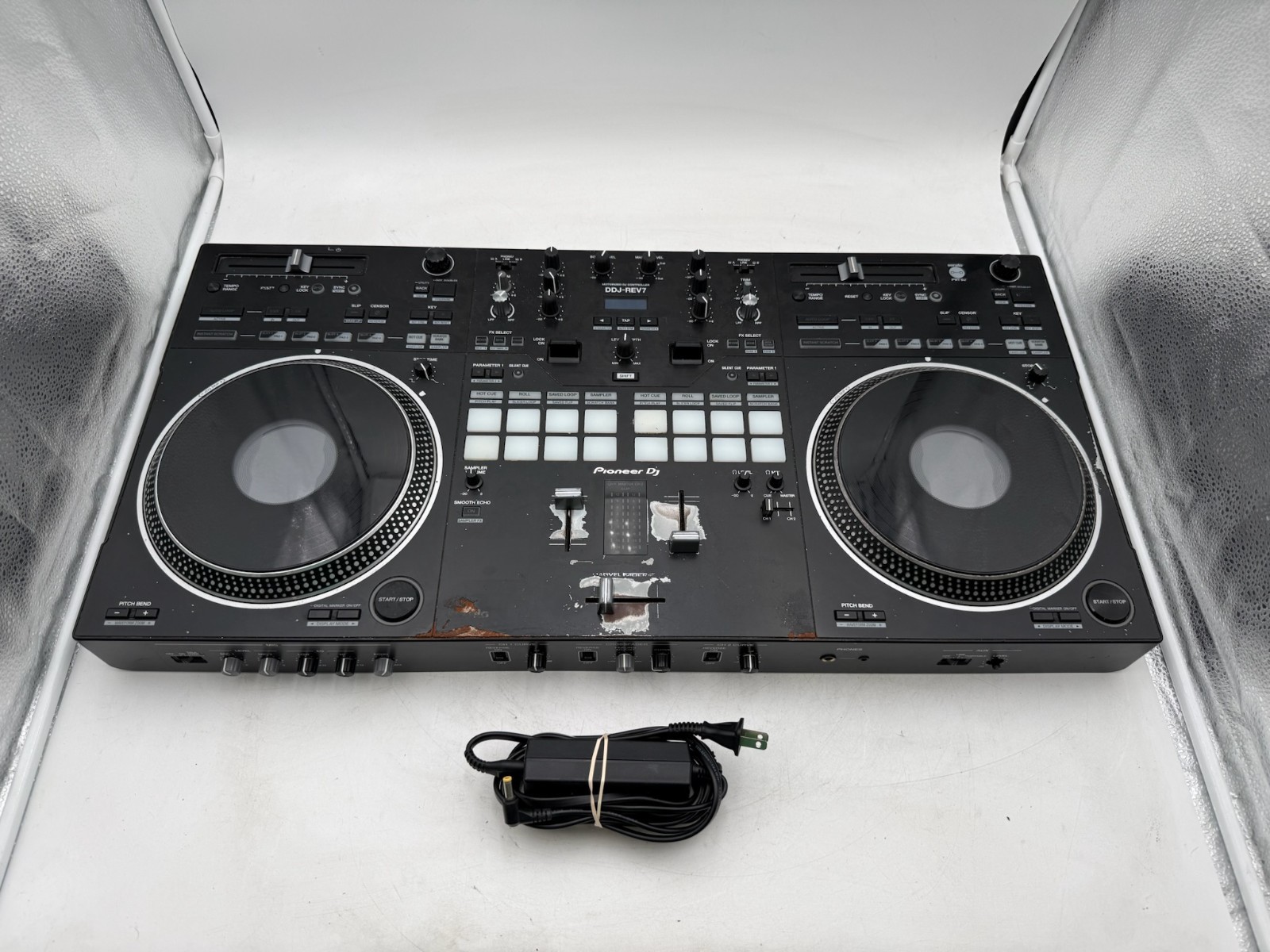
The Pioneer DJ DDJ-REV7 is a 2-channel scratch-style controller that includes built-in effects and a loop/sampler, with XLR and RCA outputs for connecting to mixers or speakers. The unit has a known issue: channel 1 produces no sound, while the tables spin and the displays function. It also comes with a power cable and no returns. That combination makes it a risk for anyone expecting a plug-and-play unit. If you're comfortable with electronics repair and you want a Pioneer scratch-style layout, the jog wheels and effects section give you a solid base to work on. For most DJs, though, the unresolved audio issue and the lack of returns make it harder to recommend over a working alternative.
Final choice by use case
If you need a dependable controller for upcoming performances, go with the AlphaTheta DDJ-GRV6. It's working and less expensive. If you're a repair-minded DJ who specifically wants a Pioneer controller and won't need returns, the DDJ-REV7 might be worth the challenge. Just be prepared for the risk. If you're just starting out, the GRV6 gives you room to grow without outgrowing the controller too quickly.