Quick verdict
Choosing among cartridges & phono preamps comes down to a practical fork: do you want the Ortofon 2M Blue or the Benz Micro MC Gold, and how much does the purchase condition matter? The listed prices are USD 190.00 and USD 350.00, a $160 spread. The useful decision is not a claimed sound-quality ranking; it is the cartridge type, the condition attached to each choice, and the specific attributes that fit your turntable plans.
The Ortofon is the more direct pick for a moving magnet brief, while the Benz is aimed at shoppers who specifically want a moving coil cartridge. Both require choosing the product identity first rather than assuming that the higher price automatically means a better result.
At a glance
| Product | Cartridge type | Listed price | Condition |
|---|---|---|---|
| Ortofon 2M Blue Moving Magnet Phono Cartridge | Moving magnet | USD 190.00 | Open box |
| Benz Micro MC Gold Moving Coil (MC) phono cartridge | Moving coil (MC) | USD 350.00 | Used |
Where each cartridge wins
Ortofon 2M Blue wins on clearly stated compatibility cues
The Ortofon 2M Blue is the better fit when the listed compatibility entries are central to your selection. They include Shure, Technics, Universal, and Ortofon, giving you concrete names to compare with your existing setup. Its description also focuses on reproducing sound close to the artist's vision and taking vinyl listening more seriously. Choose it when you want those compatibility cues and the product's stated listening goal to guide the decision.
Benz Micro MC Gold wins for a moving-coil brief
The Benz Micro MC Gold is the more relevant choice when the moving coil format itself is your priority. Its description gives specific ownership context, including about two weeks of use before upgrades involving a SOTA Saphire turntable, a Rega Incognito rewire kit and tonearm, and later a Lyra Delos MC. That history does not establish a sonic advantage, but it does make the stated used condition an important part of the purchase decision.
Product notes
Ortofon 2M Blue Moving Magnet Phono Cartridge
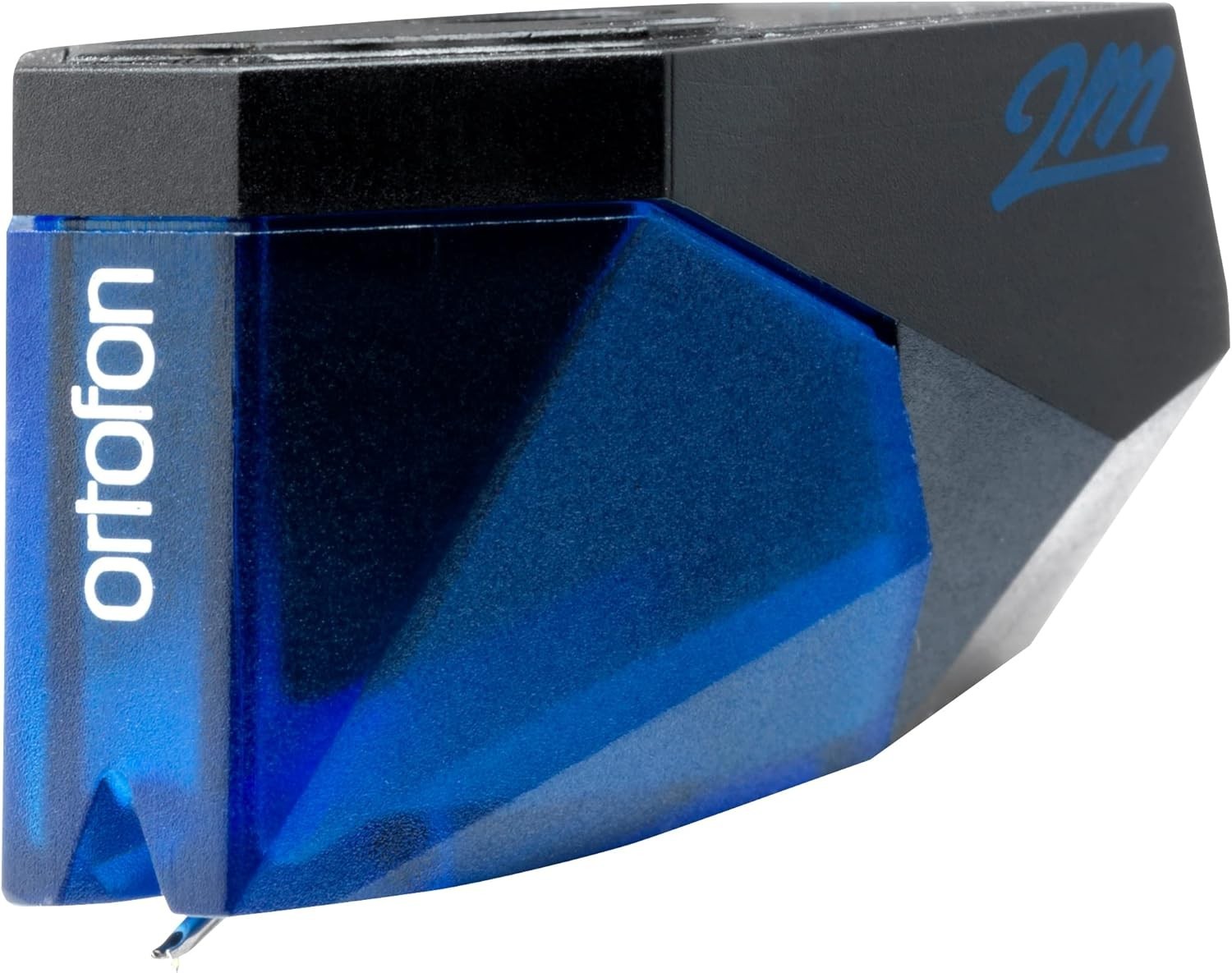
The Ortofon 2M Blue offers a plainly named route into the moving magnet category, with a blue color designation and Denmark listed as its country of origin. The description's emphasis on authenticity and serious vinyl listening makes it a natural choice for someone who wants a clearly identified Ortofon cartridge for record playback. The compatible-brand attributes-Shure, Technics, Universal, and Ortofon-add useful selection context without requiring a sound-quality assumption. Its concrete limitation is the open-box condition. That matters for shoppers who want the condition stated plainly before choosing. Select the Ortofon for its named format, color, compatibility cues, and listening-focused description.
Benz Micro MC Gold Moving Coil Cartridge
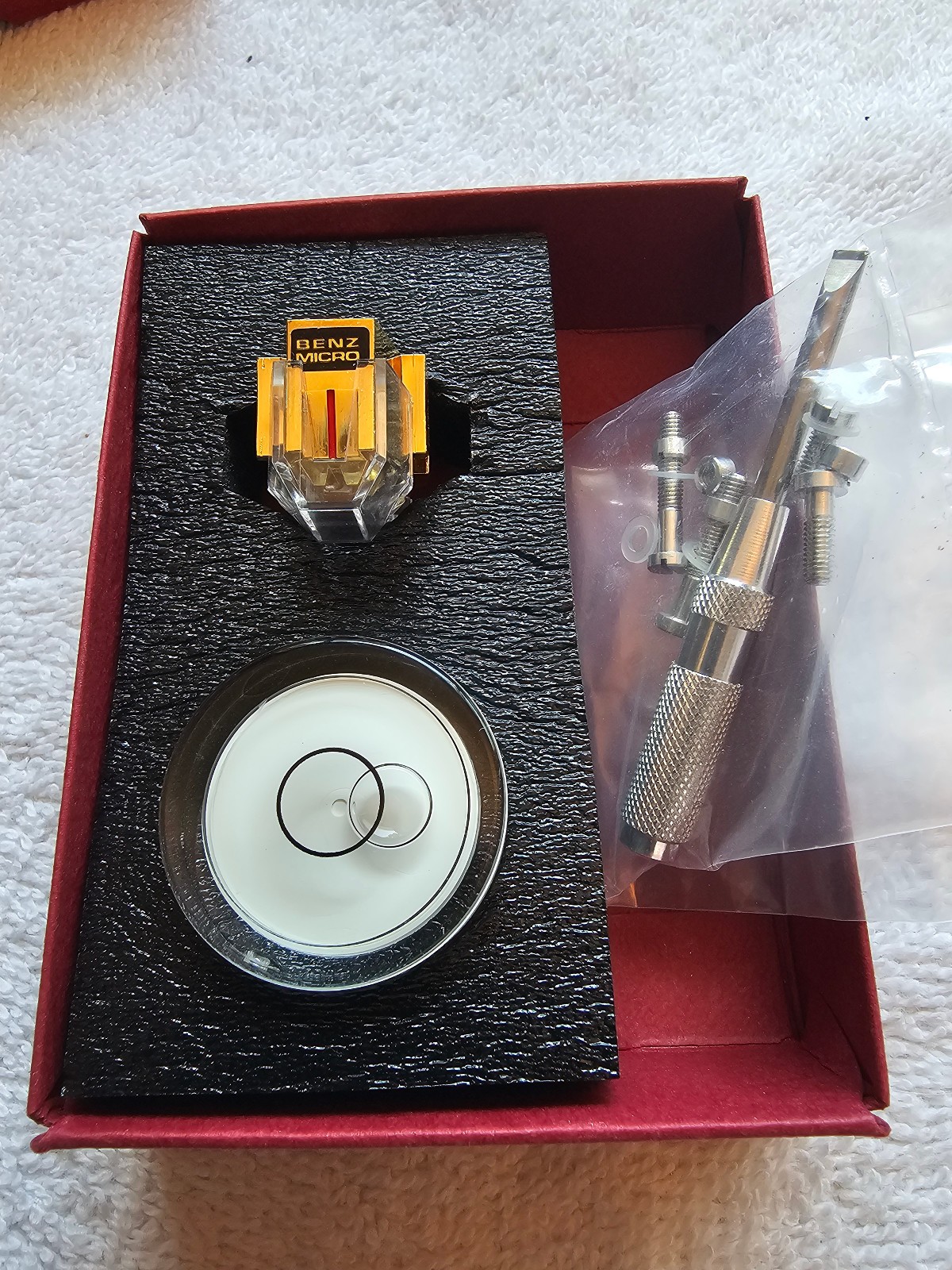
The Benz Micro MC Gold takes a different route, with the title explicitly identifying a moving coil cartridge. Its description says it was used for about two weeks and later set aside after upgrades to a SOTA Saphire turntable, including a Rega Incognito rewire kit and tonearm, followed by an upgrade to a Lyra Delos MC. Those details give the purchase a specific prior-use context, but they do not prove a particular sonic result. The limitation is equally concrete: it is described as used. That makes it less suitable for a shopper who places the condition label ahead of the moving-coil format. Choose it when MC is the deciding requirement and the described prior use is acceptable.
Final choice by use case
- For a moving magnet cartridge: Choose the Ortofon 2M Blue. Its title states the format, and its compatibility attributes name Shure, Technics, Universal, and Ortofon.
- For a moving coil cartridge: Choose the Benz Micro MC Gold. The MC designation is explicit in the title, and the description provides a clear account of its prior use.
- For a condition-led decision: Compare the Ortofon's open-box status with the Benz's used status, then choose the format that matches your turntable plan.
The simplest answer is to start with cartridge type, use the concrete compatibility cues where they apply, and treat the $160 difference as a separate price decision rather than proof that one design is inherently superior.