Choosing a guitar or bass control pot comes down to the tonal direction you want from the wiring: retain a more open, bright response or bleed more high frequencies to ground for a warmer result. The Musiclily Pro A1Meg and Musiclily Pro A250K share the same listed price and core physical format, so resistance value-not cost-is the meaningful choice.
Quick verdict
Pick the Musiclily Pro A1Meg Brass Inch Split Shaft Pot Audio Taper For USA Guitar Bass when the stated goal is an even brighter tone than a 500K control, particularly with humbuckers or hot pickups. Pick the Musiclily Pro A250K Brass Inch Split Shaft Pot Audio Taper For USA Guitar Bass when the guitar uses single-coil pickups and you want the warmer character associated with its 250K resistance.
Both are listed at USD 10.73, leaving a USD 0.00 price spread. Each is an audio-taper, full-brass pot with a fine 24-spline split shaft, a 6 mm shaft diameter, and a 9.5 mm threaded diameter and height.
At-a-glance comparison
| Detail | Musiclily Pro A1Meg | Musiclily Pro A250K |
|---|---|---|
| Listed price | USD 10.73 | USD 10.73 |
| Resistance | 1Meg, ±20% tolerance | 250K, ±20% tolerance |
| Tonal direction described | Even brighter than 500K | Warmer than 500K |
| Pickup pairing described | Humbuckers or hot pickups | Usually used for single-coil pickups |
| Construction and taper | Full brass, audio taper | Full brass, audio taper |
| Shaft format | Fine 24-spline split shaft, 6 mm diameter | Fine 24-spline split shaft, 6 mm diameter |
Where each pot wins
Choose A1Meg for a brighter humbucker or hot-pickup direction
The A1Meg is the clear fit when brightness is the objective. Its 1Meg resistance is described as giving an even brighter tone than 500K, and the product specifically calls out humbuckers and hot pickups. That makes it the more direct choice for a build whose pickup arrangement is already in that category and whose player wants the control selection aligned with a brighter result.
Choose A250K for warmer single-coil-oriented wiring
The A250K takes the opposite tonal route. Its description says it is usually used for single-coil pickups and bleeds some high frequencies to ground, yielding a warmer tone than 500K. For a single-coil guitar or bass circuit where that warmer direction is the priority, 250K is the more closely matched option.
Product notes
Musiclily Pro A1Meg Brass Inch Split Shaft Pot Audio Taper For USA Guitar Bass
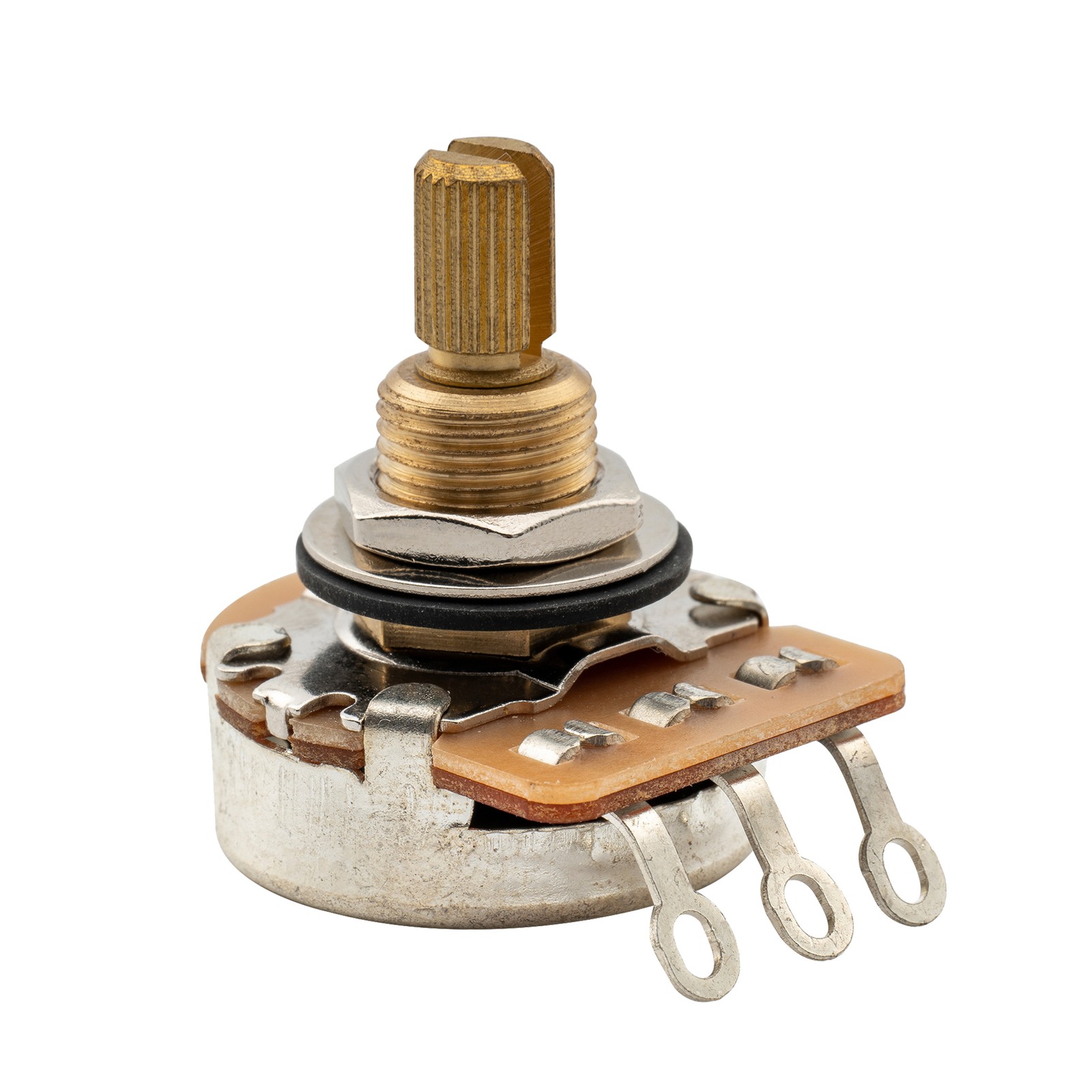
Choose the A1Meg when a 1Meg audio-taper control suits humbuckers or hot pickups and a brighter-than-500K tonal direction is desired. It uses a full-brass construction and a fine 24-spline split shaft with a 6 mm diameter, while the threaded section is listed at 9.5 mm in diameter and height. Mounting accessories are included with the one-piece potentiometer package. Its limitation is inherent to its focus: the stated tonal aim is brighter, so it is not the listed choice for players seeking the warmer, high-frequency-reducing behavior described for the A250K. At USD 10.73, it costs the same as the 250K alternative.
Musiclily Pro A250K Brass Inch Split Shaft Pot Audio Taper For USA Guitar Bass
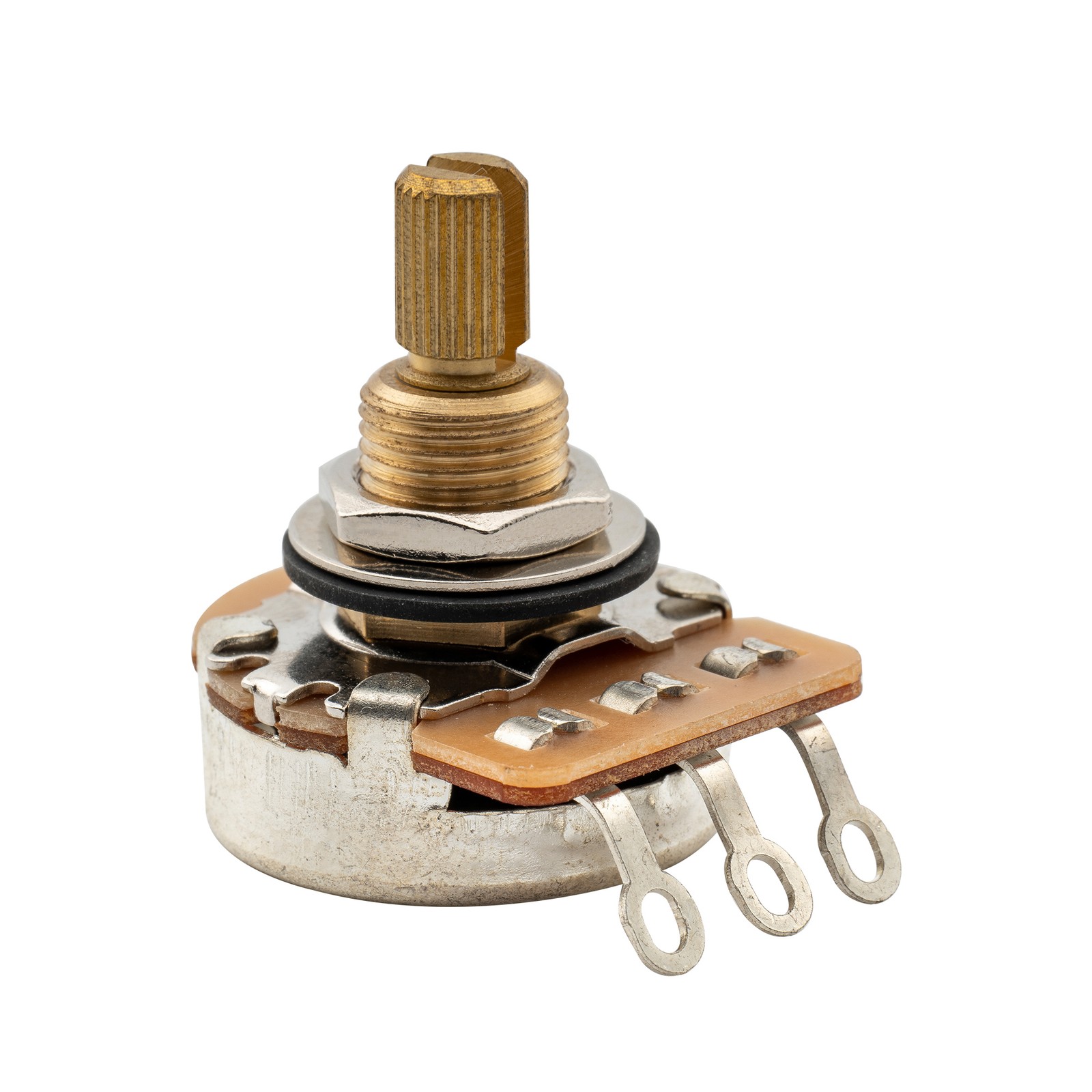
The A250K is the natural pick for a warmer control direction, especially where the setup uses single-coil pickups. Its 250K audio-taper resistance is described as bleeding some high frequencies to ground and producing a warmer tone than 500K. Like the A1Meg, it is full brass and has a fine 24-spline, 6 mm split shaft plus a 9.5 mm threaded diameter and height; one potentiometer and mounting accessories are included. The trade-off is equally clear: this is the warmer-voiced option rather than the 1Meg model's brighter approach for humbuckers or hot pickups. Its listed price is USD 10.73.
Final choice by use case
Choose the Musiclily Pro A1Meg for humbuckers or hot pickups when a brighter response is the priority. Choose the Musiclily Pro A250K for a single-coil-oriented setup when the target is a warmer tone with some high frequencies bled to ground. With identical listed pricing and shared brass, audio-taper, split-shaft specifications, the resistance value should make the decision.