Choosing microphone cables often comes down to a practical split: do you need several connections around a compact setup, or one cable that can cover a long distance? The H&A Value Series, 3 Pack XLR M to F Professional Microphone Cable - 25 and the ProX XC-MIC100 100' XLR-F to XLR-M Balanced High Performance Microphone Cable take those two different approaches. Both are new XLR female-to-male microphone cable options, but their formats and listed prices point toward different setups.
Quick verdict
Pick the H&A Value Series, 3 Pack XLR M to F Professional Microphone Cable - 25 when multiple microphone connections are the immediate need. Its three-cable format is tailored to setting up more than one microphone, and its listed price is USD 44.85.
Pick the ProX XC-MIC100 100' XLR-F to XLR-M Balanced High Performance Microphone Cable when the main requirement is a single explicitly stated 100-foot run. It is listed at USD 63.15. The listed-price spread between the two is USD 18.30, so the key decision is cable count versus stated reach.
At-a-glance comparison
| Buying consideration | H&A Value Series, 3 Pack XLR M to F Professional Microphone Cable - 25 | ProX XC-MIC100 100' XLR-F to XLR-M Balanced High Performance Microphone Cable |
|---|---|---|
| Listed price | USD 44.85 | USD 63.15 |
| Cable format | Three-pack | Single cable |
| Connection named in title | XLR M to F | XLR-F to XLR-M |
| Length wording | Title ends in "- 25" | 100' |
| Signal wording | Low-noise material is described | Balanced cable is named |
Where each cable option fits best
H&A is the better match for multiple mic positions
A three-pack makes the H&A option the natural fit for a small recording arrangement, rehearsal area, or performance layout that calls for several microphone connections at once. Its description specifically centers on setting up multiple microphones, while the low-noise material is described as minimizing unwanted handling sounds. The decision is especially straightforward when separate cable runs matter more than having one notably long run.
ProX is the clearer pick for one long cable route
The ProX title explicitly identifies a 100-foot XLR-F to XLR-M cable, making it the more direct choice when the microphone and destination are far apart. Its balanced designation is also relevant to shoppers who want that signal format named in the cable title. The description additionally emphasizes bending and twisting resistance for on-stage use, keeping the focus on a single cable intended for extended routing.
Product notes
H&A Value Series, 3 Pack XLR M to F Professional Microphone Cable - 25
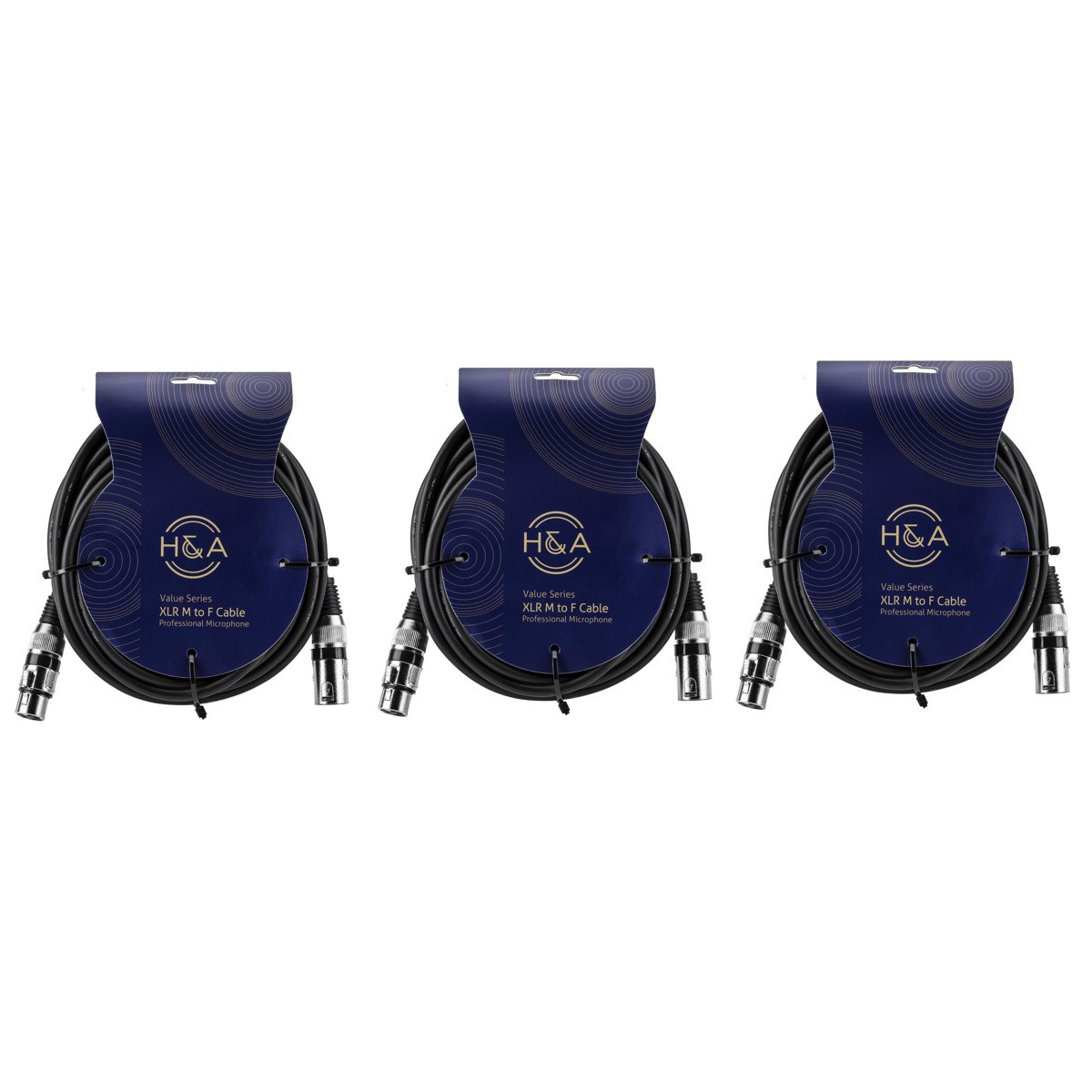
Choose the H&A pack when you want three XLR M-to-F cables available for several microphones rather than building a setup around one run. That format can suit creators and performers arranging multiple microphone positions, and the description calls out low-noise material intended to reduce unwanted handling sounds. At USD 44.85, it is the lower-listed-price choice in this comparison. Its trade-off is that the product is organized around three cables, not a single explicitly stated 100-foot cable. If your central need is routing one microphone across a large room or stage, the ProX's clearly named 100-foot length is the more targeted specification.
ProX XC-MIC100 100' XLR-F to XLR-M Balanced High Performance Microphone Cable
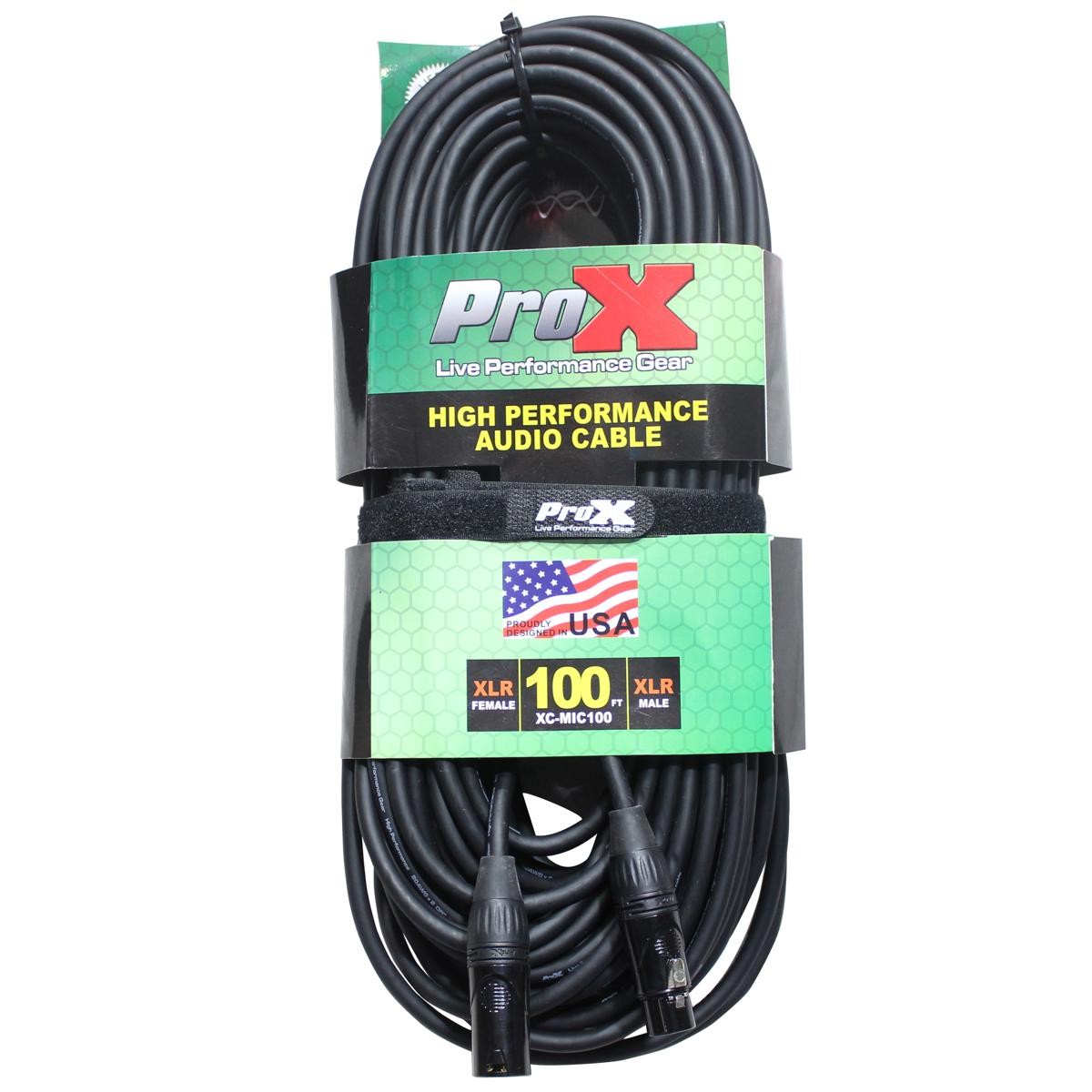
The ProX makes sense for a setup that needs one XLR-F to XLR-M cable with an explicitly stated 100-foot length. Its balanced designation and description of durability for bending and twisting make its intended use easy to read: a long, single microphone cable for performance or production routing. The listed price is USD 63.15. The limitation is cable count: this is one cable, while the H&A option is a three-pack for multiple connections. Choose ProX when one long route is more useful than several separate runs; choose the H&A format when adding microphones is the first priority.
Final choice by use case
For multiple microphones in one setup, choose the H&A three-pack. For one long 100-foot XLR connection, choose the ProX XC-MIC100. The deciding factor is not the shared XLR connection type; it is whether your setup benefits more from three cables or one clearly identified long balanced cable.