Choosing a used bass often comes down to a practical trade-off: do the instrument's construction, electronics, and included gear outweigh the marks left by regular playing? The ESP E-II BTL-4 addresses that question directly. It is presented as a fully working, made-in-Japan active 4-string with a case, while also being clear about cosmetic wear on the back and around the neck-joint area.
Quick verdict
At USD 1,799.00, the ESP E-II BTL-4 makes the most sense for a right-handed player who wants an active solid-body bass with a 24-fret maple-and-ebony neck combination and is comfortable with a used finish. The main appeal is not a pristine appearance; it is the listed combination of a swamp ash body, ebony fingerboard, active electronics, and included case in a bass described as ready to play.
Who it suits
This model is a natural fit for players seeking a black 4-string bass with a modern-leaning active setup rather than a stripped-down passive configuration. The 24-fret layout gives players who work farther up the neck more room than a shorter-fretboard design, and the right-handed format is clearly specified.
It is less suited to a shopper whose priority is a near-unmarked finish. Light scratches, swirl marks, a small lower-back-edge chip or finish-wear area, and additional surface wear near the neck joint are all part of the package. Those details do not change the stated functionality, but they are central to the buying decision.
What stands out from the listed details
The feature set is focused and coherent: black solid-body construction, a swamp ash body, maple neck, ebony fretboard, and active electronics. The neck is described as straight, the action as comfortable, and the frets as having substantial life remaining. Along with electronics described as operating properly, those points make the bass relevant to a player who wants an instrument intended for regular use rather than a display-only piece.
The included case also gives the package a practical advantage for someone who transports their bass between rehearsals, lessons, or sessions. Made-in-Japan construction is another specific draw for shoppers narrowing their search to that origin.
Meaningful trade-offs
The cosmetic condition is the defining compromise. Wear is concentrated mostly on the back, so the bass can still present as black from the front while carrying clear signs of use elsewhere. That may be an easy compromise for a player focused on the neck, frets, and electronics, but it is harder to overlook for someone collecting clean-looking instruments.
The configuration is also specific: this is a right-handed, active, 4-string model. Buyers looking for a passive circuit, left-handed orientation, or a different string count should focus on instruments built around those needs instead.
ESP E-II BTL-4 Bass Black MIJ Japan 4-String Active w/ Case - Fully Working
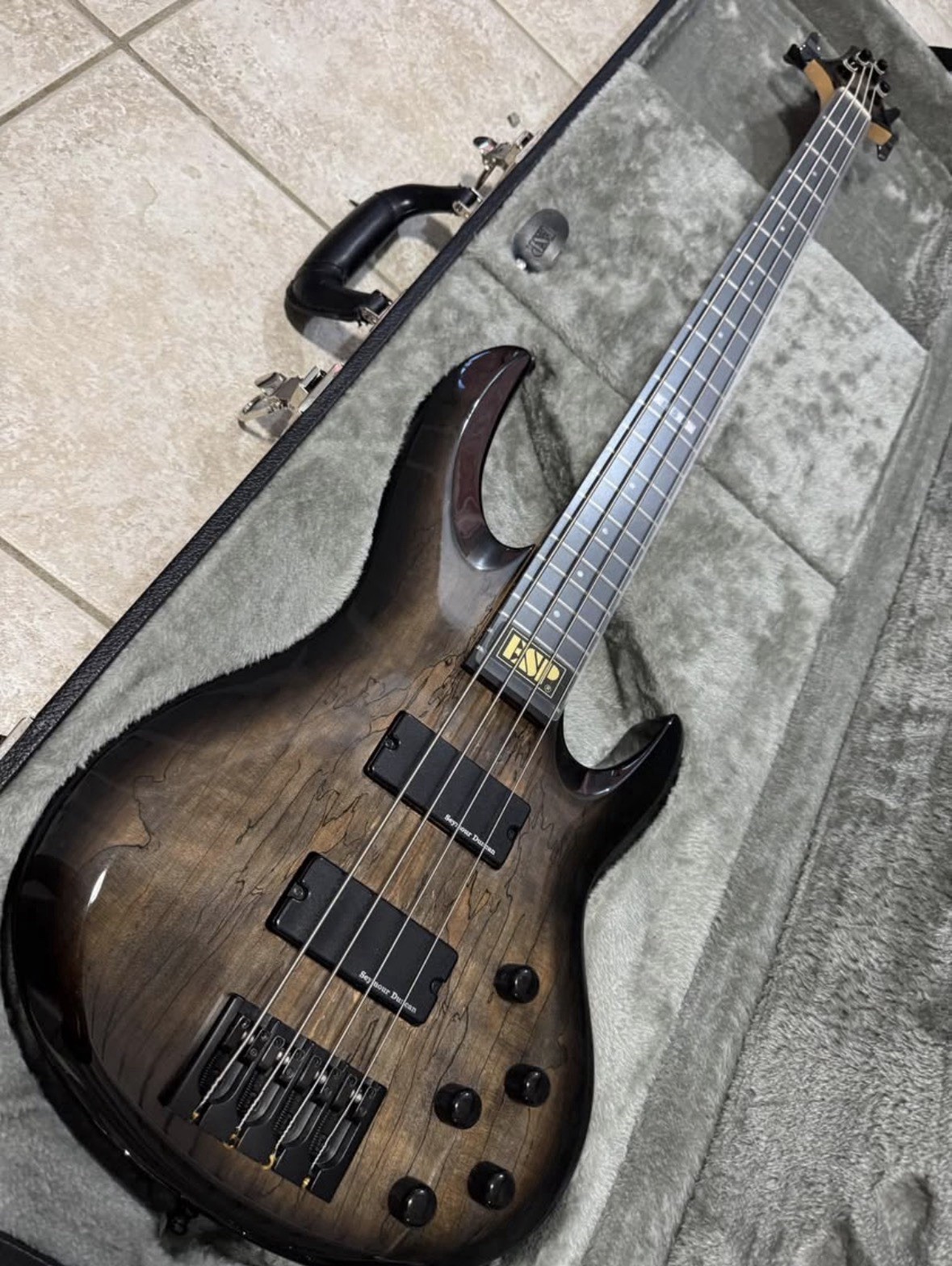
Choose this ESP E-II BTL-4 for its active 4-string format, 24 frets, ebony fingerboard, stated working condition, and included case at USD 1,799.00. Its concrete limitation is visible cosmetic wear, including scratches, swirl marks, and a small finish-wear area on the lower back edge.
Bottom line
This ESP E-II BTL-4 is best approached as a player-focused used bass: its appeal rests on the active electronics, made-in-Japan build, useful neck and fretboard specifications, and case rather than an untouched finish. If those functional priorities matter more than back-side wear, it is a focused option in guitars basses.